Skip to content
How Smaller Farms Manage with Fewer Tractors: Practical Field Guide
Two months ago in northern Kazakhstan, I watched a family-run wheat farm juggling 80 hectares with a single, well-worn 95 hp tractor and an old Belarus utility machine. Their secret wasn’t fancy equipment—it was sharp planning and doing more with less, even when the weather refused to cooperate.
Small- and medium-sized farms frequently manage peak seasonal workloads with only one main tractor by carefully calculating required field capacity for critical operations such as planting, spraying, and harvesting. Implement width, tractor speed, and available field hours determine whether a single machine can complete essential tasks within limited weather windows1. A practical combination for 30–120 hectares is one 70–100 hp 4WD main tractor supported by a smaller utility tractor, maximizing backup and
How to Assess Tractor Sufficiency for Workload?
Calculating if one tractor suffices requires assessing peak workload periods, not averages. Identify critical tasks like planting or harvesting and their weather windows. Estimate field capacity: implement width (m) × speed (km/h) × 0.8 ÷ 10. If projected hectares exceed capacity, consider an extra tractor, longer shifts, or hiring power.
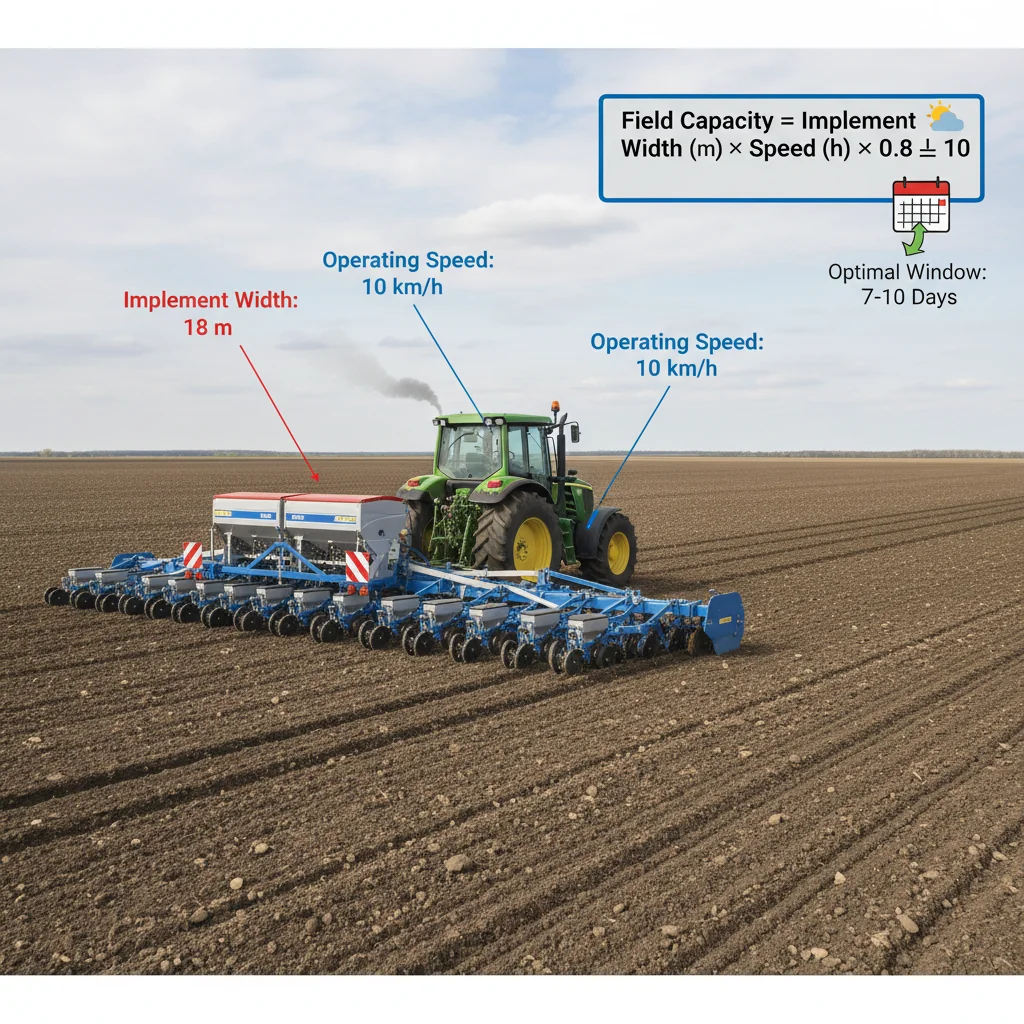
The biggest mistake I see is planning by average workload, not by peak demand. Most farms in Africa or Central Asia don’t have the luxury of spreading out planting or harvest over weeks. Instead, the real pressure comes in those tight weather windows—maybe five to seven days for maize planting, or a single clear week for harvesting before rains hit. Last season, I worked with a customer in Peru who needed to plant 60 hectares of maize. He had a 3-meter, four-row planter and ran at 6 km/h—field capacity comes out to about 1.4 hectares per hour after adjusting for turns and downtime.
Here’s the thing: if you only look at total hectares, one tractor seems enough. But when you factor in the weather window and available daylight, the math gets tight. In Peru, they had about 10 workable field hours per day for planting. So, 1.4 hectares/hour × 10 hours × 5 days equals 70 hectares—just enough, but with no margin for breakdowns or rain delays. If you fall behind, yield drops fast. I always suggest mapping out each critical job—plowing, planting, spraying, harvesting—and calculating exact hectares per hour for your implements.
If your projections show the tractor can’t finish in the window, look at alternatives—run longer shifts with multiple operators, add a second light tractor, or hire in extra power just for those peak days. Don’t forget to check your three-point hitch and PTO capacity match your implements—horsepower alone doesn’t guarantee you can pull or lift what you need. I recommend double-checking these numbers before deciding one tractor is enough for your farm.
Smaller farms often rely on sharing or renting tractors during peak periods because owning enough machinery for short, intense workloads is usually not economically viable.True
Peak agricultural operations like planting and harvest are highly time-sensitive but occur only a few weeks per year. For smaller farms, the cost of owning sufficient machinery for these brief peak periods often outweighs the benefit, so they address this by sharing equipment among neighbors or renting tractors as needed.
A single small tractor is typically able to handle all field operations for a diversified small farm during peak planting and harvest windows without any scheduling challenges.False
Even on diversified small farms, peak windows for planting or harvest can overlap, creating bottlenecks. One tractor may not be sufficient for all tasks during these critical periods, leading to delays that can reduce yields or impact crop quality.
Key takeaway: For smaller farms, determining if one tractor can handle all essential tasks depends on peak workload analysis, realistic weather windows, and accurate field capacity calculations—not averages. If capacity falls short during critical periods, options include another tractor, longer operating hours, or temporary equipment hire.
What is a one-plus-small tractor setup?
A one-plus-small-tractor setup2 uses a main 70–100 hp 4WD backbone tractor for heavy, time-critical fieldwork, complemented by a compact 25–50 hp utility tractor for lighter duties. This approach maximizes efficiency, provides essential backup, and reduces per-hour costs on small to mid-sized farms (30–120 ha).
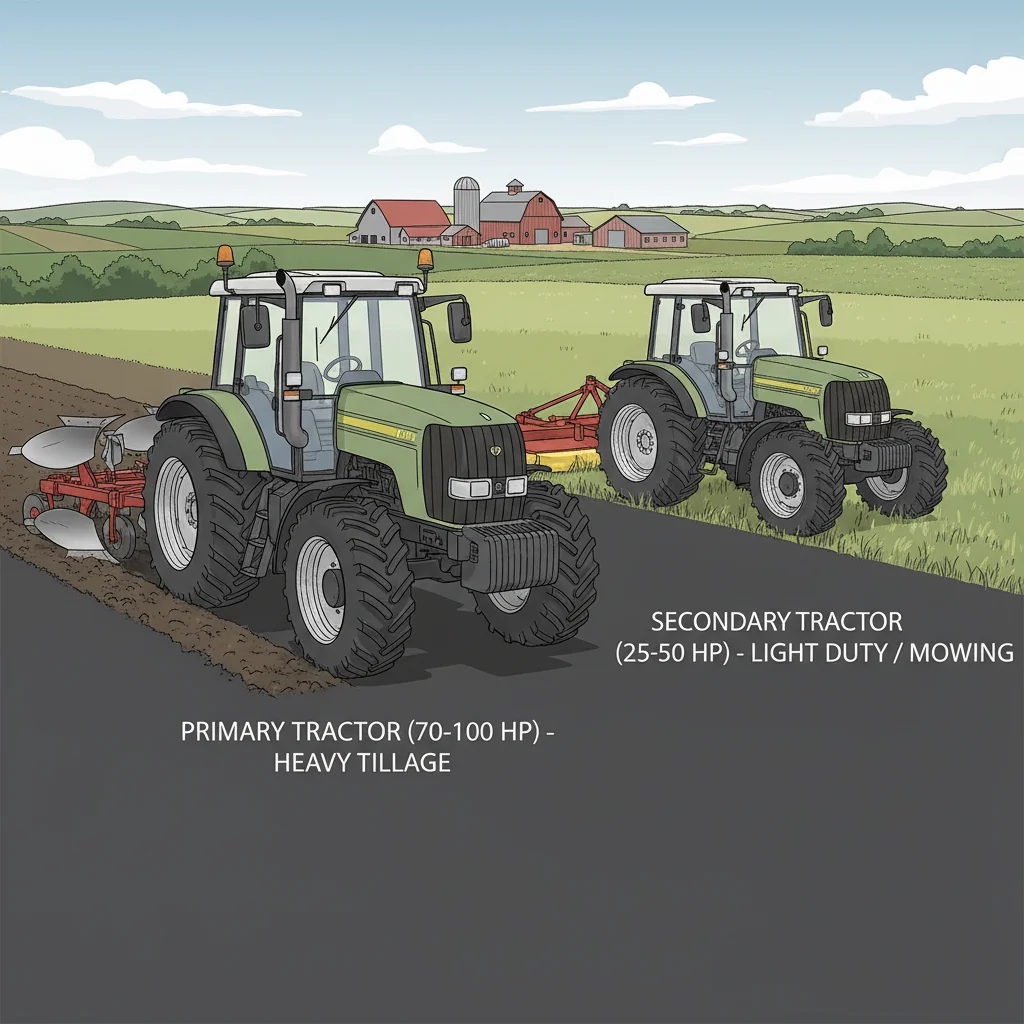
Let me share something important about the one-plus-small-tractor setup. On most 30 to 120 hectare farms, you don’t need a whole fleet. What actually works is having one main tractor—usually 70 to 100 horsepower, 4WD, loader-ready—doing all your heavy and time-sensitive jobs. That means primary tillage, seeding, heavy transport, and even baling. I’ve seen this exact pattern on farms in Bolivia and Kazakhstan. The main tractor racks up most of the annual hours, so you get your money’s worth and keep per-hour costs under control.
The smaller utility tractor—typically 25 to 50 horsepower—fills a different role. I visited a customer in Peru last season who used his compact 40HP for running the grain auger, cleaning yards, pulling a small sprayer, and mowing. His main 85HP unit handled plowing and heavy hauling. When the big tractor needed a clutch repair, he could still keep the farm moving—feeding cattle and even spraying 10 hectares daily with the smaller machine. That’s the backup value most people overlook until something breaks.
From my experience, this setup lets you do parallel tasks during busy times, like having one tractor spreading fertilizer while the other hauls harvest loads. You avoid over-investing in extra tractors that end up sitting idle most of the year. The key is matching your main tractor’s three-point hitch and PTO capacity to your heaviest implements, while making sure your small tractor is reliable for daily chores. I suggest double-checking local parts availability for both sizes before committing. That’s what keeps downtime short and costs predictable.
A one-plus-small tractor setup allows a smaller farm to maximize equipment use efficiency because the main tractor handles nearly all critical operations, reducing the downtime and maintenance costs associated with owning multiple large machines.True
On smaller farms, a single well-chosen main tractor can be used for the majority of essential tasks, so it operates more hours per year compared to farms with larger fleets, resulting in better return on investment and less underutilized machinery.
In a one-plus-small tractor setup, the small tractor is typically used for the same primary tillage and heavy transport tasks as the main tractor.False
The small tractor in this setup is usually reserved for lighter, less time-sensitive jobs like mowing, spraying, or utility work, while the main tractor is responsible for demanding tasks such as tillage and heavy transport, which require more power and capacity.
Key takeaway: On 30–120 ha farms, combining a main backbone tractor (70–100 hp) with a smaller utility tractor (25–50 hp) balances productivity, backup capability, and cost efficiency. This setup keeps most hours on one machine, supports parallel tasks, and limits downtime without over-investing in underused equipment.
How to Choose a Multi-Role Main Tractor?
Selecting a true multi-role main tractor requires matching specifications to farm size and workload. For up to 80 ha mixed cropping, a 70–90 hp 4WD tractor suffices; for 100–200 ha or heavier tillage, 90–120 hp is preferred. Key features include shuttle transmission3, dual-speed PTO4, robust hydraulics, and loader-ready design.
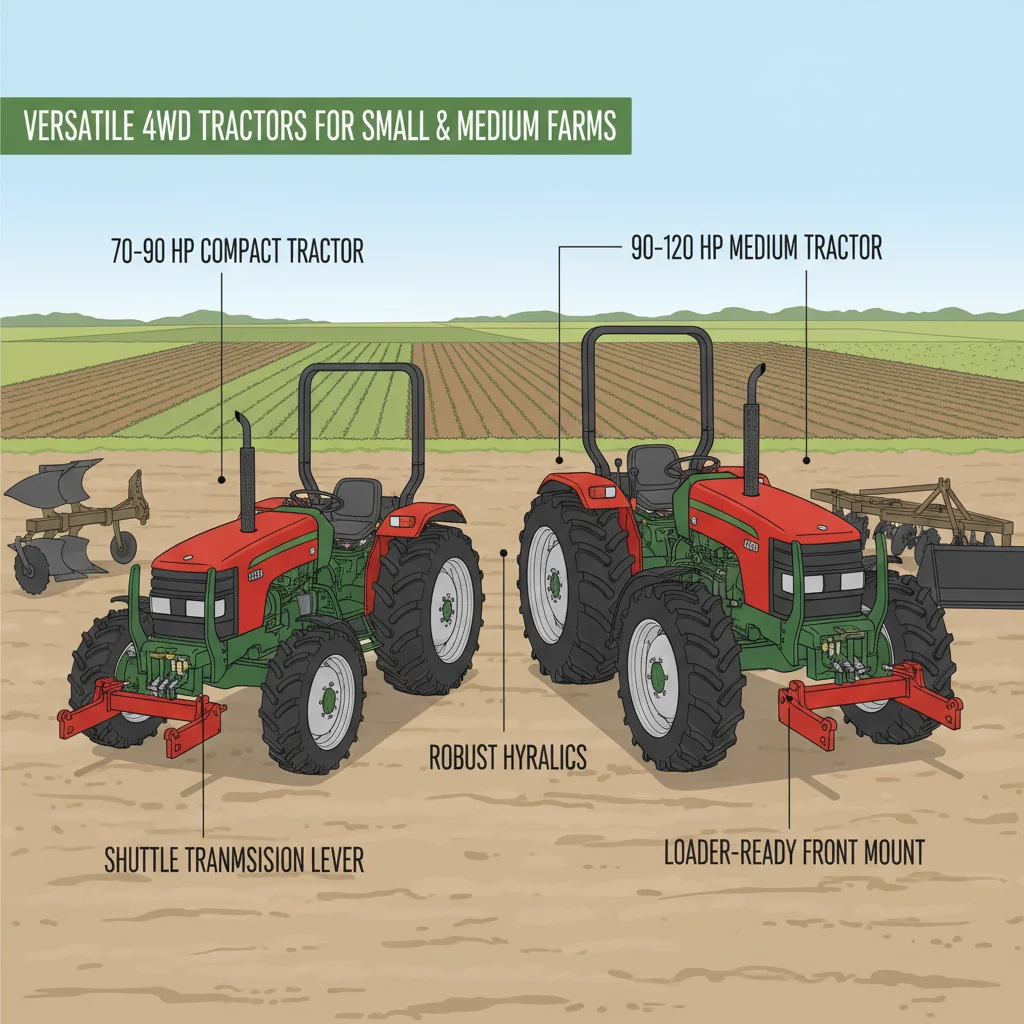
Most people don’t realize that choosing a multi-role tractor isn’t about picking the biggest engine or the flashiest model. It’s about finding the right balance for your land and your workload. For example, in Peru, I worked with a medium-sized farm—about 120 hectares—where the owner insisted on a 120HP 2WD tractor. The power was there, but after one season, he found it struggled with muddy fields and loader work. We switched him to a 100HP 4WD model with a shuttle transmission and dual-speed PTO. Suddenly, his tasks—from plowing to hauling—were much smoother, and his operating costs dropped.
From my experience, the transmission type makes or breaks your daily efficiency. A true shuttle transmission (12×12 or better) saves hours when you’re loading or doing repetitive fieldwork. I’ve seen this in Kenya, where a farm running only one 90HP tractor needed to switch between transport, tillage, and spraying. The operator told me the easy forward-reverse shifting was the reason he could finish peak season work without burning out.
Hydraulics are just as critical. I always suggest looking for at least 45–60 liters per minute of hydraulic flow and two or more rear remotes. This lets you run heavier implements—like mowers, sprayers, or a front loader—without stalling or slow response. Loader-ready frames and comfortable cabs make a huge difference, too. If your tractor can run 10–12 hours a day without wearing out the operator, you’ll see productivity jump. Carefully match real specs to your actual tasks, not just the brochure—your farm’s success depends on it.
A 4WD tractor with a shuttle transmission is often better suited for loader work and muddy conditions than a higher-horsepower 2WD tractor.True
4WD improves traction in wet or uneven terrain, and a shuttle transmission enables smoother and quicker directional changes, both of which enhance loader performance and field versatility compared to relying solely on higher horsepower.
On smaller farms, selecting a tractor with the highest possible horsepower is always the best way to maximize productivity.False
Excess horsepower can lead to unnecessary fuel consumption, soil compaction, and higher upfront costs; smaller farms benefit more from matching tractor specifications to actual needs and field conditions rather than focusing solely on engine power.
Key takeaway: For small to mid-sized farms with only one main tractor, prioritize practical specifications—adequate horsepower, versatile transmission, strong hydraulics, and operator comfort—over brand name. The right configuration ensures one tractor can efficiently handle diverse tasks across varied field conditions.
How do implements reduce tractor needs?
Multipurpose implements and combination tools allow a single tractor to perform multiple field tasks in fewer passes. By using implements like rotary tiller-seeder combos or planters that apply fertilizer and seed simultaneously, farms maximize tractor capacity and efficiency. Proper implement sizing prevents overloading, minimizing fuel use and wear.
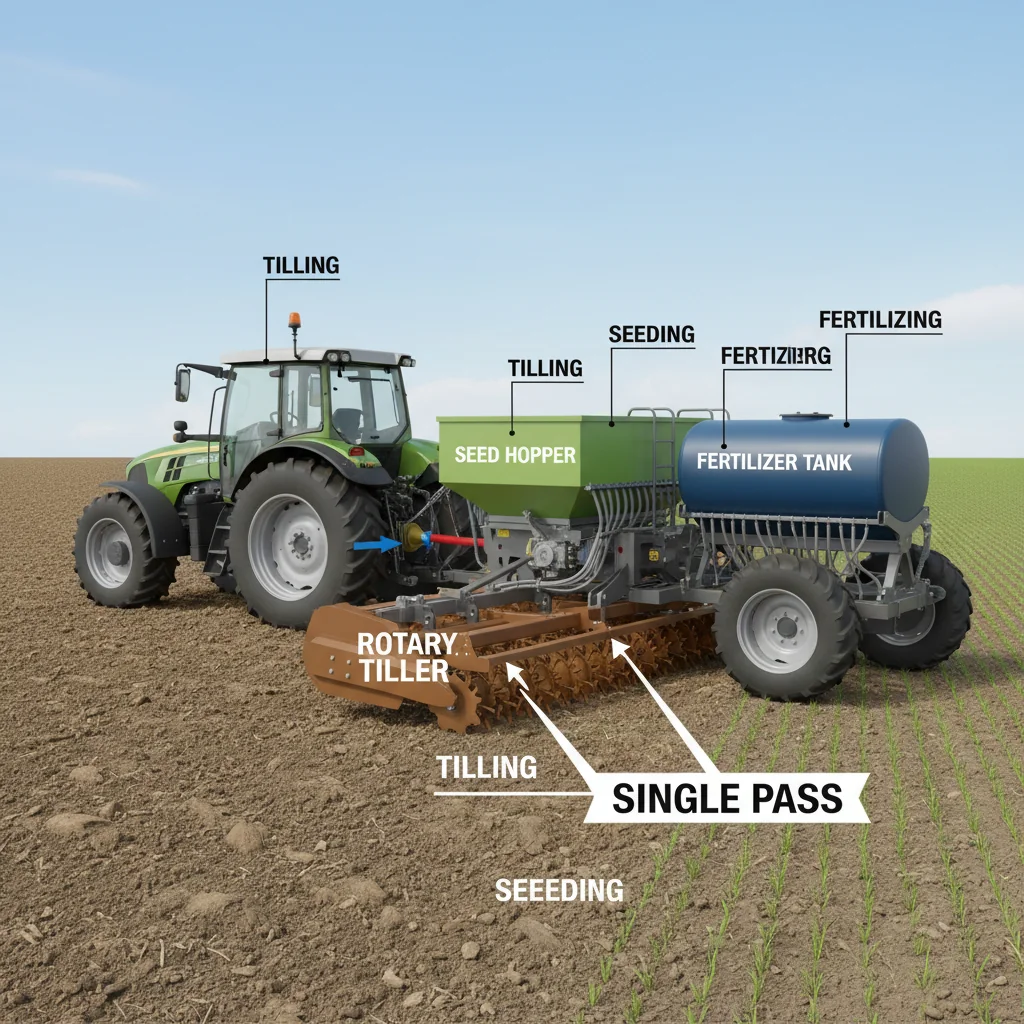
Last month, a contractor in rural Kenya asked me how he could manage a tight planting window with just two 75HP tractors. His solution? He invested in a rotary tiller-seeder combination implement5. Instead of making separate passes for tillage and seeding, he covered both jobs in one go. That change alone saved him at least two full working days over 60 hectares. I see this all the time—by combining tasks, a single tractor can handle almost double the workload, especially on smaller farms where budgets limit the fleet size.
From my experience, the key is matching implement size to your tractor’s real capacity. I’ve seen farmers in Peru struggle with oversized cultivators on 65HP models; the tractor bogs down, fuel use jumps, and the work takes longer. The sweet spot is running your main tractor at 70–85% of its rated power, especially in heavy soil. For example, a 90HP unit in Kazakhstan pulls a 2.2-meter disc harrow and a rear sprayer together, working at 6 km/h without straining the engine. That setup trims field passes and keeps wear and tear down.
Always ask yourself, “What jobs can this implement replace?” before buying. A planter that applies both seed and fertilizer in one pass, or a front sprayer paired with a rear cultivator, means you finish more work with less equipment. I suggest checking your tractor’s three-point hitch and PTO specs—those limits matter far more than just chasing horsepower. The right multipurpose tool can turn one tractor into your entire team.
Combining implements, such as rotary tiller-seeder units, allows a single tractor to perform multiple field operations in one pass, which can substantially reduce the total number of tractors required on smaller farms.True
When implements are designed to handle more than one task simultaneously, they minimize the time and equipment needed for fieldwork. This is especially useful for small to mid-sized farms with limited tractor fleets, as it maximizes the productivity of each machine.
Using combination implements always eliminates the need for specialized tractors on small farms, regardless of crop or soil conditions.False
While combination implements increase efficiency, certain crops or challenging soil types may still require specialized tractors or equipment. Not all field operations can be combined effectively, so a variety of machines may still be needed depending on the farm's specific needs.
Key takeaway: Selecting multipurpose or combination implements enables smaller farms to complete more tasks with fewer tractors. Matching implement size to tractor power ensures efficient operation, while reducing field passes saves time, fuel, and maintenance costs, helping smaller operations maintain productivity without overextending resources.
How Does Shift Scheduling Reduce Tractor Needs?
Efficient shift scheduling allows a single tractor to operate 12–16 hours daily with 2–3 rotating operators, maximizing machine use during critical farm windows. Strategic field sequencing6, precision GPS guidance, and designated maintenance periods further boost productivity, enabling small farms to match the field capacity of larger fleets with fewer tractors.
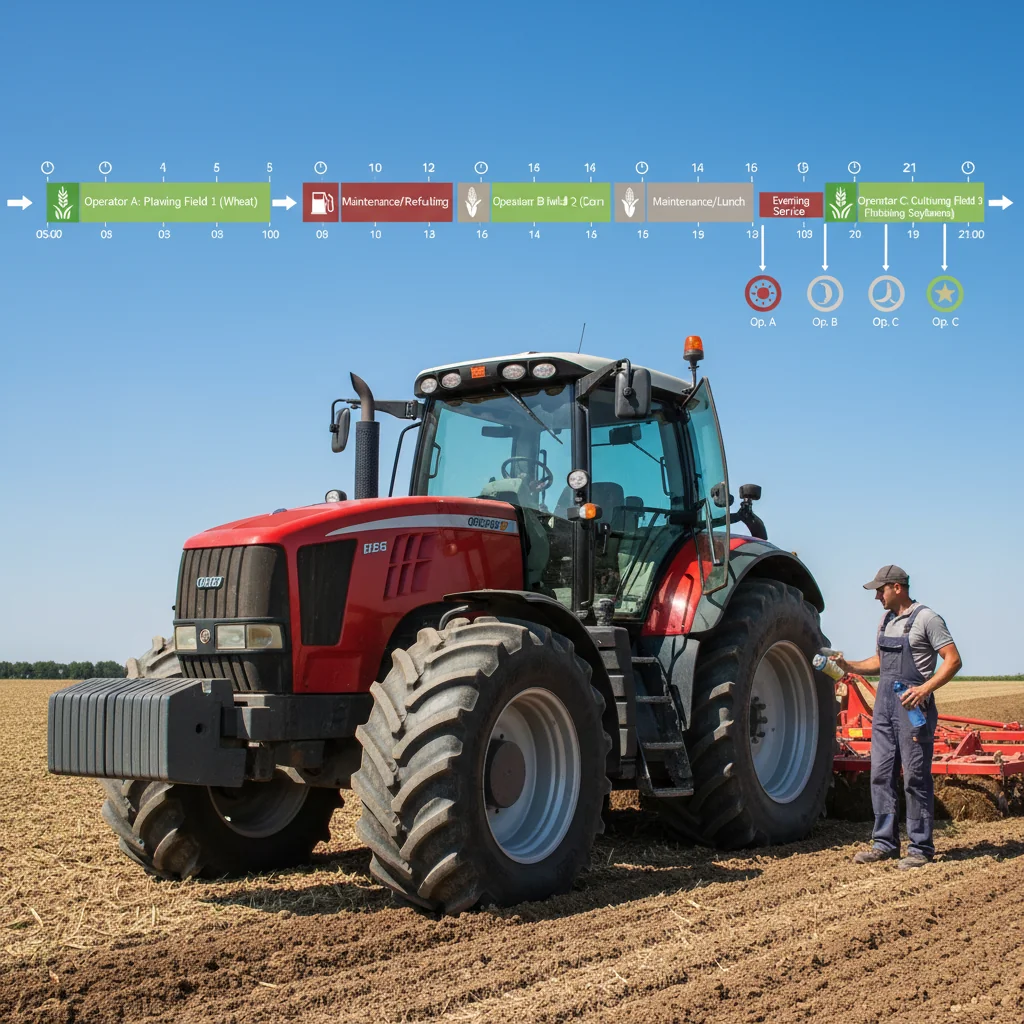
Here’s what matters most when you’re trying to make one tractor do the work of two: shift scheduling isn’t just for factories. It works in the field too. I’ve seen this firsthand on a customer’s maize farm near Eldoret, Kenya. He runs a 75HP 4WD tractor, not a big fleet—just one solid machine and a small team. During planting, they split the day into two main shifts: sunrise to midday, and afternoon until almost dark. Each operator works about six hours, then swaps out. By keeping the tractor moving for 12–14 hours, he covers over 20 hectares daily. Most neighboring farms, with similar land, need two tractors just to keep up.
The key is planning your field sequence. Start with the driest or most accessible plots early in the morning, when soil moisture is ideal. Leave road work, loading, or any hauling for midday when the fields are too hot or dry for good tillage. I always suggest mapping your route to avoid backtracking—no wasted fuel, no extra hours. If you’re working with a basic 60–90HP unit, proper sequencing can mean the difference between finishing the harvest on time or losing yield to weather.
From my experience, scheduling short breaks for maintenance checks—like cleaning air filters or greasing the PTO—prevents breakdowns during peak hours. Even without fancy electronics, just smart shift changes and field order can boost your true working capacity by at least 20%. For most small farms, that’s enough to skip buying a second tractor and still get the job done.
By using shift scheduling, a single tractor can be operated almost continuously during peak seasons, reducing downtime and allowing smaller farms to meet time-sensitive field operations with fewer machines.True
Shift scheduling enables longer daily operation without overworking individual operators, making it possible for one tractor to cover more ground during critical periods like planting or harvesting. This method leverages human resource management, not just equipment quantity, to maximize productivity.
Implementing shift scheduling on a single tractor significantly increases its fuel consumption compared to using two tractors for the same workload.False
Fuel consumption depends primarily on the workload and efficiency of the tractor, not the number of operators or shifts. Running a single tractor for more hours does not inherently make it less fuel-efficient than using two tractors for shorter periods; the total fuel used is more closely related to the total work done, not the scheduling method.
Key takeaway: By optimizing operator shifts, field order, and leveraging precision technology, smaller farms can extend tractor working hours and coverage. This approach minimizes the need for additional tractors while maintaining productivity during peak operations such as planting and harvest.
When Is Renting Tractors Cost-Effective?
Renting tractors becomes cost-effective for small farms when a second machine cannot consistently reach 300–400 hours of annual use. Fixed costs per hour7 rise sharply with lower utilization—often exceeding US$30/hour—making rental or contracting more economical for occasional, power-intensive tasks while capital is better allocated to other essential farm assets.
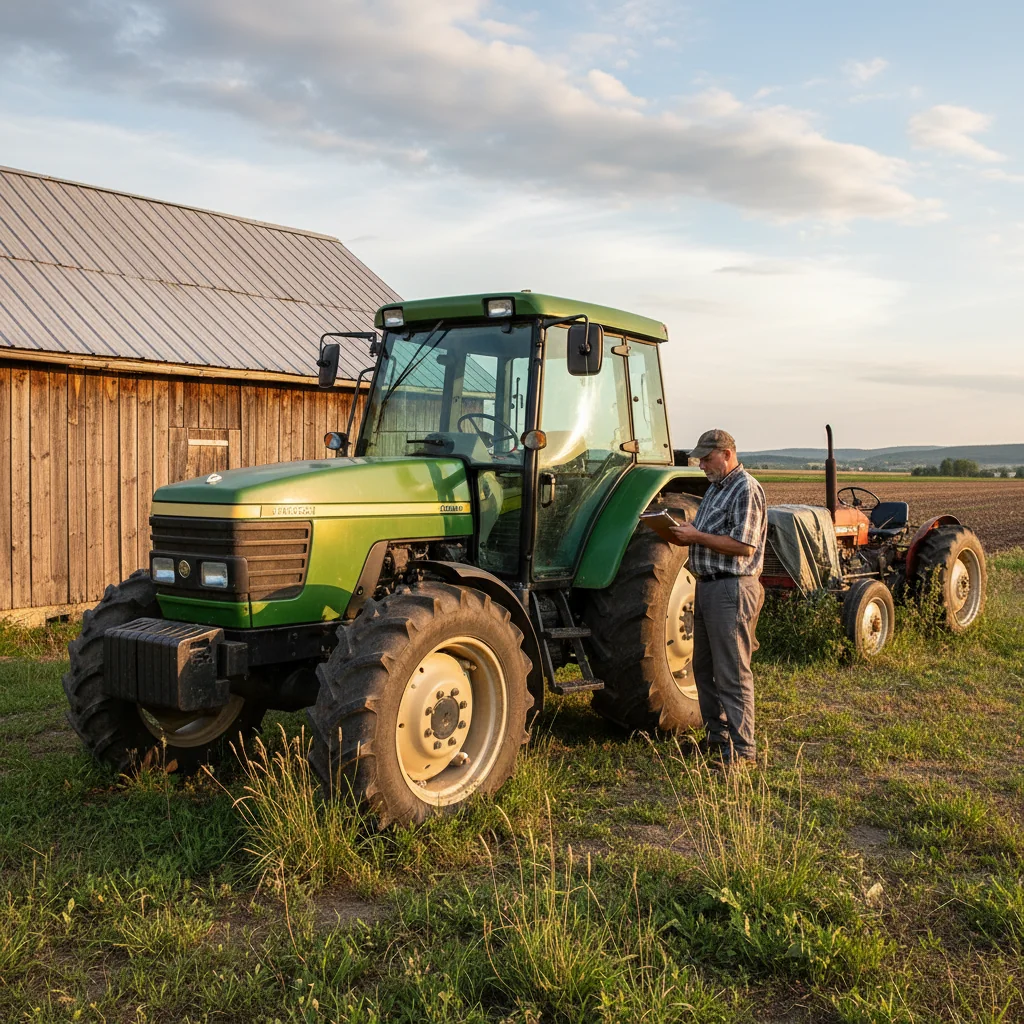
I've worked with customers who made this mistake—buying a second tractor for peace of mind, only to watch it sit idle most of the year. In places like northern Kazakhstan, where the growing season is short and intense, a 90HP main tractor might clock 700–800 hours between planting and harvest. But when I ask how many hours their backup unit runs, the answer is usually less than 200. That second machine ends up costing them over US$30 per hour just in fixed costs—depreciation, insurance, interest—before adding any fuel or repairs.
From my experience, for farms under 200 hectares, it just makes more sense to run one versatile tractor—something in the 70–120HP range with solid three-point hitch capacity and reliable hydraulics. When you hit those peak weeks, like deep ripping before the rains or baling after harvest, you can rent a bigger machine from a contractor or neighbor. I saw this work well for a group of growers in Bolivia: they pooled funds for a shared 110HP tractor, then hired out a high-power 150HP unit for just five days during heavy tillage season. Their per-hour costs stayed low, and they spent their capital on better implements and grain storage instead.
The reality is, unless that second tractor can reach at least 300–400 hours a year, you’re tying up money that could go toward things that actually improve yield or cut losses. I always suggest running the numbers honestly—track your actual hours, not just what you hope to use. Renting fills the peak gap without dragging down your bottom line.
Renting tractors can be more cost-effective than owning a second unit for smaller farms with limited seasonal workloads, because rental fees avoid the fixed costs of depreciation and insurance associated with underutilized equipment.True
The cost structure of renting allows farms to pay only for the hours used, which helps avoid the high per-hour costs of owning tractors that see little annual use, especially in regions with short, intense growing seasons.
Smaller farms can always save money by purchasing older, low-cost tractors as backups instead of renting, since initial purchase price is the primary cost factor.False
While older tractors may have a lower upfront cost, ongoing expenses like maintenance, repairs, insurance, and depreciation still apply. When backup tractors are rarely used, these fixed costs can result in a much higher cost per hour compared to renting, making ownership less economical.
Key takeaway: For farms under 200 hectares, owning a single versatile tractor and renting or contracting for peak labor or power needs usually minimizes costs. This approach avoids high per-hour expenses from underutilized machinery and frees up capital for more productive investments like implements, storage, or essential infrastructure.
How does strict tractor maintenance boost uptime?
Consistent maintenance is critical for single-tractor farms, minimizing downtime and protecting yields. New compact and mid-size tractors8 offer improved fuel efficiency and user-friendly daily checks. Following the operator’s manual for oil and filter changes, planning service before busy seasons, and stocking essential spare parts maximizes uptime and extends the tractor’s working life.
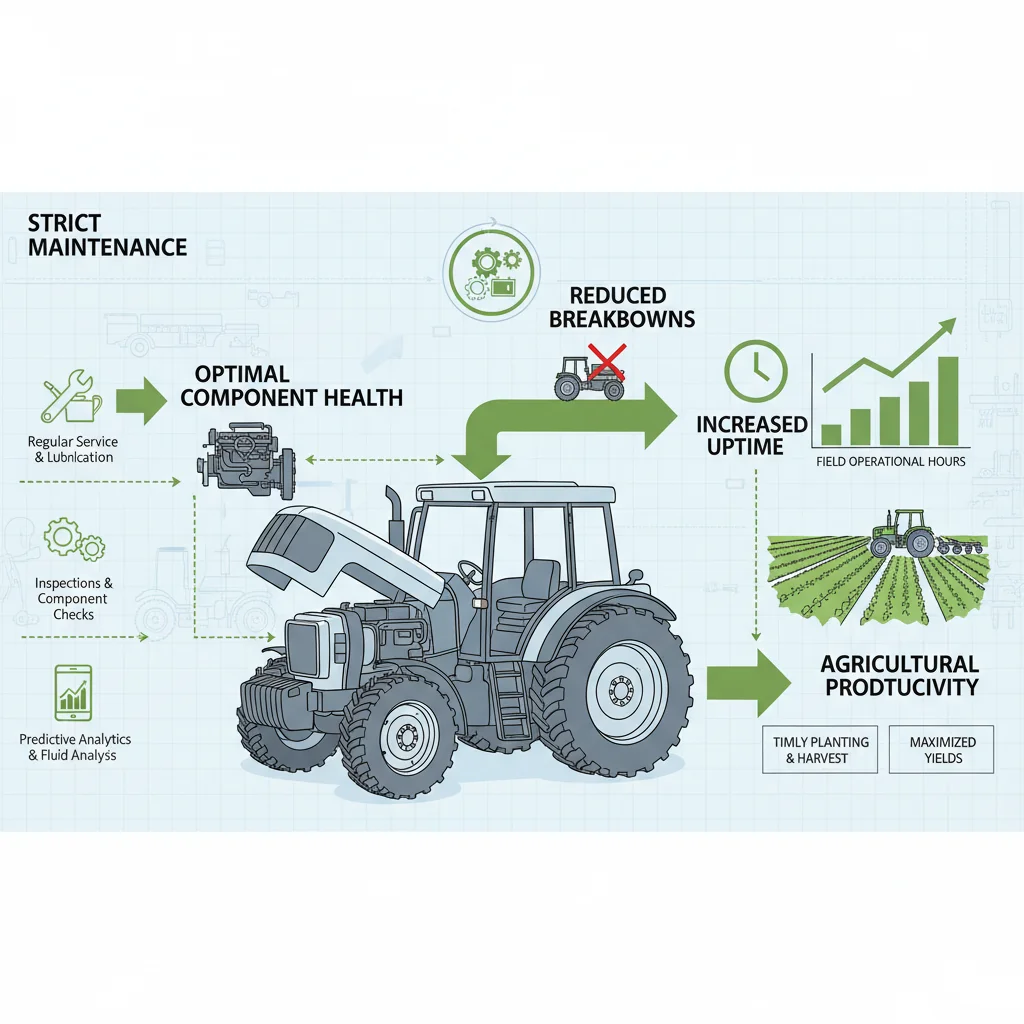
Most people don’t realize that for single-tractor farms, downtime isn’t just an inconvenience—it can destroy your season. I remember a farmer outside Cochabamba, Bolivia, whose mid-size tractor broke down during planting. The delay meant missing the optimal window by several days, cutting his maize yield by at least 15%. That’s why I always push for strict maintenance, especially with newer compact and mid-size models. These tractors are built for easy daily checks—dipstick right by the step, fuel and air filters up top, color-coded grease points. But these features only help if you actually use them every day.
Here’s what matters most when you’re trying to keep that one machine reliable: stick to the service intervals in the manual. For most 60-90HP tractors I’ve seen in Africa and Central Asia, that means engine oil and filter every 250 hours, fuel filters every 500, and a full hydraulic and coolant change at least once a year. If the planting season is coming up and you expect 80-100 hours of use, always service the tractor just before—don’t wait for something to fail mid-job. I’ve seen too many farmers in Kenya gamble on “just one more week,” only to lose days waiting for a replacement belt or hose.
To be honest, spare parts are your safety net. I suggest stocking at least filters, one fan belt, a set of basic hydraulic hoses, and tire repair supplies—especially in regions where parts can take weeks to arrive. Quick daily walk-arounds—check fluids, look for leaks, inspect tires and lights—can catch issues before they stop you cold. That’s how you get more hours out of a single workhorse without risking your harvest.
Strict maintenance schedules for compact and mid-size tractors reduce the risk of unexpected hydraulic system failures, which are a common cause of extended downtime on smaller farms.True
Hydraulic system issues can be hard to detect until they become serious, and smaller farms often lack backup equipment. Regular inspections and maintenance catch problems like fluid leaks or filter blockages early, preventing failures that could halt work during critical planting or harvesting periods.
Because compact and mid-size tractors have fewer components than larger models, they require less frequent maintenance checks to ensure reliable operation.False
While compact tractors may have fewer overall systems, their components are often under greater strain due to continuous use on small farms. Skipping maintenance can lead to higher failure rates; in fact, these tractors often need just as frequent—if not more frequent—checks to maintain uptime.
Key takeaway: Rigid adherence to manufacturer-recommended maintenance intervals, combined with daily inspections and spare parts readiness, ensures a single tractor remains reliable for small farms. This approach reduces costly breakdowns during critical operations and supports higher annual usage without compromising machine longevity or farm productivity.
How Do Smaller Tractors Reduce Soil Compaction?
Compact and mid-size tractors with proper tires and ballasting exert less axle load9 than large machines, minimizing deep soil compaction. When combined with reduced tillage10 or strip-till systems and cover crops, fewer and lighter tractor passes help protect soil structure, maintain drainage, and support healthy root growth in small farm operations.
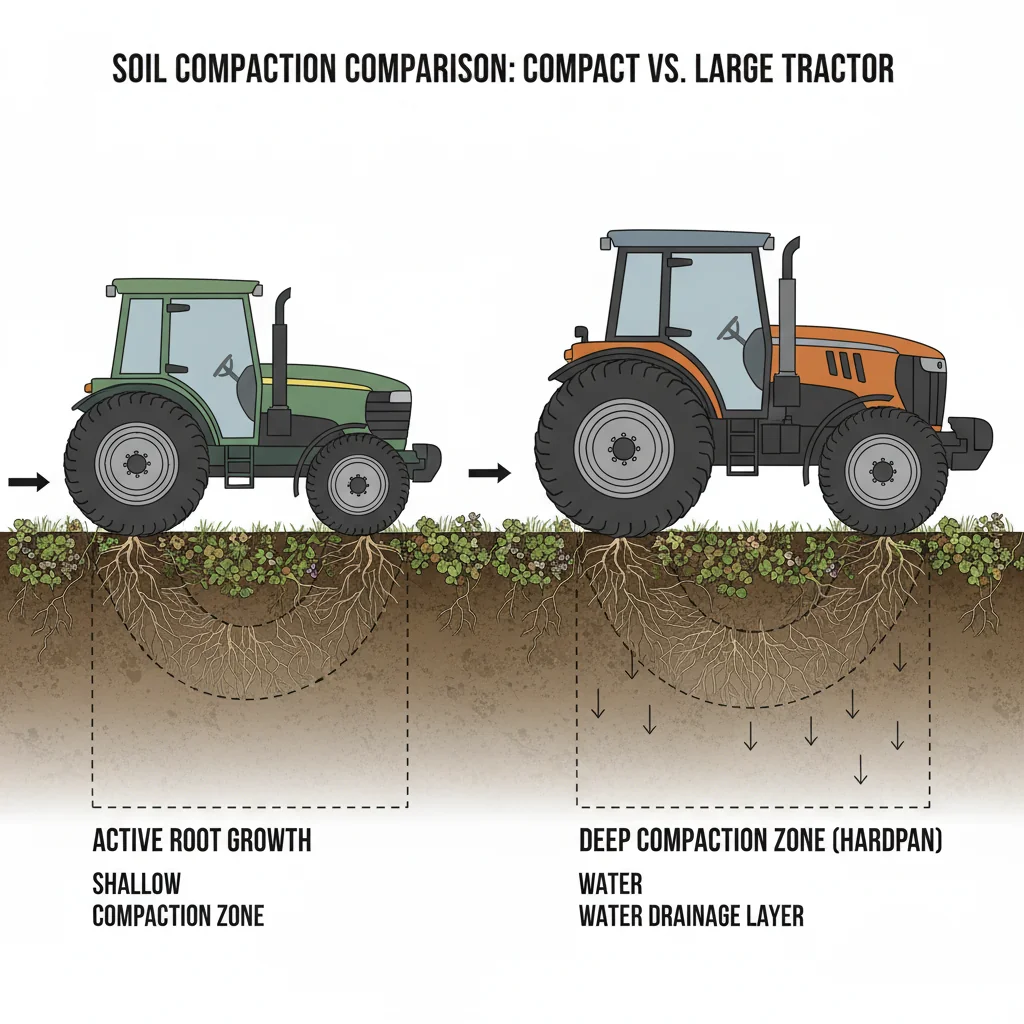
To be honest, the spec that actually matters is axle load—not just overall tractor weight. Heavy machines with high axle loads can press soil deeper, especially after rains. In Kenya, I visited a farm last season where a 120HP 4WD tractor left ruts nearly 30 cm deep in the wet spots. The farmer switched to a 55HP compact model with wider tires and proper ballasting. The difference was obvious. Wheel tracks were shallow, and you could still see earthworm activity right under the surface.
Here’s the thing: compact and mid-size tractors—say, 40 to 75HP with the right tires—spread their weight better. When you combine this with reduced tillage or strip-till, you’re not just making fewer passes. You’re protecting the soil’s natural structure. I’ve seen this in Bolivia too. One cooperative cut their tractor fuel use by almost 30% after switching to lighter units and only working strips. Yields held steady, and their beans rooted deeper in the loosened soil.
For small farms, protecting soil structure isn’t just about today’s crop. Deep compaction from heavy tractors can block drainage and roots for years. I always suggest looking at your typical field conditions—rainfall, soil type, and size. If you’re using cover crops and minimizing tillage, a 50HP 2WD or 4WD tractor with flotation tires can often do the job more efficiently than a big machine. You’ll cut fuel costs and give your soil a chance to recover. It’s a practical way to keep yields resilient in variable seasons.
Smaller tractors with lower axle loads help preserve soil structure by minimizing subsoil compaction, which is critical for maintaining earthworm activity and healthy root growth.True
Axle load, rather than total tractor weight, is the main factor influencing how deeply a tractor compresses the soil. Lower axle loads distribute weight more evenly and reduce deep compaction, supporting better soil biology and root penetration.
Smaller tractors always eliminate the risk of soil compaction, regardless of soil moisture or tire setup.False
Even smaller tractors can cause soil compaction if used on wet soils or with narrow tires, as pressure is still concentrated. Proper tire selection and soil conditions are important factors in minimizing compaction, regardless of tractor size.
Key takeaway: Using smaller tractors with appropriate tires and lighter passes, alongside reduced tillage and cover crops, helps small farms protect soil health, conserve fuel, and maintain resilient yields. This approach aligns with NRCS and regenerative recommendations for sustainable, cost-effective farming in emerging markets.
How Does Precision Tech Extend Tractor Use?
Precision technology, such as GPS guidance, lightbars, and basic auto-steer, enables compact and utility tractors to achieve 20–25% higher operational efficiency through reduced overlap and improved tramlines. Telematics and IoT sensors further optimize fieldwork, targeting inputs and scheduling tasks for maximum productivity on small farms with limited tractor fleets.
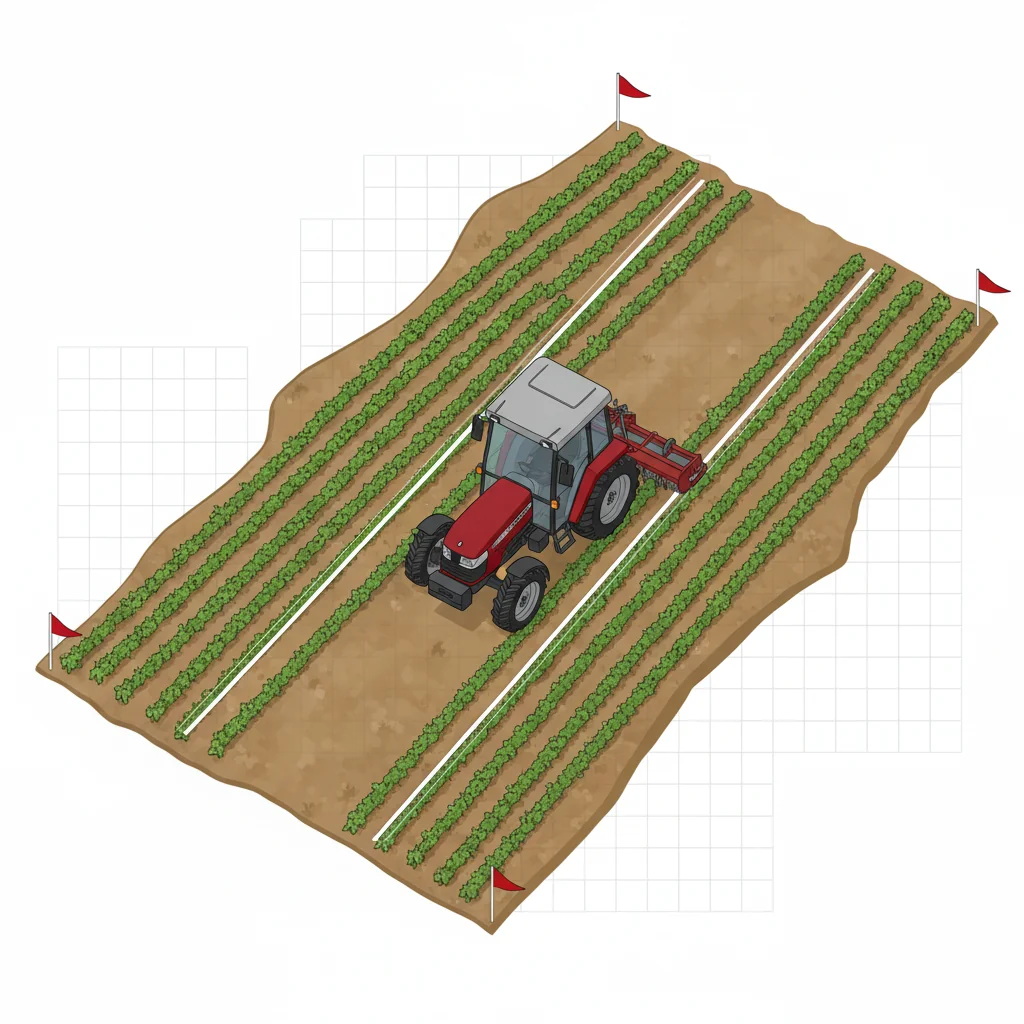
Here’s what matters most when you’re trying to get more done with just one tractor: the right precision add-ons can stretch every hour and every liter of fuel. I’ve seen this on small farms in northern Kazakhstan, where a single 60HP utility tractor handles tillage, spraying, and transport. With a basic GPS lightbar and a simple auto-steer kit, overlap dropped by at least 20%. The operator covered nearly 25 hectares a day—before, they struggled to finish 18. That’s a real difference when every hectare counts.
The biggest value comes from combining a well-equipped tractor with targeted field data. I visited a customer in Peru who set up low-cost IoT soil moisture sensors. With one 75HP tractor and a mounted sprayer, they only irrigated where and when the soil needed it. That cut water use and saved fuel, because unnecessary passes were eliminated. The tractor’s PTO and hydraulic systems did all the heavy lifting, but it was the data that made the work smarter, not harder.
On small and medium farms, these basic tech upgrades mean one tractor can work almost like two. Typical gains include:
- Fewer wasted passes—GPS lightbars help avoid missing or overlapping rows.
- Better tramlines—Auto-steer keeps lines straight, reducing crop damage.
- Targeted input use—Sensors guide spraying, fertilizing, and irrigation only where needed.
- Less fatigue—Easier guidance means longer, steadier workdays for operators.
I suggest looking into financing programs that bundle tech add-ons with the tractor loan. For many farms, that’s the most affordable way to get real efficiency—without growing your fleet.
Adding a GPS lightbar and auto-steer kit to a tractor can significantly reduce implement overlap, allowing a single machine to efficiently handle multiple field operations on small farms.True
Precision guidance systems help operators drive straighter passes, which reduces overlap and missed areas. This directly increases efficiency, especially when one tractor is responsible for diverse tasks such as tillage, spraying, and transport.
Precision agriculture technology is only beneficial for large, high-horsepower tractors and does not improve productivity on smaller utility tractors.False
Precision tech such as GPS guidance and auto-steer benefits tractors of all sizes by increasing efficiency, reducing fatigue, and improving operation accuracy. Small utility tractors on smaller farms can see major gains in productivity and input savings from these add-ons.
Key takeaway: Small farms can significantly increase efficiency using precision agriculture tools and IoT technology with a single, well-equipped tractor. This approach reduces wasted passes, enables targeted applications, and streamlines operations—allowing fewer tractors to cover more ground and perform tasks with greater accuracy.
Should Small Farms Invest Beyond More Tractors?
For small and mixed farms, investing in infrastructure—like cold storage11, pack sheds, or high tunnels12—often yields greater returns than purchasing additional tractors. USDA programs and cost-share schemes help fund these upgrades, which protect crop quality, extend the marketing window, and maximize the utility of a single versatile tractor plus attachments.
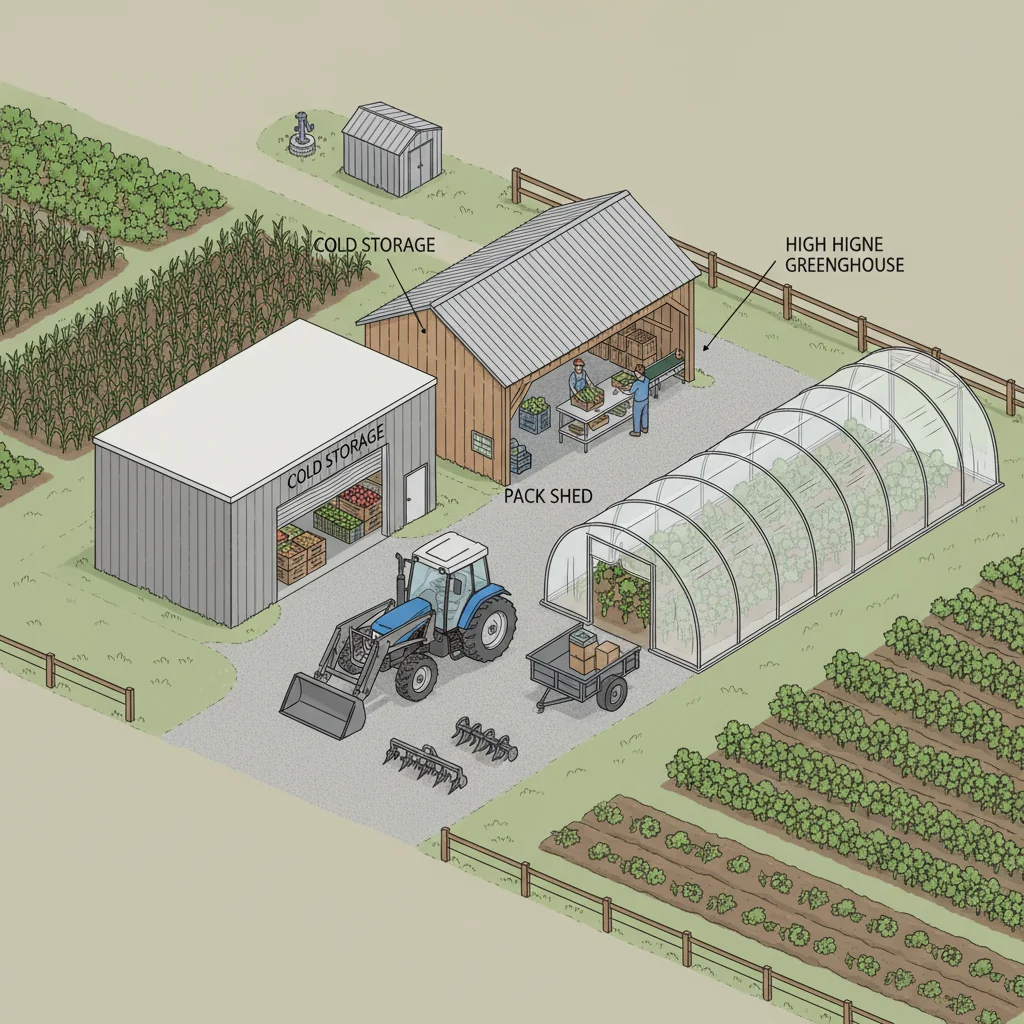
A question I hear often is, “Should I get a second tractor, or invest elsewhere?” For most small and mixed farms, the answer is clear—better infrastructure usually wins. I’ve worked with growers in Peru and Kenya who thought another tractor would double productivity. But after running the numbers, the real bottleneck was post-harvest losses. For one farm in southern Peru, upgrading to a 10-ton cold storage unit cut losses by at least 30%. That’s real money back in their pocket, and their old 65HP tractor handled the field work just fine with a few new attachments.
Cold storage and pack sheds don’t just preserve quality—they give you marketing flexibility. One small onion farmer in Kenya told me he used to panic-harvest whenever his single 80HP tractor was available, even if prices were low. With a cold room, he harvested when labor and weather allowed, then waited for better prices. That’s a simple shift, but it made a bigger impact than any extra tractor could. I’ve seen similar results with high tunnels in Kazakhstan. By extending the growing season, farmers reduced weather risk and spread out field work, making one tractor work harder—not sit idle.
To be honest, I always ask customers, “Will this machine or building earn its keep—500 hours a year, or more product out the door?” If not, think twice before buying another tractor. A versatile 70-90HP model with the right implements covers most jobs. I suggest looking at cost-share programs for storage or tunnels first. That’s where small farms see the biggest returns.
Investing in post-harvest infrastructure like cold storage often yields greater improvements in profitability for small farms than acquiring additional tractors.True
On many small farms, machinery downtime is not the main constraint; instead, losses from spoilage or improper storage can be a much bigger factor limiting income. Addressing bottlenecks in the supply chain, such as through better storage, can have a more significant impact on overall productivity and profitability than simply increasing field capacity.
Small farms generally require at least three tractors to efficiently manage routine operations throughout the year.False
Most small or mixed farms can handle routine fieldwork and transport with one well-maintained tractor, occasionally supplemented by rental or contractor equipment during peak times. The capital and maintenance costs of owning multiple tractors usually outweigh the benefits for smaller operations.
Key takeaway: Small farms should prioritize infrastructure investments such as cold storage and high tunnels over buying extra tractors. These assets support better crop quality, marketing flexibility, and efficient fieldwork with fewer machines, often delivering greater long-term value and improved profitability.
How Can Farm Layout Reduce Tractor Needs?
Strategic farm layout13 and efficient logistics can significantly reduce the need for additional tractors. Placing seed, fertilizer, and chemicals near field access, streamlining loading zones, and using stationary power for augers14 and pumps allow tractors to focus on high-value tasks. Route planning and job combination further minimize idle tractor time.
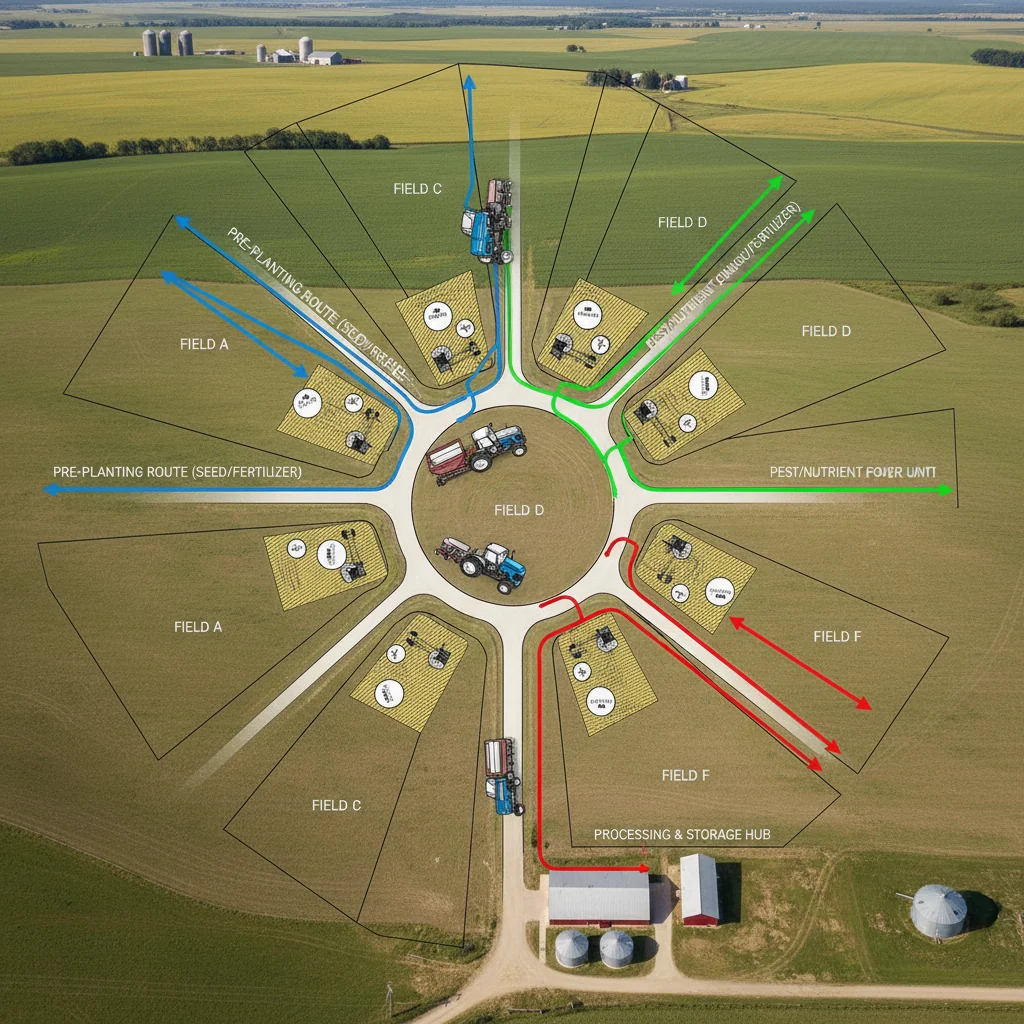
Here’s something I notice on a lot of farms, especially in places like northern Kazakhstan or rural Peru: the way you organize your yard and storage can make a bigger difference than you think. For example, a distributor I worked with in Kazakhstan used to keep seed and fertilizer in a shed 400 meters from the main field gate. Every time they needed to load up, their 80HP tractor spent 30 minutes just shuttling back and forth. When they moved the supplies closer and set up a simple loading zone with enough space for both trucks and wagons, loading times dropped sharply. Suddenly, that same tractor finished field prep a day earlier—and they didn’t feel pressure to buy another machine.
I’ve seen another common issue where tractors get stuck doing stationary jobs—like running an auger, or powering a water pump through the PTO. In Bolivia, a customer switched to using a small electric motor for their grain auger. That freed up their 60HP tractor for planting and hauling instead of idling by the silo. The result? They got more work done with one tractor, and cut their diesel costs noticeably.
Good route planning also matters. On scattered fields in Kenya, I’ve helped farms combine spraying and fertilizer drops in a single trip. That way, the tractor spends less time on the road and more time working. My advice is to review your farm layout and logistics before thinking about a second tractor. Often, you can manage with fewer machines just by cutting down wasted movements and using the right stationary power where possible.
Strategically placing storage areas for seeds and fertilizer near field entrances can reduce the total operating hours required from a tractor during busy seasons.True
This is true because minimizing travel distance for loading and unloading reduces the time tractors spend on non-productive transport tasks, freeing them up for actual fieldwork.
A farm’s layout has no significant impact on how many tractors are needed, since field operations always take the most time regardless of storage placement.False
This is false because inefficient layouts can force tractors to spend excessive time on logistical tasks like shuttling supplies, increasing machine requirements. Efficient layouts can streamline operations and reduce the need for multiple tractors.
Key takeaway: Optimizing farm yard design, storage location, and work logistics enables smaller farms to maximize tractor productivity. By reducing wasted movements and using alternative power sources for stationary tasks, many operations can manage effectively with fewer tractors, cutting unnecessary costs and boosting operational efficiency.
What are safe limits for overloaded tractors?
When one tractor handles multiple tasks, exceeding safe load or operational limits increases risk and costs. Trailer weight should not exceed 1.5–2 times tractor weight, with adequate brakes required. Avoid heavy loads on steep slopes. Never remove ROPS or cabs for clearance; instead, modify sheds. Rotate operators every 4–6 hours to prevent fatigue-related accidents.
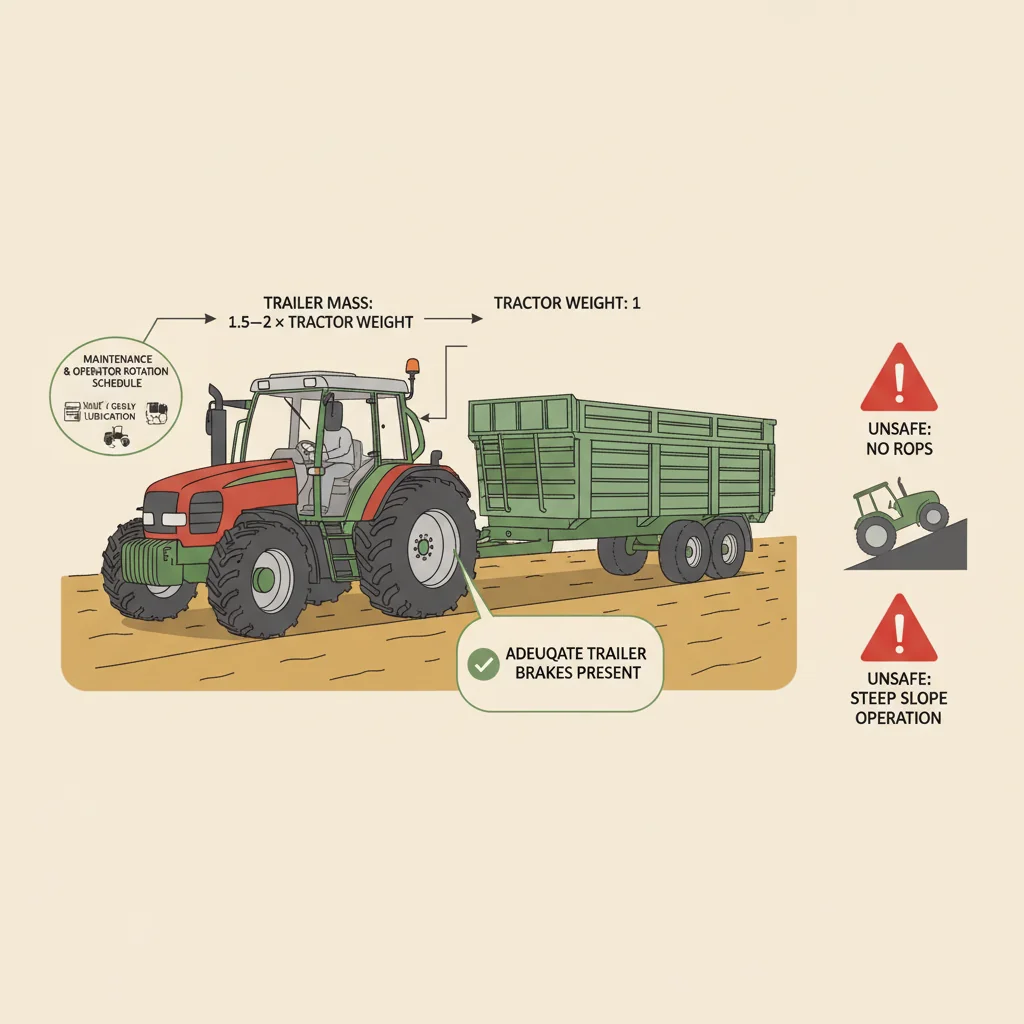
One thing I see all over—especially on small farms in Africa and Central Asia—is a single tractor doing every job. It hauls harvests, plows, and moves bricks, often in the same day. The temptation is always to push for “one more load” to save a trip. But the risk climbs fast. A typical 75HP 4WD tractor weighs around 3,000 kg. If you’re pulling a trailer, keep the total loaded weight to 4,500–6,000 kg. Anything above that, especially without proper trailer brakes, makes stopping dangerous—especially on wet or uneven roads.
Last season in Bolivia, a customer overloaded his 90HP tractor with nearly 8,000 kg of maize on a steep gravel track. The tractor’s brakes faded, and he lost control. The repair costs alone set him back almost two months’ profit. From my experience, steep slopes and heavy trailers are a bad mix. If you have to climb hills, split the load or use a second trip. It’s far cheaper than downtime or a rollover.
I always remind operators—never remove the ROPS (that’s the roll-over protective structure) or the cab just to fit into a low shed. In Kazakhstan, a farm cut off their cabs to squeeze into an old storage barn. That’s not the place to save money. Modify the building instead. During peak harvests, rotate drivers every 4–6 hours. Fatigue turns simple mistakes into serious accidents—PTO entanglements and rollovers happen when people are tired. Setting these limits means you get more years—and safer hours—from your tractor.
Overloading a tractor beyond its recommended trailer weight limit can significantly reduce braking effectiveness, especially if the trailer is not equipped with its own brakes.True
A tractor's braking system is designed for a specific maximum weight. Exceeding this load, particularly when the trailer lacks independent brakes, increases stopping distances and can lead to dangerous situations on sloped or uneven terrain.
Smaller tractors can safely handle heavier loads than larger tractors because they are more maneuverable and have lower ground pressure.False
Maneuverability and ground pressure do not compensate for the mechanical and safety limitations imposed by overloading. Smaller tractors have lower weight and power ratings, making them less capable of safely towing or carrying heavy loads compared to larger models.
Key takeaway: Overloading tractors or operators leads to accidents and costly downtime. Set clear limits: follow safe trailer weight ratios, maintain ROPS/cab integrity, and enforce rest periods during peak use. These habits enable small farms to run fewer tractors safely and efficiently.
Conclusion
We've looked at how smaller farms can decide if one tractor is enough by checking peak workload timing, weather windows, and true field capacity—not just averages. From my experience, the farms that run smoothly are the ones that plan for bottlenecks, not just daily routines. I’ve seen too many buyers focus only on upfront price and end up caught in “parts roulette” when something breaks at the busiest time. If you want help matching tractor size to your farm’s real needs, or have questions about attachments and local support, feel free to reach out. Every farm is different—choose what actually works for your conditions.
References
-
Understanding weather windows is crucial for timely planting and harvesting, preventing yield loss due to delays or rain. ↩
-
Explore how combining a main 70–100 hp tractor with a smaller utility tractor optimizes workload and reduces costs on small to mid-sized farms. ↩
-
Explains how shuttle transmission enables quick forward-reverse shifts, boosting productivity and reducing operator fatigue during repetitive tasks. ↩
-
Details how dual-speed PTO enhances tractor versatility and power delivery, optimizing performance for various farm operations and implements. ↩
-
Explore how combining tillage and seeding in one pass saves time and fuel, boosting tractor productivity on small farms. ↩
-
Details how planning the order of field tasks minimizes fuel waste and downtime, enhancing overall farm productivity. ↩
-
Explains how fixed costs impact tractor ownership economics, helping farmers decide when renting is more cost-effective. ↩
-
Explore how compact and mid-size tractors improve fuel efficiency and ease of maintenance, ideal for single-tractor farms. ↩
-
Explains how axle load affects soil health and compaction depth, crucial for sustainable farming and equipment selection. ↩
-
Details the benefits of reduced tillage practices in maintaining soil drainage, root growth, and long-term farm productivity. ↩
-
Explore how cold storage reduces post-harvest losses by 30%, preserving crop quality and extending marketing windows for small farms. ↩
-
Learn how high tunnels extend growing seasons, reduce weather risks, and improve farm productivity with expert case studies. ↩
-
Explore how optimizing farm layout can cut tractor idle time and delay costly equipment purchases with real-world examples. ↩
-
Learn how using stationary power for augers frees tractors for high-value tasks and reduces diesel costs on farms. ↩