Skip to content
What Comfort Features Matter Most in a Farm Tractor? Field Guide for Buyers
Not long ago, I watched a young operator in Ethiopia finish a twelve-hour shift on a basic 80HP tractor—he looked more worn out than the machine. He told me the rough ride and stiff clutch were harder than the actual fieldwork. That conversation stuck with me.
Operator comfort in farm tractors is a measurable factor influencing productivity, safety, and long-term health outcomes. Enhanced seat and cab suspension1 systems can decrease vibration and cab rocking by 10–11%, reducing fatigue and minimizing the risk of chronic back injuries. Transmission smoothness and ergonomic control layout2 contribute to less physical strain, especially during repetitive loader work or extended hours. Improvements in visibility, lighting, and power steering3 further reduce operator workload and error rates.
How Does Tractor Comfort Impact Productivity?
Tractor comfort features like advanced cab suspension4 and ergonomic seats5 reduce vibration and cab rocking by about 10–11%, directly lowering operator fatigue over long shifts. Less fatigue improves reaction time, accuracy, and safety, while reducing mistakes. For high-use fleets, investing in comfort yields measurable gains in output and operator retention.
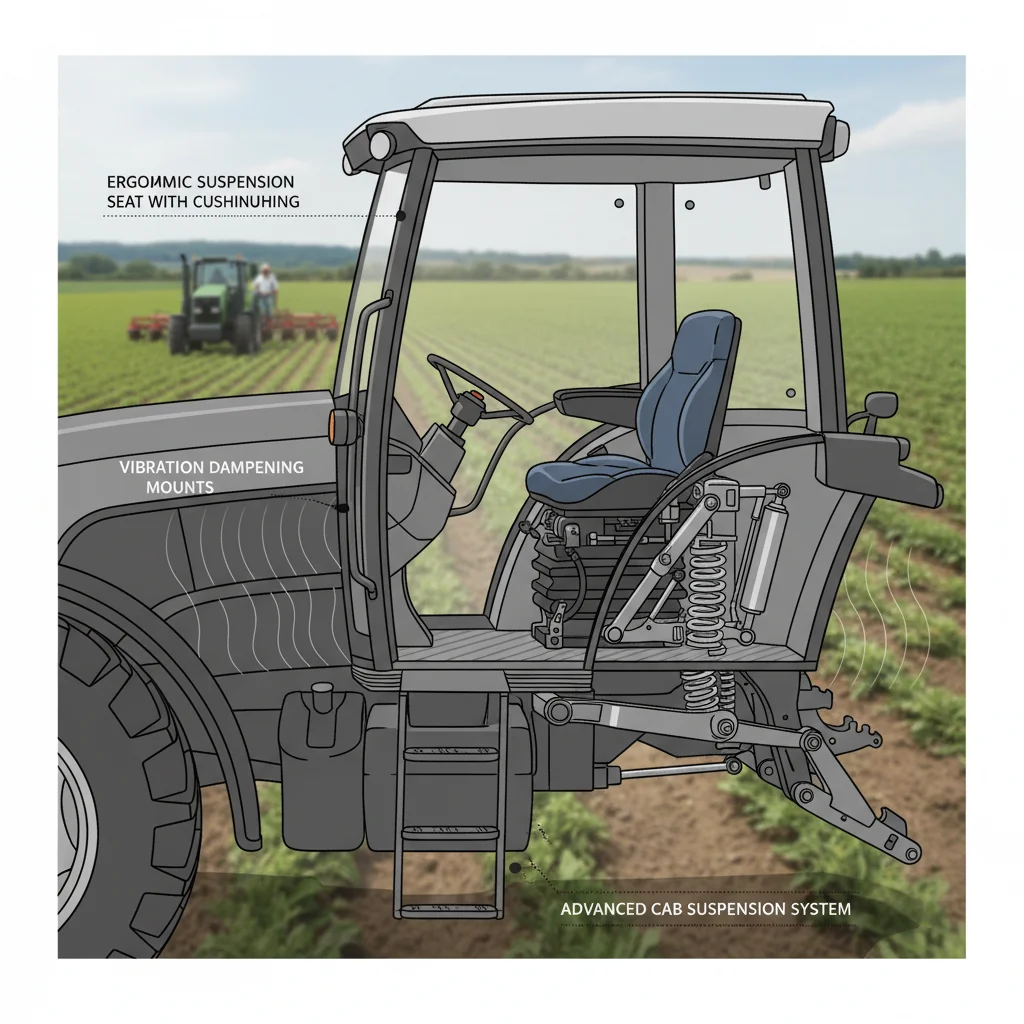
Most people don't realize that comfort features are more than just a luxury—they’re directly tied to how much work gets done in the field. I’ve seen this first-hand on a large farm in Brazil, where operators run 100HP tractors for up to 12 hours a day during peak harvest. When they upgraded to ergonomic seats with better cab suspension, the difference was obvious. Operators reported less back pain and could finish their shifts with fewer breaks. Even a 10% drop in vibration makes a big difference after a long week.
Last year, I worked with a distributor in Kenya who managed a fleet logging over 900 hours per tractor each season. Before investing in upgraded seats and cab dampers, their crew complained about fatigue and lost time to minor injuries. Within a season of making the change, sick days dropped, and their operators handled straight passes and tight turns with more accuracy. The cost for each comfort upgrade was about USD 2,000 per tractor—spread over several years, that’s less than USD 0.35 per working hour. For a fleet manager, that’s a small price if it means fewer mistakes and better operator retention.
Here’s what matters most: when tractors are uncomfortable, operators slow down, cut corners, and sometimes make costly mistakes. I always suggest thinking about comfort as a productivity tool, not just an extra. If a small investment in a better seat or cab helps your best driver stay on the job through peak season, it pays for itself many times over.
Advanced cab suspension systems in modern tractors can significantly reduce operator fatigue by minimizing exposure to continuous vibration during long field operations.True
Continuous vibration from rough terrain can lead to musculoskeletal strain and fatigue. Cab suspension systems absorb much of this shock, leading to improved comfort and allowing operators to work longer and more efficiently with less physical stress.
False
"Maintaining
Key takeaway: Investing in tractor comfort features has proven benefits for productivity, safety, and operator wellbeing. Even modest upgrades can yield significant returns by minimizing fatigue-related errors, reducing sick days, and making it easier to retain skilled operators in high-hour agricultural operations.
Which Tractor Seat and Cab Suspension Matter?
Air-suspension seats7 with adjustable weight range, lumbar support, and armrests significantly reduce operator fatigue and back pain compared to basic mechanical seats. Cab suspension—mechanical or air—further minimizes vibration, especially on rough or uneven ground. Prioritizing quality seat and cab suspension over non-essential features delivers the greatest comfort gains for long hours in the field.
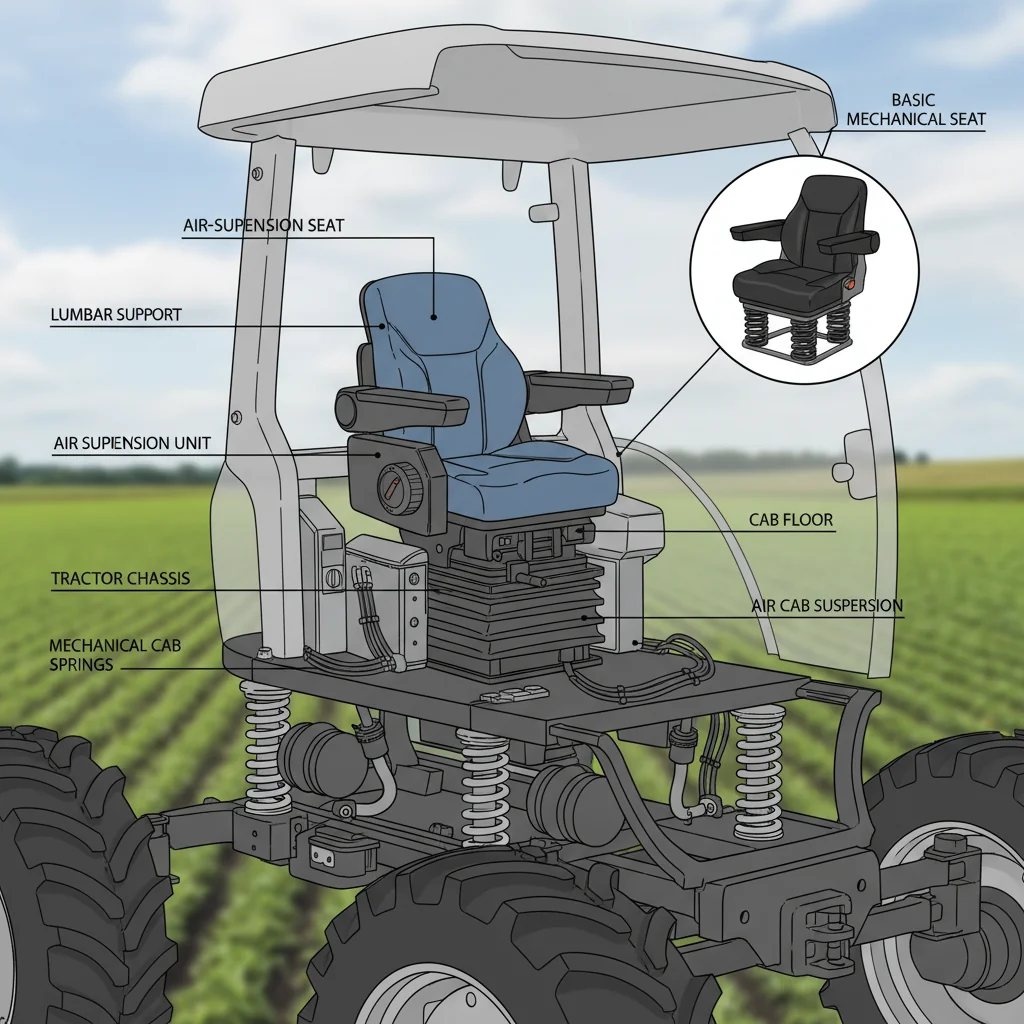
Let me share something important about tractor comfort—seat and cab suspension make a bigger difference than most buyers expect. I’ve seen too many farmers in places like Kenya or Bolivia upgrade from old mechanical seats, only to wonder why they didn’t do it sooner. If you’re driving 8–10 hours on uneven ground, every bump adds up. With a basic mechanical seat, all that shock goes straight to your back and neck. After a full season, chronic pain becomes a real problem. Last year, a distributor in Peru ran side-by-side demos on terraced fields—one 90HP tractor had just a basic seat, the other offered an air-suspension seat and mechanical cab suspension. Operators reported feeling noticeably less fatigue after just four hours in the upgraded cab. The difference wasn’t subtle. The air seat let them adjust for weight (50–130 kg), and the lumbar support kept posture steady on rough ground. Armrests and a fore–aft shock absorber added more stability. The cab’s suspension system reduced overall vibration by about 10–12%, which made long days possible without soreness. Here’s a simple comparison table of common tractor seat and cab suspension options: | Feature | Basic Mechanical | Air Suspension Seat | Cab Suspension (Mech/Air) | |------------------------------|------------------|--------------------|---------------------------| | Weight Adjustment | No | Yes (50–130 kg) | N/A | | Lumbar Support | No | Yes | N/A | | Armrests | Sometimes | Yes | N/A | | Vibration Reduction | Minimal | Moderate | High (up to 11%) | | Comfort on Rough
Air-suspension seats in modern tractor cabs can automatically adjust to the operator’s weight, providing consistent shock absorption and reducing fatigue on rough terrain.True
Air-suspension seats use sensors and compressors to adapt to the operator’s weight and movement, maintaining optimal ride comfort and minimizing the transmission of vibrations and jolts to the driver, which helps reduce long-term fatigue and discomfort.
Cab suspension is only beneficial at high speeds, so it offers little to no advantage for tractors working at low field speeds.False
Even at low speeds, field conditions can cause significant jolts and vibrations. Cab suspension helps isolate the operator from these shocks regardless of speed, improving comfort and reducing the risk of cumulative injury from repeated low-frequency impacts.
Key takeaway: Seat and cab suspension are the most impactful comfort upgrades in modern tractors. Features like air-suspension seats and advanced cab suspension systems reduce vibration and operator fatigue, making them a smarter investment than cosmetic upgrades or marginal horsepower increases, especially for those working long hours on rough terrain.
How Does Transmission Smoothness Affect Comfort?
Transmission and driveline smoothness play a critical role in farm tractor comfort. Jerky gear shifts and harsh direction changes can transmit shocks through the cab, leading to fatigue and back pain. Modern CVT8 and well-tuned powershift systems offer smoother, low-stress operation, while power shuttle levers simplify frequent directional changes during repetitive loader or yard work.
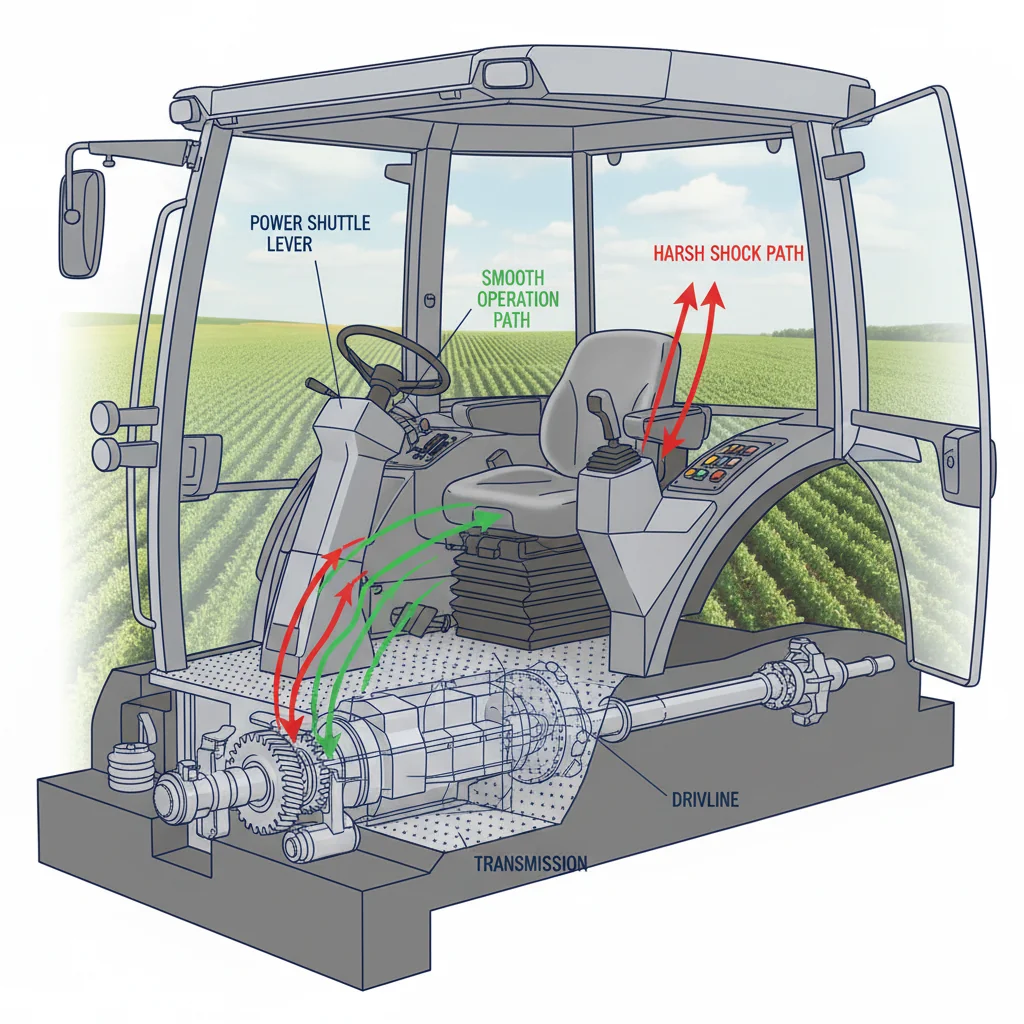
Here's what matters most when you spend long hours in the seat: how the transmission and driveline actually feel, shift after shift, day after day. Too many buyers get distracted by extra cab gadgets but ignore the gearbox. I've seen this lead to real problems, especially on mixed farms in Kazakhstan. One customer there used a 90HP tractor with a basic manual gearbox for loader work—by midday, his team complained about stiff shifts and sore backs. Every gear change sent a jolt through the frame. By the end of the week, the operators were exhausted and less productive.
If you do a lot of loader or yard work—think moving silage or stacking bales—a power shuttle lever9 makes a world of difference. On a mid-sized 75HP unit with power shuttle, you get smooth, clutchless forward and reverse changes right by the steering wheel. I watched a crew in Peru load and transport over 40 tons of material in one day. Their feedback was clear: less fatigue, fewer missed shifts, and faster cycle times compared to the old manual model. The difference showed up in both comfort and output.
For heavier field work, I always suggest looking at semi-powershift or CVT options if your budget allows. CVTs let you adjust speed steplessly—no jerks, just steady acceleration. Even a well-tuned semi-powershift with automatic shifting cuts out clutch work and mental stress. When you test a tractor, try repeated shifts and direction changes at working speeds. Pay attention to how your body feels after 30 minutes. I always tell buyers: smooth transmission beats fancy cab extras every time.
Tractors equipped with powershift or continuously variable transmissions (CVTs) provide noticeably smoother gear changes, which reduces operator fatigue during repetitive tasks like loader work or hay baling.True
Powershift and CVT systems allow for seamless changes between gears without requiring the operator to manually disengage the clutch or experience abrupt torque interruptions. This smoothness helps minimize jolts through the cab and frame, leading to greater comfort during long workdays.
The type of transmission has little impact on overall ride comfort, as most discomfort comes solely from the suspension and seat design.False
While suspension and seat design are important, transmission smoothness directly affects how much vibration and shock the operator feels during gear changes. Rough or abrupt shifting can transmit forces through the cab, leading to discomfort even if the seat is well-cushioned.
Key takeaway: Prioritizing a smooth, responsive transmission system—such as CVT, powershift, or power shuttle—significantly reduces operator fatigue and discomfort during demanding tasks. For buyers, transmission smoothness often matters more for daily comfort than less critical cab features, especially when frequent direction changes or transport work are involved.
How Do Tractor Controls Reduce Operator Fatigue?
Ergonomic control layout and power steering are critical for minimizing operator fatigue in farm tractors. Modern designs cluster key controls—like loader joysticks and hydraulic levers—within easy reach, reducing repetitive stretching. Power steering and power shuttle transmissions further lessen arm, shoulder, and leg strain, especially during frequent loader work and tight maneuvers.
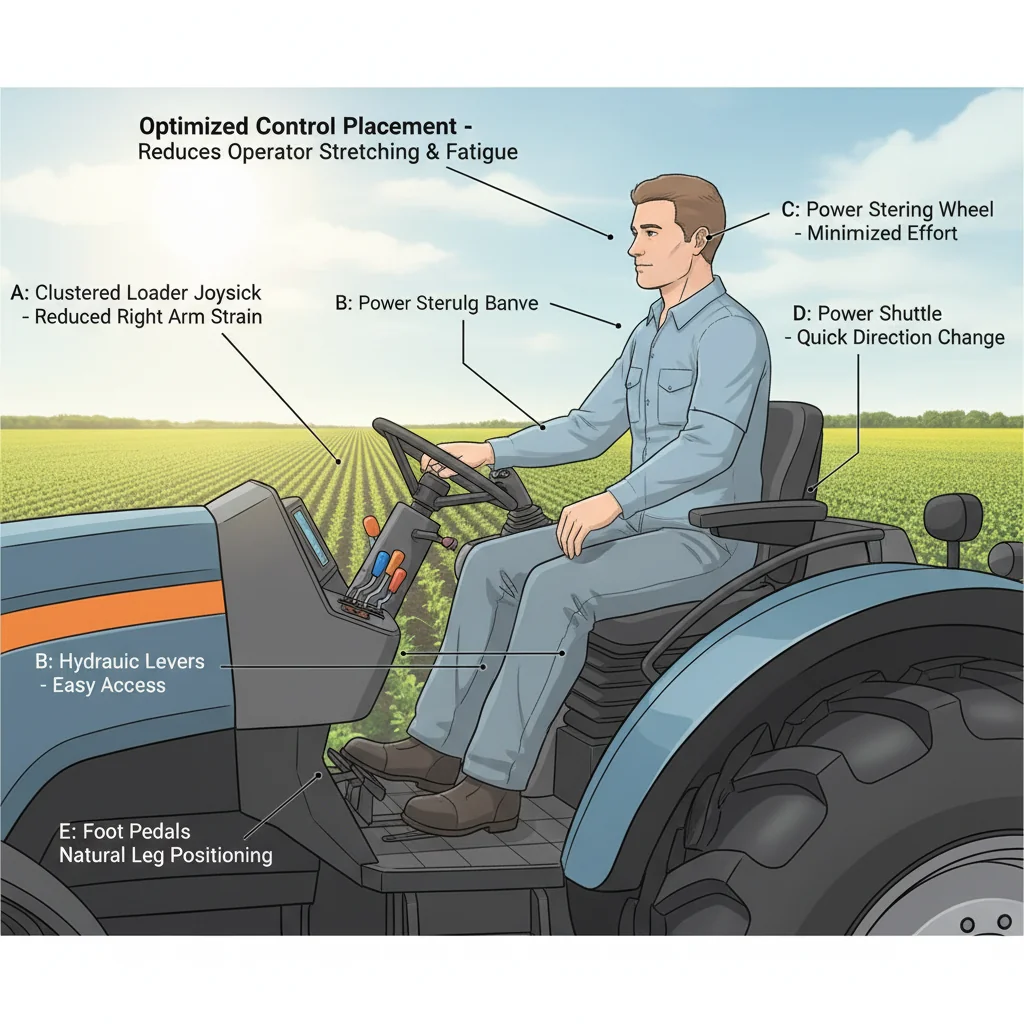
The biggest mistake I see is farmers judging tractors by horsepower alone, then realizing too late that clumsy controls and heavy steering wear them out faster than the fieldwork itself. I’ve seen this in Peru, where a client upgraded their fleet to 80HP units expecting higher productivity. What actually happened? Their operators complained about sore shoulders and knees after long loader shifts—simply because the hydraulic levers and shuttle were awkwardly placed. Instead of working efficiently, they wasted time stretching for controls and fighting stiff steering.
To be honest, the spec that actually matters is how the controls feel after a real day’s work. Modern layouts cluster loader joysticks, hydraulic levers, and transmission shuttles near the armrest, so your hand stays relaxed, not constantly reaching. Power steering isn’t just a luxury—it’s essential for loader work and tight yard maneuvers. In Kazakhstan, I visited a wheat farm using older models without power steering. The operators were strong, but after ten hours, their arms were done. When they switched to a 90HP tractor with power steering and a power shuttle, loader cycles became smoother, and left-leg fatigue dropped since they didn’t have to clutch every time they changed direction.
Here’s what matters most when choosing a tractor for long shifts: try the layout yourself before buying. Sit in the seat, simulate 30 loader cycles with tight turns. Notice where your hands and feet go—do you have to twist or stretch? I always suggest prioritizing ergonomic controls and steering comfort over fancy interiors. Your body will thank you after a full season in the cab.
Ergonomically placed shuttle and hydraulic controls in modern tractors can significantly reduce repetitive strain injuries among operators during long shifts.True
When controls are within easy reach and designed for natural hand movement, operators exert less effort and maintain better posture, lowering the risk of musculoskeletal problems compared to poorly designed layouts.
Tractor seat cushioning alone is sufficient to prevent operator fatigue during long hours of loader work.False
While good seat cushioning improves comfort, it is not enough by itself; factors like control placement, steering effort, and vibration reduction are also critical to minimizing fatigue during extended operation.
Key takeaway: Tractors with ergonomically grouped controls and advanced steering systems greatly reduce operator fatigue, particularly during repetitive loader work or in confined spaces. Buyers should test control layout and steering feel during demonstrations to ensure comfort and efficiency over long working hours.
How Do Visibility and Lighting Affect Tractor Comfort?
Enhanced visibility and effective LED lighting10 significantly reduce operator fatigue and mental strain during long hours and precision farming tasks. Panoramic windscreens11, narrow pillars, and strategic light placement help monitor implements and surroundings, while quality mirrors and wipers support safety—especially in low-light or adverse weather conditions.
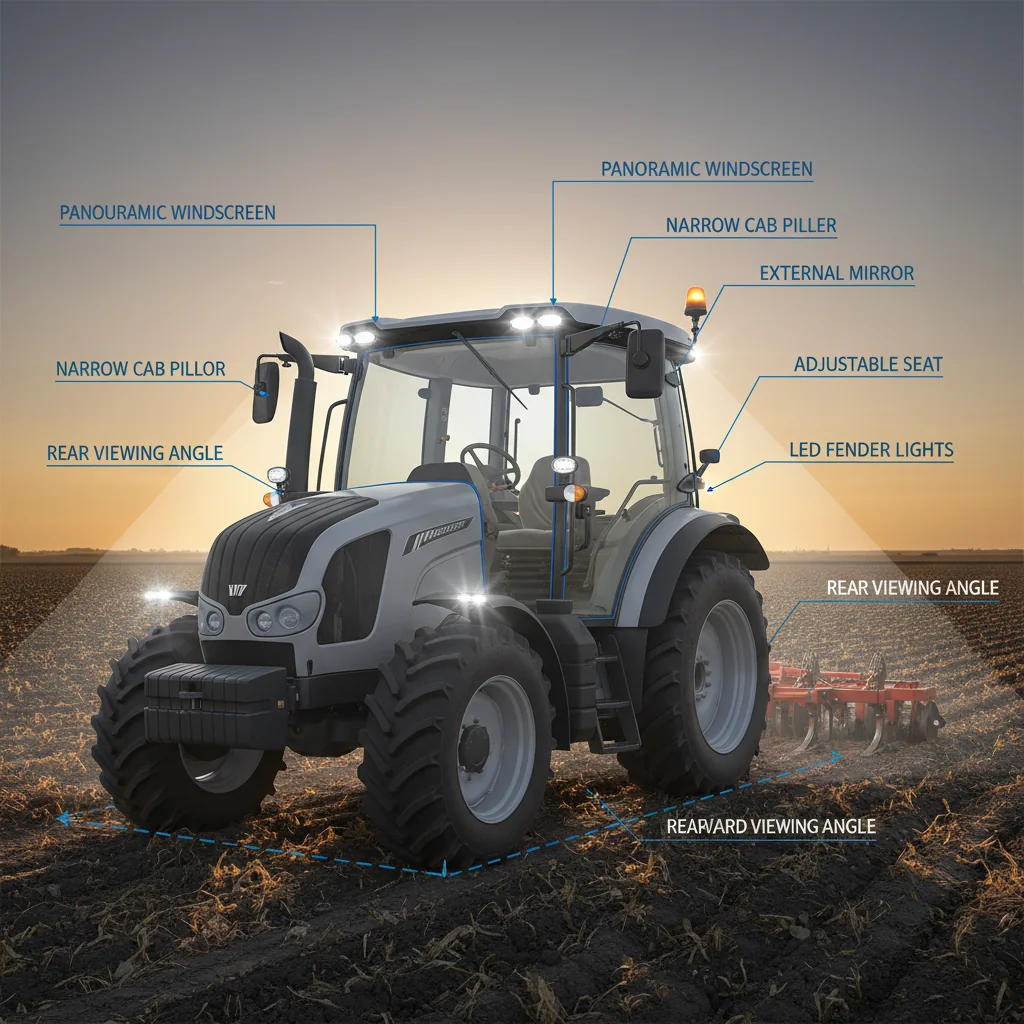
I've worked with customers who made this mistake—choosing a tractor based on engine specs, then realizing visibility and lighting were never up to the job. One case in Bolivia stands out. The farm ran a 95HP 4WD tractor for night spraying and early-morning seeding, but the operator kept missing sections and bumping into irrigation lines. The problem? Thick cab pillars blocked sightlines, and the work lights only lit up the hood, not the actual implement. The operator was exhausted after just a few hours, always craning his neck or leaning forward to see.
From my experience, good visibility does more for operator comfort than air conditioning or fancy seats. Wide windscreens, narrow pillars, and a low front hood let you check your loader bucket, see the edge of your mower, and keep an eye on traffic when crossing roads. In Kazakhstan, one client had a 120HP tractor with panoramic glass and mid-height LED lights—he told me his team could bale hay well after sunset without missing a windrow. That setup saved them at least two full working days during the busy season.
To be honest, mirrors and wipers are often overlooked. I always suggest sitting in the cab and checking if you can see your rear implement and front hitch, especially in rain or dust. Are there blind spots? Does the wiper clear enough area? If you work long hours or after dark, prioritize a well-designed lighting package with LEDs on the cab corners and mid-level. That small upgrade can mean the difference between a safe, comfortable shift and a frustrating, tiring day.
Cab pillar design can significantly impact an operator’s ability to monitor both the implement and obstacles, especially during low-light fieldwork.True
Thick or poorly placed cab pillars can create blind spots, making it difficult for operators to see implements or spot hazards during operations like night spraying or early-morning seeding, which increases fatigue and the risk of missed work areas or collisions.
Adding extra work lights to a tractor always ensures perfect visibility of both the field and attached implements, regardless of cab design.False
Even with additional lighting, poor cab design with obstructive pillars or improperly positioned lights can still limit sightlines and leave shadowed areas, meaning visibility may not be fully improved just by increasing light output.
Key takeaway: Prioritizing advanced visibility features and well-designed lighting in a farm tractor directly improves comfort and safety, especially during extended operations, night work, or in challenging environments. Buyers should inspect sightlines, lighting placement, and mirror quality to minimize blind spots and operator strain.
Is Climate Control Worth It in Tractors?
Advanced climate control in farm tractors is vital for operator health and productivity, especially in extreme temperatures. Effective air conditioning maintains cab temperatures below 26 °C even when it’s 35 °C outside, while robust heating and fast defogging are essential for winter and early mornings. Proper vent placement and filtration12 further boost comfort and air quality.
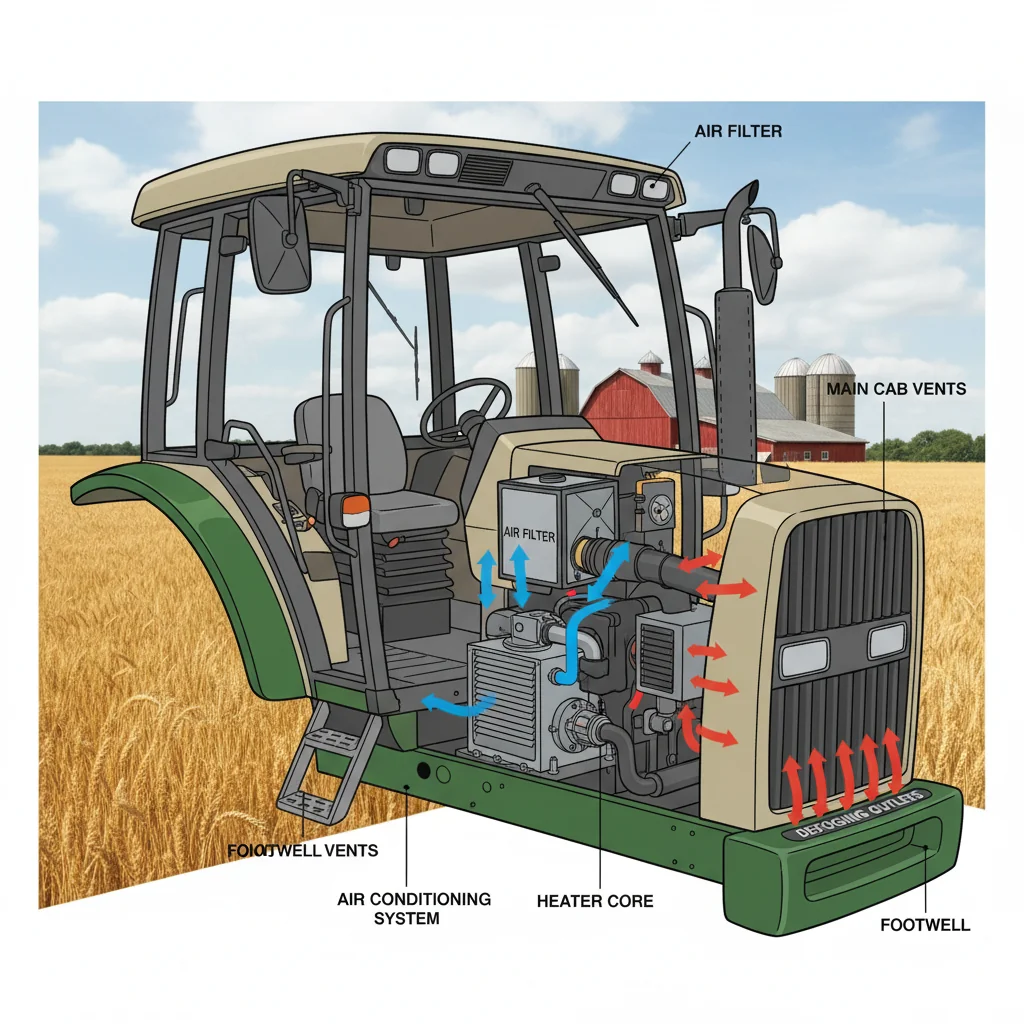
Last month, a contractor in southern Kazakhstan asked me if climate control was just an expensive extra. I get this question a lot, especially from buyers trying to keep costs low. The reality is, in places where summer hits 35 °C or more, a weak air conditioner turns the cab into an oven by midday. I’ve seen operators in Brazil lose focus and even make mistakes after hours in a stuffy cab—productivity drops and safety risks climb. A solid A/C system keeps cab temps under 26 °C, even during fieldwork with the windows closed and dust swirling outside.
From my experience, the real test is not just cooling, but how well the system handles dust and humidity. In Kenya, one distributor told me their 90HP tractors with poor filtration needed constant filter changes—every 200-250 hours—because fine dust clogged the evaporator and reduced cooling power. Multi-stage filters last longer and keep air cleaner, which matters when you’re working during dry harvests or spraying. Good vent placement—aimed at both your upper body and feet—makes a long day much more bearable. If you’re running light implements at low RPM, check if the A/C still performs; some cheaper systems lose cooling when the engine idles.
I always suggest looking beyond just “does it have A/C?” Instead, ask about heating, fast defogging for cold mornings, and how easy it is to access and clean filters. For contractor fleets or large farms, a comfortable cab means less operator turnover and longer workable hours. In tough climates, climate control isn’t a luxury—it’s a tool for keeping your team healthy and productive.
Modern tractor climate control systems often include both air filtration and humidity control features, which help reduce operator fatigue by maintaining consistent air quality and comfort during long field hours.True
Besides cooling, advanced climate control systems filter dust and regulate humidity. This minimizes exposure to airborne particles and prevents dehydration, both of which can impact alertness and health over a full workday.
Tractor climate control is only necessary for operators working in tropical climates and offers little benefit in temperate regions.False
Even in temperate regions, tractors can become uncomfortably warm or cold due to sun exposure or changing weather. Climate control improves comfort, focus, and safety regardless of outside temperature, especially during long hours in the cab.
Key takeaway: Investing in reliable climate control systems—featuring efficient A/C, heating, and multi-stage filtration—is essential for maximizing operator comfort, safety, and year-round productivity in modern farm tractors, especially in extreme climates. Regular maintenance of filters and condenser fins preserves system performance in challenging, dusty conditions.
Do auto-steer systems boost operator comfort?
Autoguidance and precision steering systems significantly enhance operator comfort by reducing mental fatigue13 during long, straight-line fieldwork. By automating steering corrections, these technologies allow operators to focus on implement performance and field conditions, minimizing cognitive load. Key comfort benefits include less mental strain, more consistent work quality, and greater willingness to extend working hours.
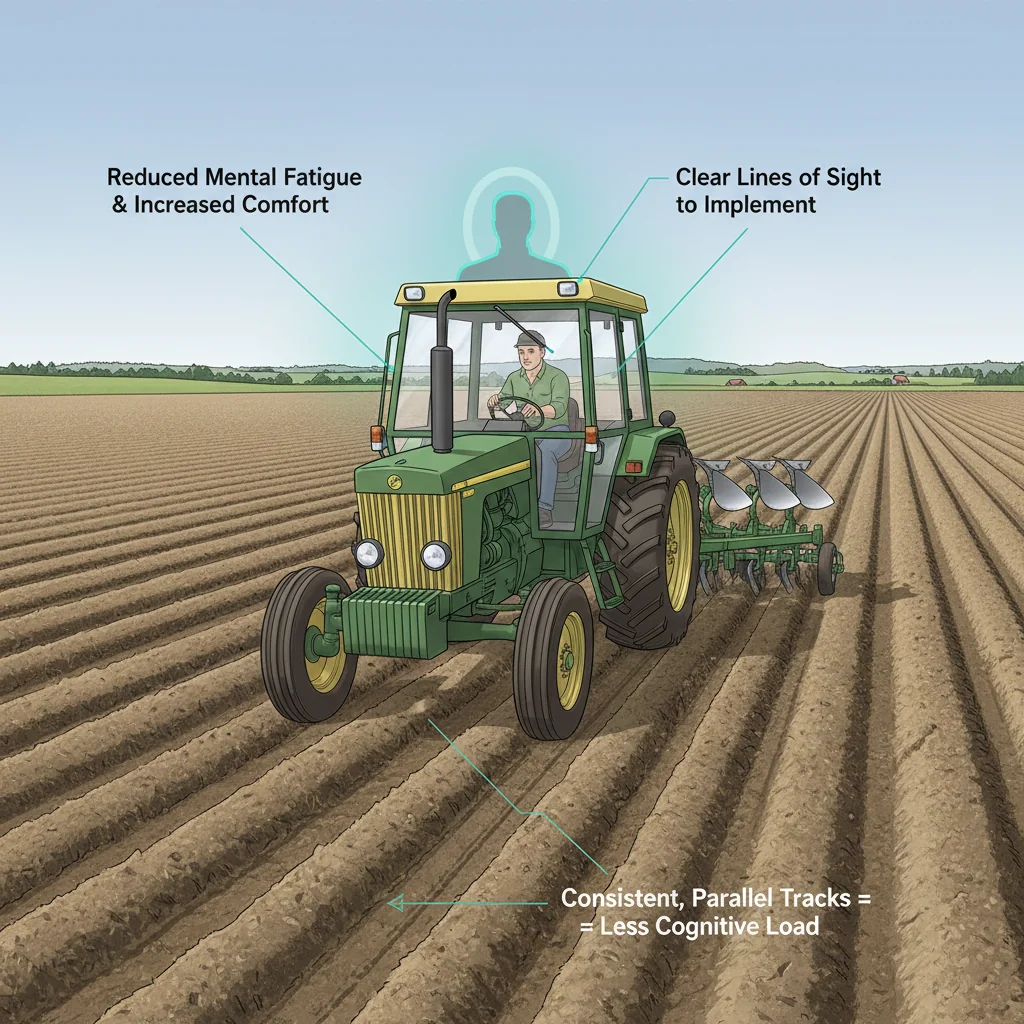
To be honest, the spec that actually matters is how much mental energy you have left after a long day in the field. I’ve seen operators in Kazakhstan covering 100 hectares of wheat, driving straight rows for ten hours at a stretch. Physically, they’re fine—the cab suspension takes care of bumps. But mentally? Holding a perfect line with a 110HP tractor and a 4-meter drill, especially on uneven ground, is exhausting. One customer told me he felt more tired after a day of steering than after swapping heavy implements.
When auto-steer systems are installed—factory-fitted or aftermarket—the difference is obvious. I visited a farm in western Brazil where the owner ran two identical 90HP units on fertilizer spreaders: one with guidance, one without. The operator with auto-steer finished his 60-hectare block less fatigued and was willing to work past sunset. He could monitor the PTO (that’s the power take-off running the spreader) and watch for blocked lines instead of constantly correcting his steering. The other operator needed more breaks just to stay focused.
Even basic auto-steer cuts out the most repetitive mental load. Instead of staring at a marker or straining to keep your front wheels perfectly aligned, you can pay attention to hydraulic pressure, implement settings, and field hazards. For mixed fleets or seasonal hires, it also keeps work quality consistent—no more wavy lines after an inexperienced driver’s shift. I suggest considering auto-steer if you’re logging over 500 hours of straight-line work a year. It’s a comfort upgrade that pays off in real stamina, not just fancy cab design.
Auto-steer systems significantly reduce mental fatigue for operators by automating line-keeping, allowing them to focus on implement performance and field monitoring instead of constant steering corrections.True
Manual steering over long periods requires continuous attention to maintain straight rows, which is mentally taxing, especially in large fields or uneven terrain. Auto-steer reduces cognitive load by handling the repetitive task of guidance, improving overall comfort and alertness.
Auto-steer systems eliminate the need for operator attention during field operations, allowing drivers to disengage entirely while the tractor works.False
While auto-steer handles directional control, operators must remain attentive to monitor implements, manage headland turns, respond to hazards, and adjust for unexpected conditions. Complete disengagement is unsafe and not supported by current auto-steer technology.
Key takeaway: Precision guidance and auto-steer systems are not just productivity tools—they are crucial comfort features for long working days. By automating repetitive steering tasks, they reduce operator fatigue and cognitive load, making them a valuable investment for those logging substantial hours in straight-line operations.
How do noise and vibration affect comfort?
Noise and vibration levels in farm tractor cabs directly impact long-term operator comfort and health. Modern cabs target 75–78 dB to minimize hearing loss, while improved seat suspension14 and driveline smoothness reduce fatigue and musculoskeletal strain. Even small increases in dB or vibration can significantly affect operator well-being over years of use.
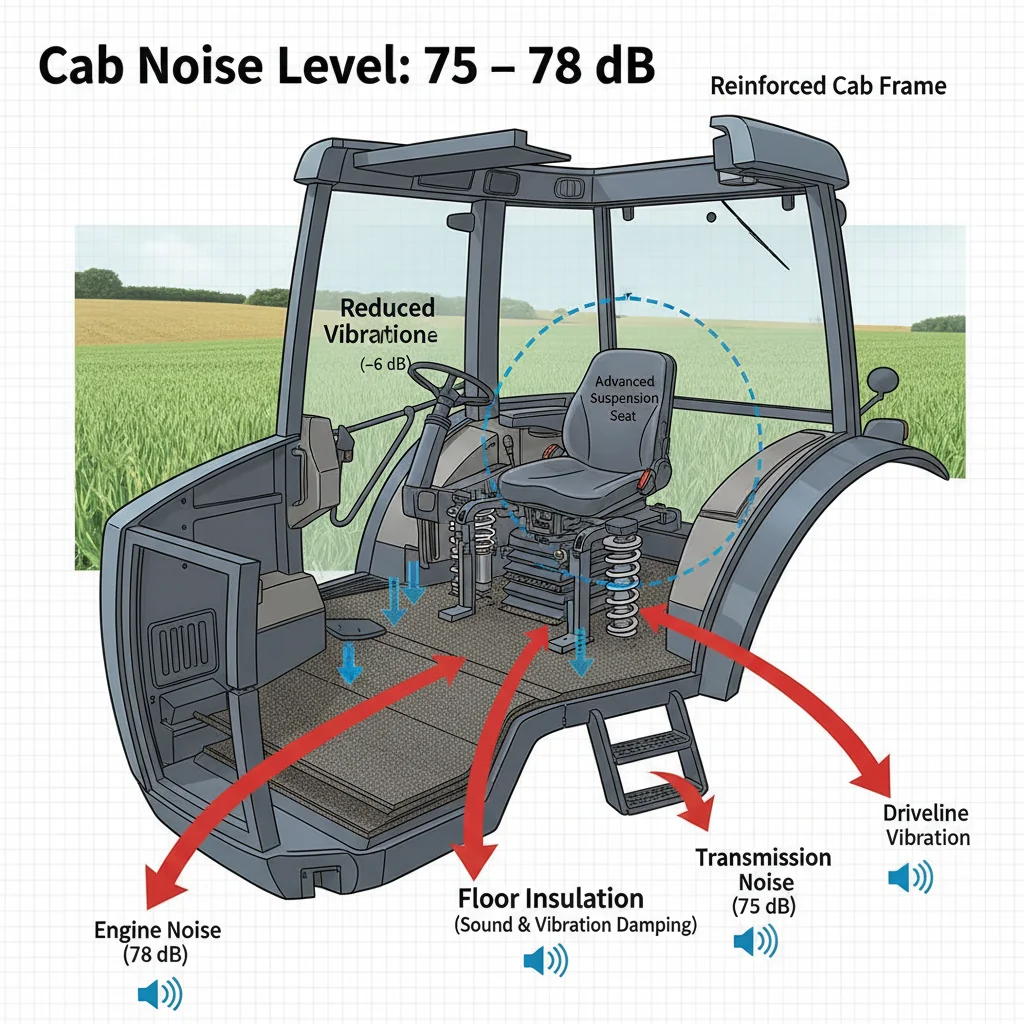
Here’s what many buyers overlook: noise and vibration aren’t just minor annoyances—they shape your entire working day, year after year. I’ve sat in older open tractors in northern Kazakhstan where the cab noise easily topped 90 dB. After a full day, your head rings and your body feels shaken up. In contrast, a modern 90HP 4WD unit with a well-sealed cab can keep noise down near 76 dB at rated engine speed. That might not sound like much, but every 3 dB step actually doubles the sound energy reaching your ears. Over ten years, that difference means your hearing stands a chance.
The vibration side is just as important. Last month, a farmer in southern Peru called me after upgrading from an old 65HP two-wheel drive to a new 75HP four-wheel drive with improved seat suspension. He noticed he could work longer hours—up to 12 per day—without the same back pain or fatigue he used to feel. Good seat suspension, balanced driveline, and softer radial tires all help reduce the constant shaking that leads to sore necks and shoulders. Even a 10% reduction in cab rocking can make a long day feel much shorter.
If you’re comparing tractors, spend time in the cab at the speeds and RPMs you’ll actually use. Try a noise meter app on your phone. Pay attention to seat movement and how your body feels after 20 minutes. I always suggest choosing the quieter and smoother ride—your body will thank you after a few seasons.
Long-term exposure to high vibration levels in tractor cabs can contribute to operator fatigue and even musculoskeletal issues, making vibration isolation a key comfort feature.True
Chronic vibration can lead to cumulative health effects for operators, not just daily discomfort. Modern tractors often use advanced suspension seats and cab mounts to mitigate this, enhancing both comfort and health over time.
Cab noise levels on most modern tractors are mainly determined by the type of tires used, rather than by cab insulation or engine design.False
While tire type can have a minor effect, the primary factors influencing cab noise are engine isolation, cab sealing, and insulation. Modern tractors are engineered to reduce noise from the powertrain and external sources through structural and material design, not just tire choice.
Key takeaway: Excessive noise and vibration in tractor cabs can cause fatigue, hearing loss, and musculoskeletal problems over time. Buyers should prioritize models with quiet cabs and advanced suspension to protect long-term health, especially if planning for decades of operation.
Why Do Steps and Doors Impact Comfort?
Steps, doors, and daily access features directly affect operator comfort and safety, especially for those entering and exiting the cab multiple times per day. Well-designed steps with a 350–380 mm rise, deep anti-slip treads15, and sturdy handrails reduce strain and injury risk, while wide-opening, wind-secure doors enhance usability on diverse terrain.
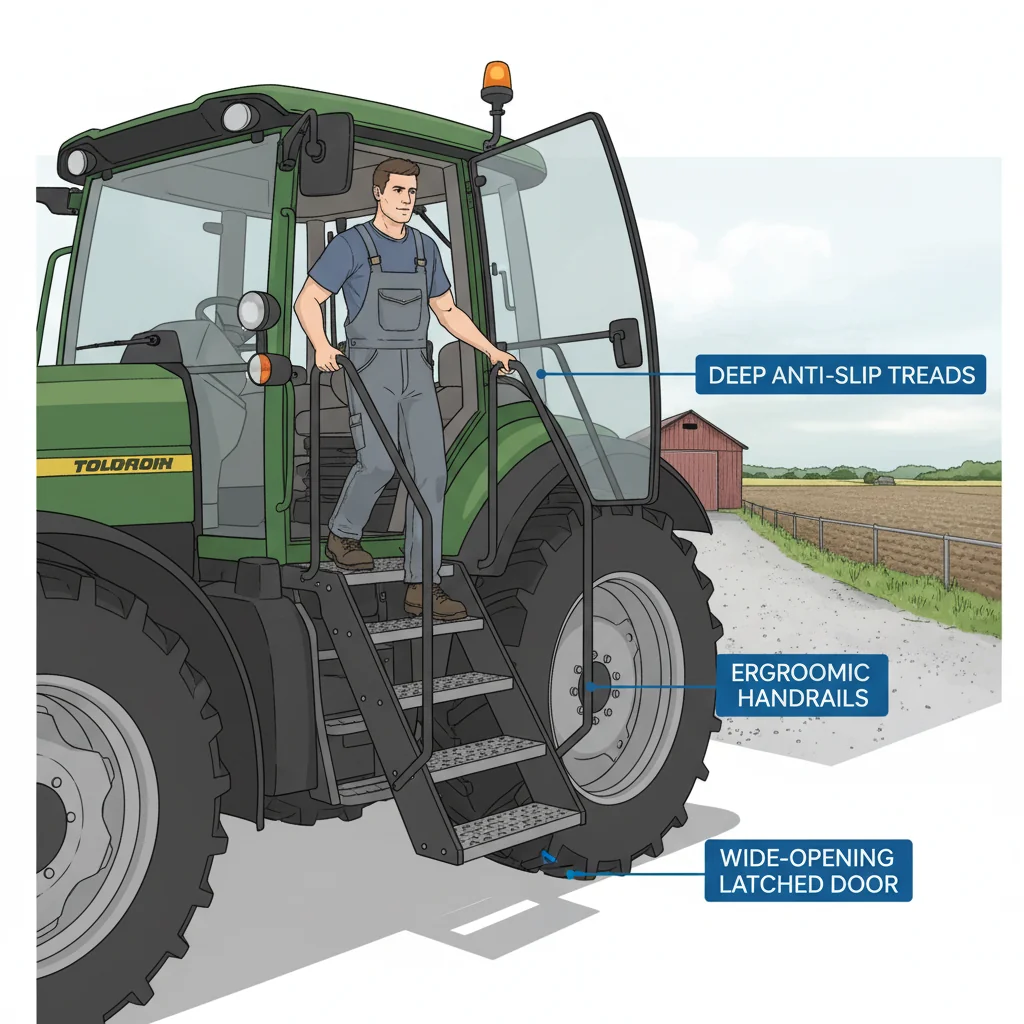
From my experience, buyers often focus on engine specs or lifting power but forget how much strain comes from just getting in and out of the cab. On a maize farm in Peru, I watched a 62-year-old operator climb in and out of a 75HP tractor more than 25 times during a single day of spraying. By the end, his knees were sore—not from fieldwork, but from awkward, narrow steps and a door that slammed shut in the wind. That’s not just uncomfortable; it’s a safety risk, especially on uneven or muddy ground.
The reality is, daily access features matter far more than most people realize. I’ve seen farms in Kazakhstan where a poorly placed bottom step—either too high off the ground or too close to the wheel—made it almost impossible for shorter operators to use the tractor safely. Doors that won’t stay open become a real hazard when you’re working on slopes or in gusty conditions. I always suggest climbing in and out yourself before buying, boots and all.
When you’re comparing models, check these design details:
- Step height16: Look for a rise between 350–380 mm for each step. Too high means more joint strain.
- Tread depth: Deep, anti-slip treads—especially those that grip when wet or muddy—help prevent slips.
- Handrails: Sturdy rails on both sides make a big difference, especially for older or shorter operators.
- Door function: Doors should open wide, latch positively, and stay open in wind. Test this on uneven ground.
Small improvements here can reduce fatigue and injuries. For mixed-age crews or in harsh climates, I recommend prioritizing safe, comfortable access—it pays off every single day.
Wide, non-slip steps and a door that can be secured open are key comfort features that also reduce the risk of operator injury, especially during frequent entry and exit cycles.True
Slippery or narrow steps and doors that swing freely in the wind can cause slips, trips, and strains when operators enter or exit the cab multiple times per day. Features like wide, grippy steps and doors with secure latches directly contribute to both comfort and safety, particularly on uneven or muddy ground.
Cab doors with complex locking mechanisms are preferred because they ensure maximum operator comfort during long workdays.False
Complex locking mechanisms on cab doors can actually hinder operator comfort by making entry and exit more cumbersome, especially when hands are full or gloves are worn. Simpler, ergonomic handles and latches are generally favored for ease of use and operator convenience.
Key takeaway: Thoughtfully designed steps, handrails, and doors significantly reduce daily strain and safety risks for tractor operators—especially those with mobility challenges or working in harsh conditions. Prioritizing these features ensures accessibility, minimizes injury, and supports a wider range of users in demanding field environments.
How Can Tractor Comfort Systems Last Longer?
Tractor comfort features, such as air conditioning and air-suspension seats, require regular maintenance to ensure longevity. Key routines include replacing or cleaning cabin filters17 every 300–500 hours, inspecting seat compressors and air lines, washing condenser fins yearly, and checking cab seals for leaks. Standardized annual checklists help maintain consistent operator comfort and equipment value.
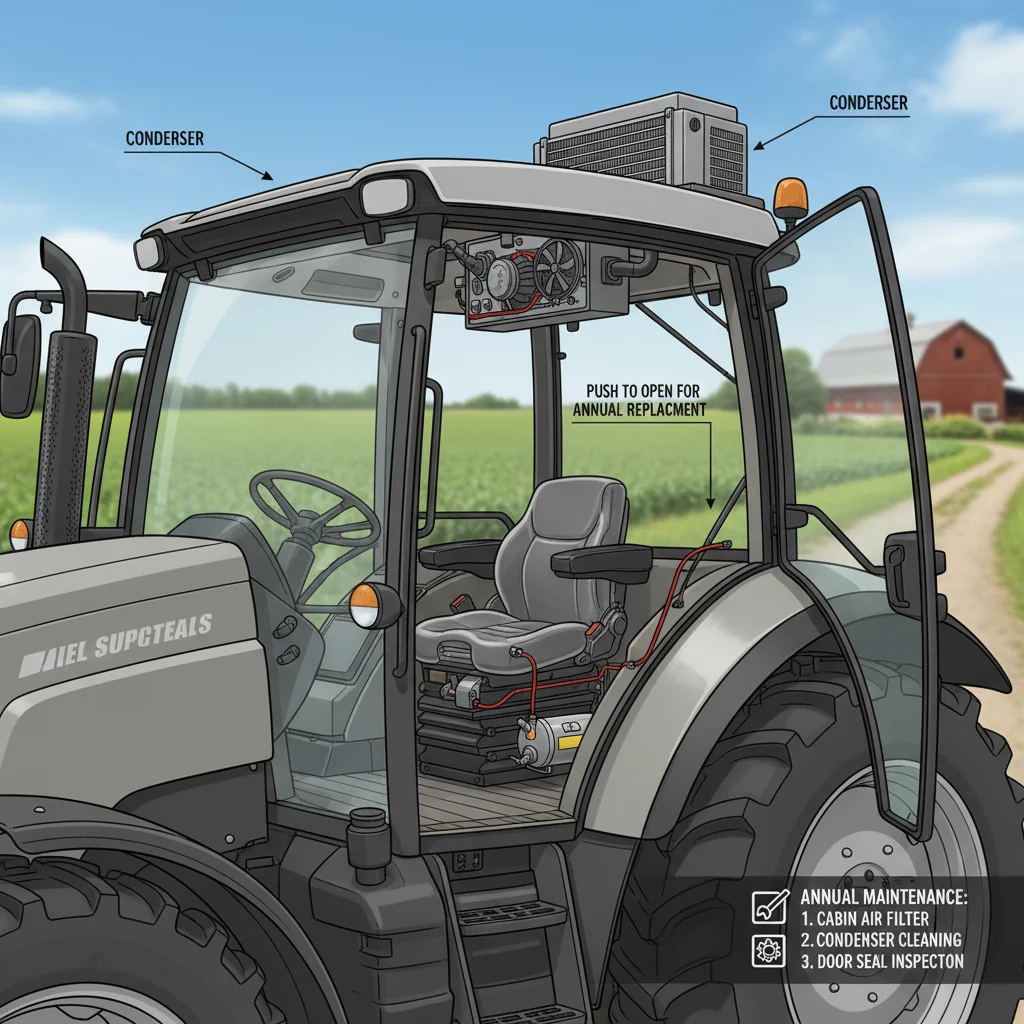
Let me share something important about keeping tractor comfort systems reliable—these features are only as good as the care they get. I’ve seen too many machines in Africa and Central Asia where air conditioning stopped working after just two seasons, simply because nobody touched the cabin filters or cleaned the condenser fins. When filters get clogged in dusty fields, airflow drops fast. The AC struggles, and operators start leaving windows open—dust gets in, seats age faster, and the cab’s value drops. I always recommend replacing or cleaning those filters every 300–500 working hours. In sandy or dry regions like northern Kazakhstan, sometimes even sooner.
One customer in Peru called me after his fleet’s air-suspension seats turned rock-hard in under three years. The cause? Tiny leaks in the seat air lines and a loose compressor mount. On a 95HP 4WD tractor, that seat costs as much as two rear tires—so it’s not a small issue. I suggest checking the seat’s air system once a year: look for leaks or cracking hoses, and tighten all mounts. A little attention here saves real money and keeps operators happy in long shifts.
Don’t forget the small things—cab and door seals seem minor, but they matter. If seals crack or lose shape, noise and dust creep in, making the cab much less comfortable. I’ve found it’s best to wash and lightly lubricate seals during annual maintenance. For larger fleets, build a simple checklist and apply it to every tractor. A few hours each season can make comfort features last, and protect your investment.
Regularly cleaning or replacing cabin air filters helps maintain optimal airflow, which prevents the tractor's air conditioning system from overworking and extends the life of comfort components.True
Cabin air filters trap dust and debris from entering the HVAC system. When these filters are neglected, airflow is restricted, causing the system to work harder, leading to premature wear and possible failure of comfort features.
Using high-pressure water jets to clean the tractor's AC condenser fins is recommended because it ensures all dust and debris are removed without any risk.False
High-pressure water jets can bend or damage the delicate fins of the condenser, reducing cooling efficiency. Gentle cleaning with low-pressure air or water is safer and more effective for maintaining these components.
Key takeaway: Routine maintenance of tractor comfort systems—filters, seats, AC condensers, and cab seals—prevents rapid deterioration and ensures that comfort features deliver long-term operator satisfaction. Annual checklists and consistent attention across fleets protect both machine value and workplace comfort.
How Should Tractor Comfort Be Field-Tested?
Proper tractor comfort testing18 requires a 30-minute demo in actual field conditions, not just a brief drive on a dealer’s lot. Operators should replicate real work speeds, monitor body movement, seat support, steering effort, leg fatigue, cab temperature stability, and noise. Direct comparison with an existing tractor yields the most reliable comfort assessment.
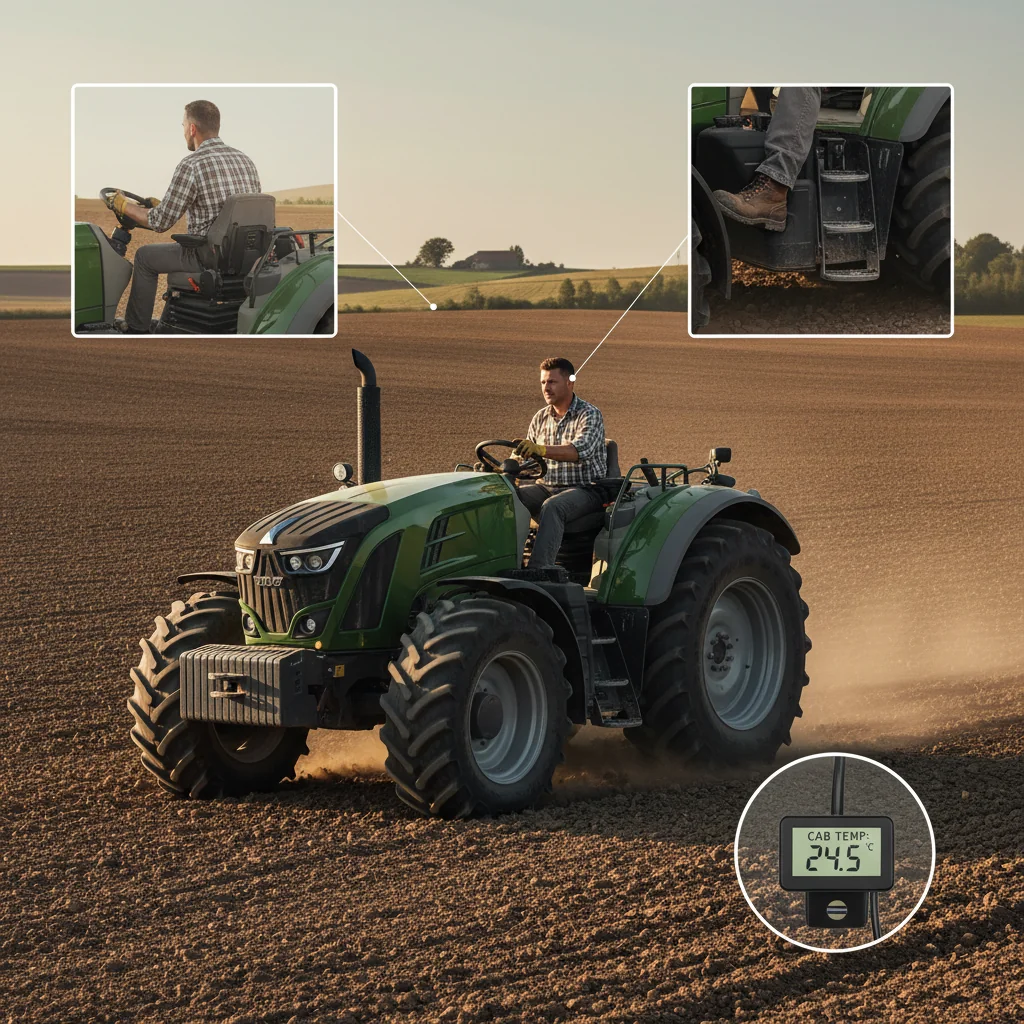
One thing I see too often—farmers make their comfort decision after a quick spin around the dealer yard. That’s not enough. Real comfort only shows itself after working 30 minutes or more in your own fields, with the engine running at normal RPM and implements attached. In Peru, I watched a customer test a new 75HP tractor on soft, uneven ground with a 2-meter disc harrow. After 15 minutes, he noticed his lower back started to ache from the seat bottoming out, and the noise in the cab was louder than his old 60HP model. That would never show up on a five-minute concrete drive.
To get a true feel, you need to run the tractor at your actual working speeds—around 7–8 km/h for tillage or mowing, and up to 20 km/h for transport. Pay attention to your body movement in the seat, how much you twist to check the implement, and whether your legs get tired holding the clutch or brakes. In Kenya, an operator told me his legs cramped quickly on a new model because the clutch pedal was stiffer than what he was used to. Details like these make all the difference after a long day.
I always suggest comparing the new tractor directly with your current one—same field, same implement, same speed. Notice differences in cab temperature stability and steering effort, especially during tight turns. This side-by-side approach reveals which comfort features really matter for your operation. Don’t pay extra for cab suspension or air conditioning unless you feel the improvement yourself. That’s the best way to avoid buying a “showroom hero, field zero.”
Testing tractor comfort with actual field implements attached is more revealing than testing with no load, because implement vibrations and resistance affect seat suspension, cab noise, and ergonomics.True
Using real implements introduces vibrations, jolts, and noise that do not occur during unloaded driving, providing a more accurate assessment of comfort features like seat quality, cab insulation, and control placement.
A tractor that feels comfortable during a short drive in the dealer lot will always be equally comfortable during prolonged field work.False
Short drives on smooth lots rarely expose issues like seat fatigue, control reach, and vibration that become apparent after extended use in real field conditions. True comfort can only be assessed during longer, realistic work sessions.
Key takeaway: A short test drive on concrete does not reflect real-world tractor comfort. A structured, 30-minute field demo at working speeds, with attention to physical strain and cab environment, provides a true measure. Comparing new models to current equipment ensures only necessary comfort features are chosen.
Conclusion
We've looked at which comfort features can really make a difference during long hours in the field. From my experience, it's easy to get distracted by extra gadgets, but basic operator comfort—like seat quality, good ventilation, and thoughtful control layout—matters more than most realize. I’ve seen too many buyers regret skipping these details, especially after a full harvest season. Before making a final decision, I suggest sitting in the cab yourself and asking local farmers how the tractor feels after a long day. If you have questions about which features are worth it for your conditions or want to know what’s worked on other farms, feel free to reach out. Every farm is different—choose what actually works for your needs.
References
-
Learn how mechanical and air cab suspension systems minimize vibration and improve operator comfort on rough terrain with real-world data. ↩
-
Learn how ergonomic control layouts reduce repetitive stretching and fatigue, enhancing operator comfort and productivity in agricultural tasks. ↩
-
Explore how power steering technology minimizes arm and shoulder strain, improving comfort and efficiency during long tractor operations. ↩
-
Explore how advanced cab suspension reduces vibration and fatigue, enhancing operator safety and productivity during long tractor shifts. ↩
-
Learn how ergonomic seats decrease back pain and fatigue, leading to fewer breaks and higher efficiency on farms with long working hours. ↩
-
Explains how effective air conditioning maintains cab temperature and boosts operator productivity in extreme heat conditions. ↩
-
Explore how adjustable air-suspension seats improve comfort and reduce back pain for long tractor operating hours with expert insights. ↩
-
Explore how Continuously Variable Transmissions provide smoother gear shifts and reduce operator fatigue during long tractor operations. ↩
-
Learn how power shuttle levers enable clutchless directional changes, reducing operator fatigue and improving cycle times in farm tasks. ↩
-
Explains how LED lighting enhances visibility during night work, reducing fatigue and improving precision in farming tasks. ↩
-
Details how panoramic windscreens increase sightlines and operator comfort, enabling safer and more efficient tractor operation. ↩
-
Details how multi-stage filtration prevents dust clogging and maintains cooling efficiency during dusty fieldwork. ↩
-
Understand the impact of mental fatigue on operator performance and how precision steering helps maintain focus and reduce strain. ↩
-
Learn how advanced seat suspension systems reduce vibration, musculoskeletal strain, and enable longer working hours with less discomfort. ↩
-
Explains how anti-slip treads enhance operator safety by preventing slips and falls on tractor steps in various weather conditions. ↩
-
Details the optimal step height range to minimize joint strain and improve daily access comfort for tractor operators. ↩
-
Explains the critical maintenance intervals and effects of cabin filter care on tractor AC performance and operator comfort. ↩
-
Explore expert guidelines on conducting effective tractor comfort tests under real working conditions for accurate operator feedback. ↩