Skip to content
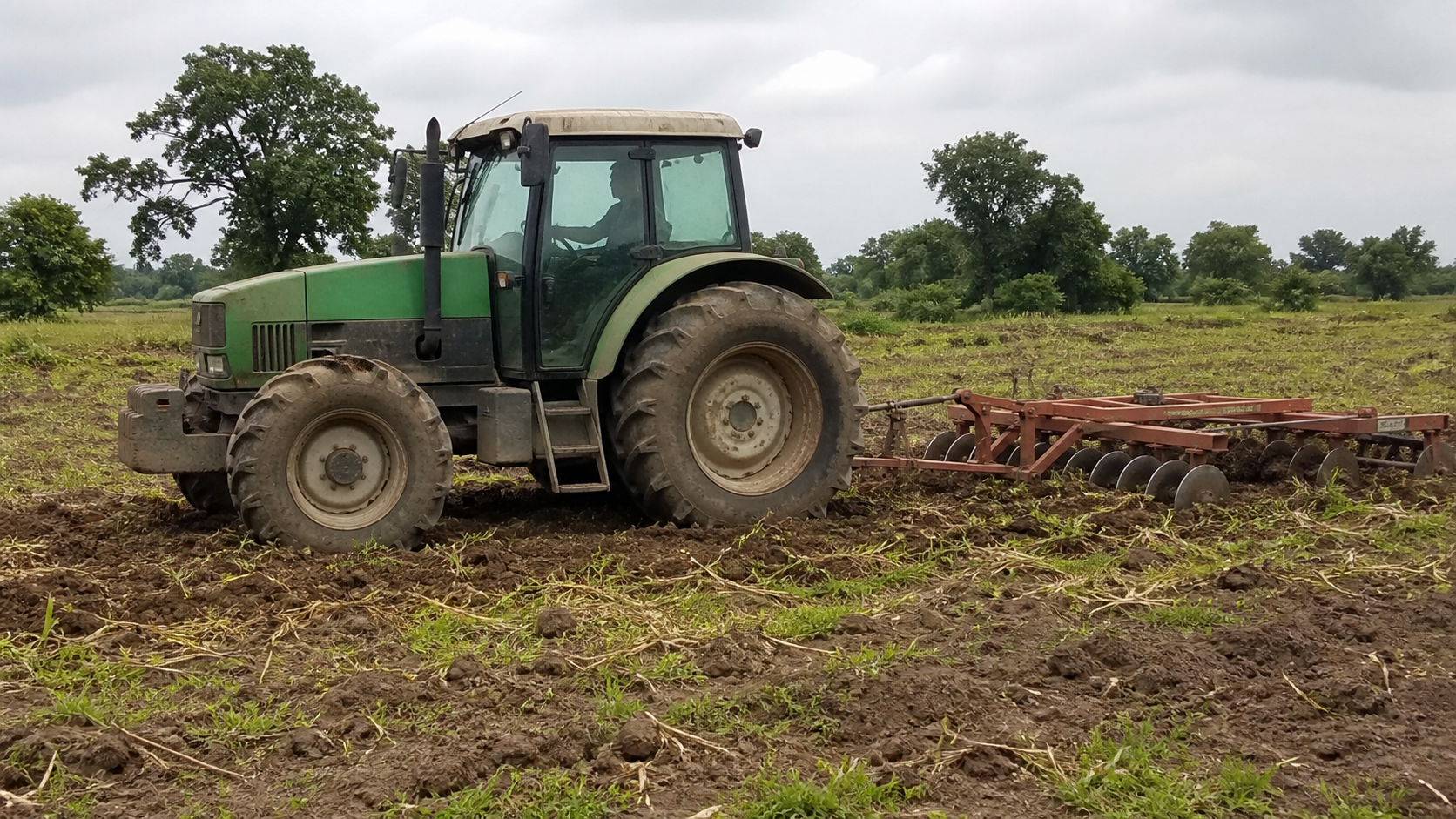
Four-wheel drive (4WD) deserves the strongest consideration when a recurring job combines substantial pulling or load demand with ground or terrain that makes traction—the tire-to-ground grip available for useful forward movement—a real constraint. The supplied industry guides most consistently associate 4WD with deep ploughing and difficult land preparation (5), loader work, slopes, mud, and hauling (1), and heavy loads and hill climbing (4).
That does not make 4WD a universal answer. A task name such as plowing, planting, mowing, or hauling says little until it is combined with the intended depth, load, soil condition, slope, and route. This guide therefore separates two questions: does the work genuinely require more driven-wheel traction, and can the proposed tractor meet every implement and load requirement?
Here, 4WD is used as a broad market-facing term. Before comparing tractors, ask whether a quoted machine is mechanical front-wheel drive (MFWD), also called front-wheel assist, or an equal-wheel or articulated 4WD tractor. Use the documentation for the exact configuration rather than assuming those terms describe identical machines.
For readers in Latin America and Africa, the decision should be based on actual fields, routes, working conditions, loads, implements, parts access, and service options. The supplied evidence does not establish typical crops, soils, farm sizes, costs, or operating conditions for individual countries.
When Does a Task Genuinely Call for 4WD?
Four-wheel drive (4WD) is most relevant when recurring work combines demanding ground engagement or substantial loads with poor traction, slopes, or rough terrain; the task name alone does not establish fit.
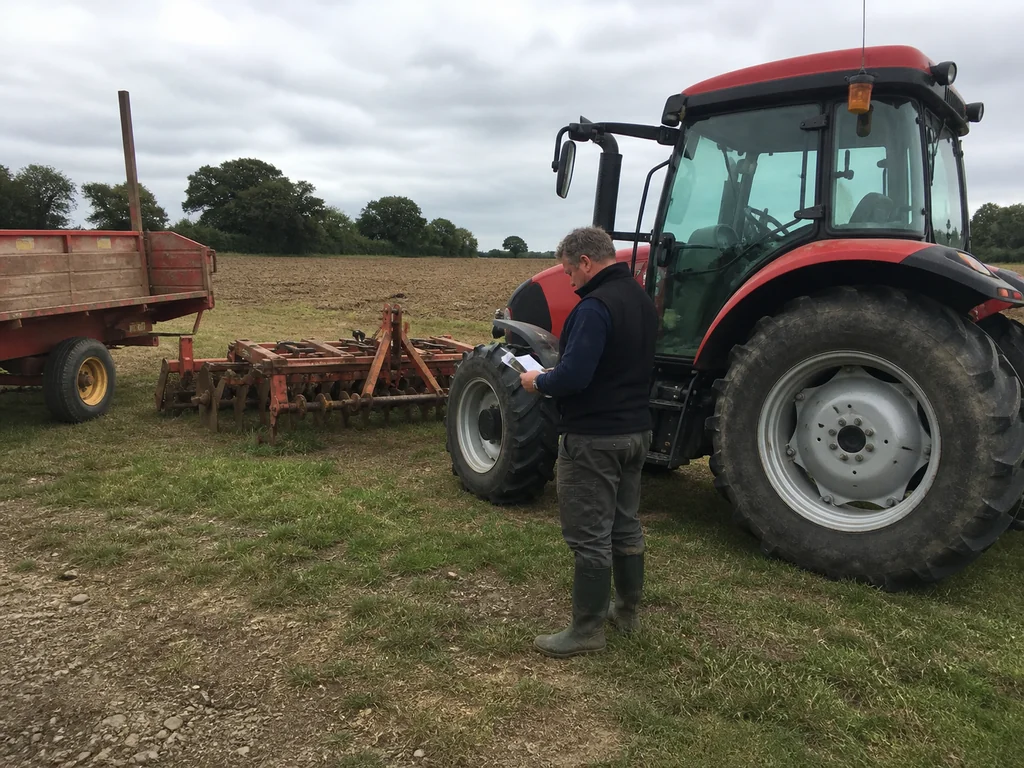
Begin with the task-condition combination. Industry application guides connect 4WD with tillage, loaders, slopes, mud, and hauling1 (1) and with plowing, hauling, and difficult-terrain work2 (2). Their lists make the strongest practical case where an important job repeatedly combines substantial pull or load with difficult footing.
Use four questions to test the fit:
- What must the tractor pull, push, lift, or carry? Record the implement, working depth, material or trailer load, and intended working speed.
- What are the actual operating conditions? Assess the surface when the job must be completed—not only a dry yard or firm dealer lot. Note mud, weak footing, hard-to-work soil, slopes, rough tracks, and field entrances.
- How often does traction constrain the work? A recurring bottleneck is a stronger reason to prioritize 4WD than an unusual event that could be avoided through timing or routing.
- Is traction really the controlling requirement? Engine and implement power, hydraulics, hitch and lift capacity, loader ratings, towing ratings, and braking requirements must be checked separately.
A useful decision rule is:
Recurring demanding task + recurring traction constraint = strong 4WD candidate.
The case is weaker when the evidence consists only of a broad task label such as “mowing” or “planting,” without a repeated traction problem under the farm’s normal conditions.
Prioritize 4WD only when the task and the conditions in which you repeat it create a meaningful traction demand.
Which Tillage Jobs Make the Strongest Case for 4WD?
Heavy or deep tillage and demanding land preparation are leading candidates when ground conditions make traction central to completing the work.
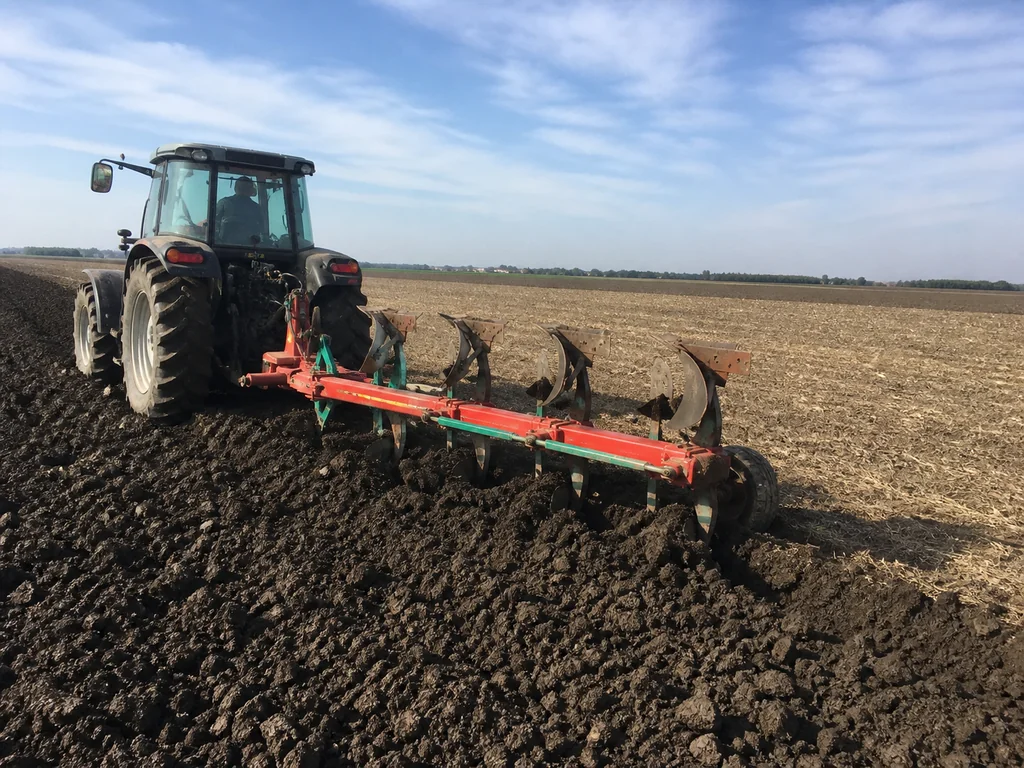
Heavy or deep tillage makes one of the clearest cases for 4WD when the soil and working depth make traction central to completing the pass. The evidence catalog associates 4WD with deep ploughing on wet or hard land3 (5), broader plowing and land preparation2 (2), and tillage in muddy fields1 (1).
| Tillage pattern | Strength of the 4WD case | What to verify |
|---|---|---|
| Deep or heavy plowing in difficult soil | Strong when traction repeatedly limits the pass | Implement width, depth, soil condition, and tractor match |
| Repeated preparation on wet, muddy, or hard-to-work ground | Strong when forward progress is regularly constrained | Field timing, soil suitability, tires, and permitted ballast |
| Difficulty confined to an occasional patch | Conditional | Whether timing, routing, or a different operation resolves it |
| Light, shallow work on firm, level ground | Weaker | Whether a proposed 2WD tractor can repeat the job reliably |
Drive type addresses only the traction part of the problem. It should not be used to conceal insufficient tractor capacity, an oversized implement, or an unsuitable configuration. Ask the supplier to evaluate the complete tractor–implement combination.
Where practical, request a demonstration using a representative working depth, soil condition, travel speed, tire setup, and ballast configuration. A successful pull on a firm surface does not by itself answer how the tractor will perform in the intended field.
Which Ground Conditions Strengthen the 4WD Case?
Wet, muddy, or hard-to-work ground strengthens the case when it repeatedly makes the intended job traction-demanding.
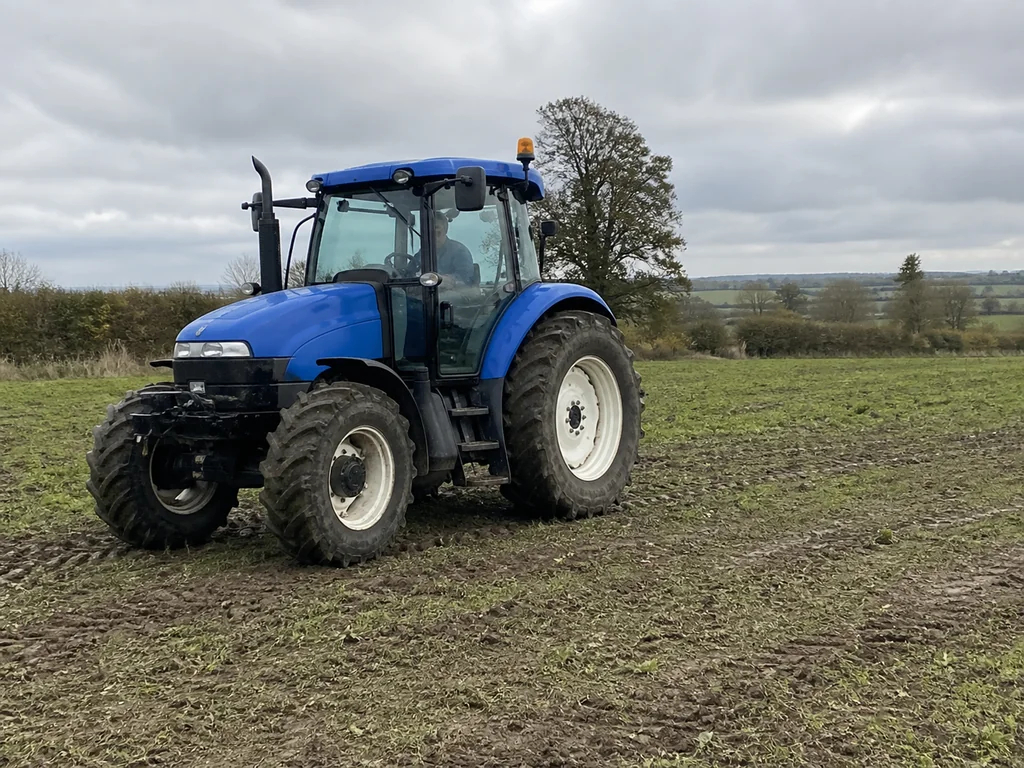
Wet, muddy, and hard-to-work conditions strengthen the 4WD case only when they repeatedly make the intended job traction-demanding. The supplied guidance identifies operation on muddy terrain4 (4), wet or hard land preparation3 (5), and broader muddy-field tractor work1 (1) as relevant applications.
| Actual working condition | Effect on the 4WD case | Practical question |
|---|---|---|
| Wet or muddy field during tillage or loaded travel | Stronger if traction loss is recurring | Must the job occur then, and is the soil suitable for traffic? |
| Hard-to-work soil during deep preparation | Stronger when pulling demand constrains completion | Can the proposed setup maintain the intended depth and speed? |
| Loose or rough route under load | Stronger when mobility is repeatedly affected | What load and surface must the tractor handle routinely? |
| Firm, level surface with light duty | Usually weaker | What specific traction problem would 4WD solve? |
Being able to keep moving is not, by itself, a reason to enter unsuitable wet ground. Field condition, rutting or compaction concerns, axle load, tire selection, approved inflation pressure, and local agronomic guidance still require separate consideration.
Do not substitute a country or regional label for a field assessment. Farms within the same country—and different parts of one farm—can present different routes and working conditions. Record what is present during each important operation and compare the tractor against that evidence.
Base the decision on the soil and surface conditions where you actually work, rather than on regional assumptions or task names alone.
Which Slope and Rough-Terrain Tasks Suit 4WD?
Work on hills, slopes, or rough routes is a stronger fit when the tractor must repeatedly maintain pull or mobility under load.
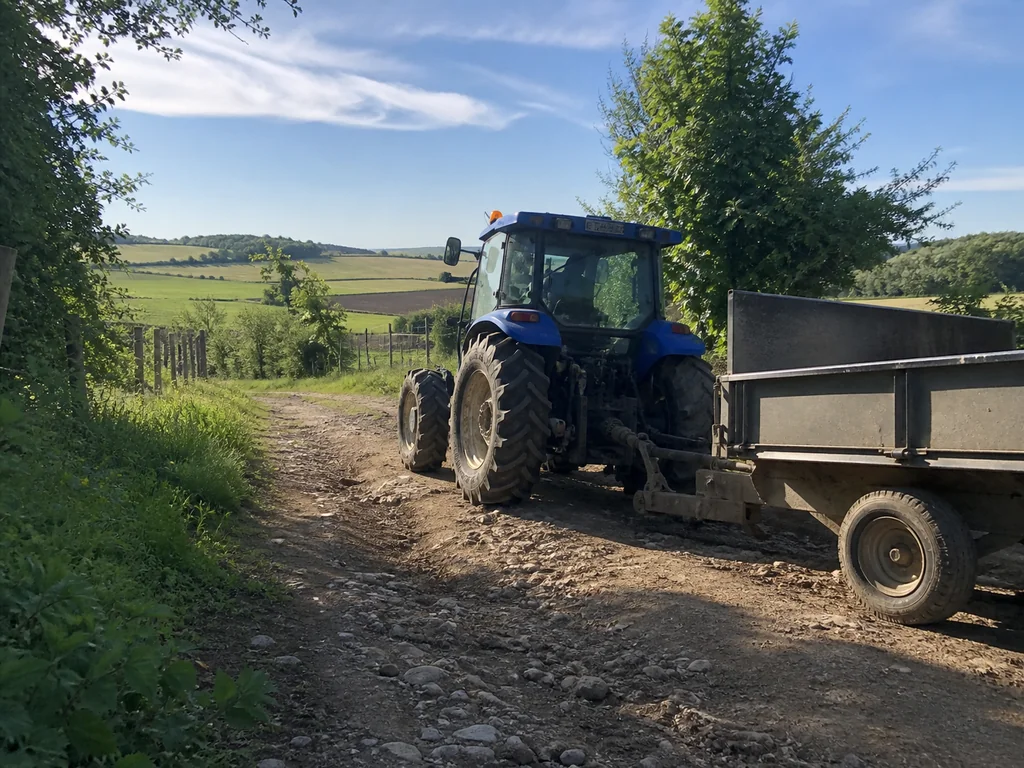
Work on slopes or rough routes is a stronger fit when the tractor must repeatedly maintain pull or mobility under load. The catalog links 4WD with heavy farming on hilly terrain3 (5), hill climbing with heavy loads4 (4), and slope, loader, and hauling work1 (1).
| Task and route | Strength of the 4WD case | Separate checks |
|---|---|---|
| Demanding tillage on a recurring slope | Strong when maintaining pull is difficult | Manual limits, implement position, tires, and weight distribution |
| Loaded hauling over a rough incline | Strong when load and surface restrict mobility | Towing and trailer ratings, braking, route, and permitted load |
| Loader travel across uneven ground | Conditional to strong when substantial loads are routine | Loader rating, axle loads, ballast, tires, and load position |
| Light work on a firm, gentle route | Conditional | Whether traction is genuinely limiting |
Treat traction, stability, steering, and braking as separate checks. A 4WD label is not evidence that any slope, load, or travel direction is safe. Use the operator’s manual and the limits for the complete tractor–implement or tractor–trailer configuration.
Assess the whole route, including loaded starts, turns, uneven sections, field entrances, and transitions to transport travel. If slopes or rough ground are a normal part of demanding work, 4WD deserves priority. If the route is firm and the duty is light, drive type may be less important than implement fit and safe configuration.
Favor 4WD when slopes or rough routes are part of normal loaded work, while verifying stability, braking, axle, tire, hitch, and implement limits separately.
When Do Hauling and Loader Tasks Justify 4WD?
Heavy hauling and loader or material-handling work are strong candidates when substantial loads coincide with difficult ground, slopes, or rough routes.
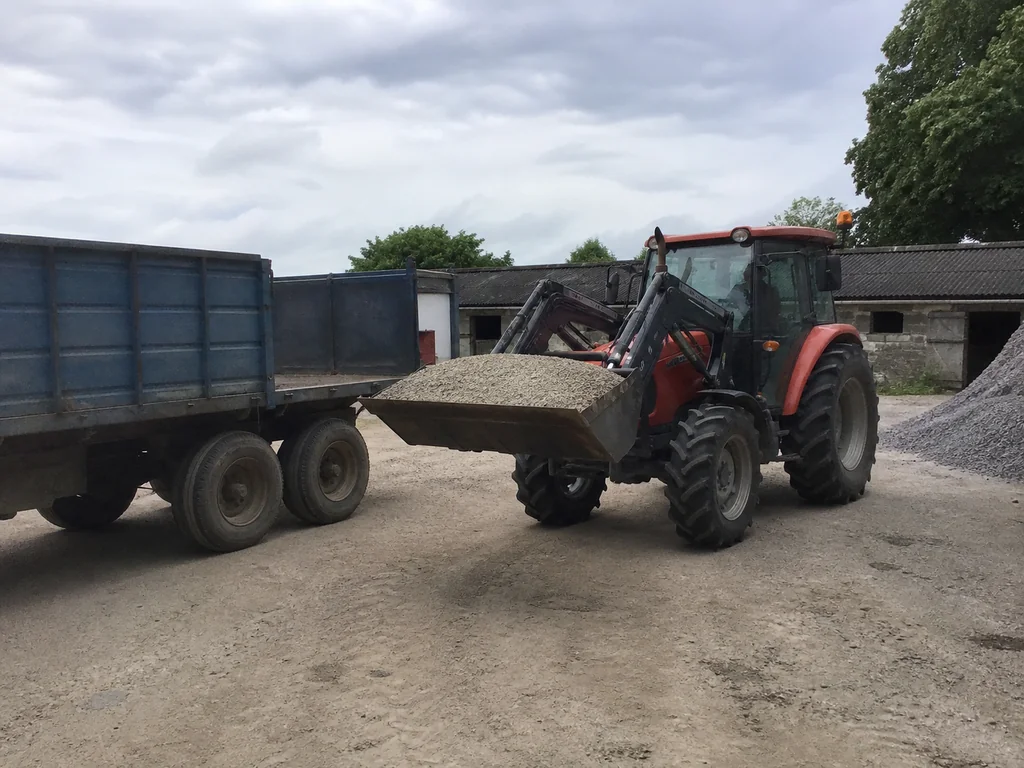
Hauling and loader work make a stronger case for 4WD when substantial loads must be moved repeatedly over soft ground, mud, slopes, field entrances, or rough routes. The supplied evidence identifies loader work and heavy hauling1 (1) and operation involving muddy terrain and heavy loads4 (4) as relevant applications.
Ask:
- Will the tractor regularly pull, push, lift, or carry a substantial load?
- Does the loaded route include weak surfaces, mud, grades, or uneven ground?
- Is insufficient traction likely to interrupt an important recurring job?
- Will this task-condition combination occur often enough to influence tractor selection?
If the answers are mostly yes, 4WD deserves priority. If material handling is light and occurs on a firm, level surface, the traction-based argument is weaker.
For loader work, verify the approved loader model, rated lift capacity, hydraulic requirements, permissible axle and tire loads, and manufacturer-specified ballast or counterweight. Evaluate the tractor with the intended bucket, attachment, and load.
For hauling, verify the approved drawbar or hitch—the tractor’s towing connection—along with trailer and load limits, tire capacity, braking requirements, route conditions, and operating instructions. Do not treat the ability to pull a load as proof that the complete combination is correctly rated or can control it safely.
Which Other Jobs Need More Than a Drive-Type Check?
Seeding, irrigation, difficult-terrain harvesting, cutting, baling, and other power take-off (PTO) jobs can suit 4WD when conditions make traction important; snow or ice work belongs here only where it recurs.
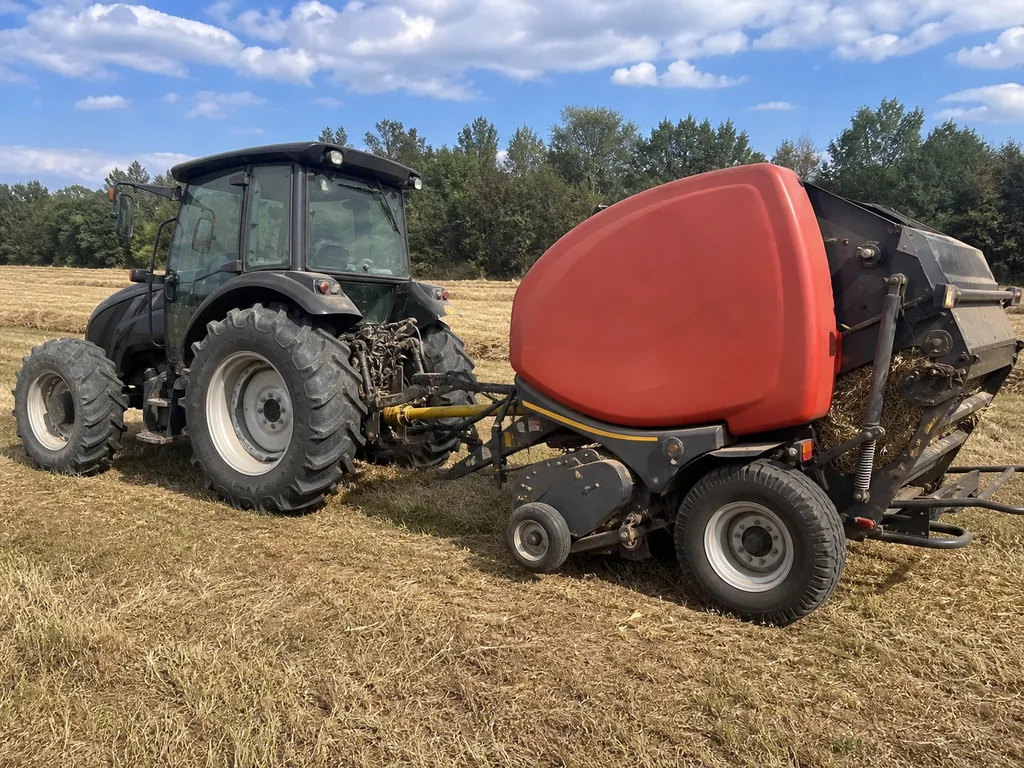
Seeding, irrigation support, and harvesting can involve difficult-terrain agricultural work2 (2). Task-based guidance also identifies cutting, baling, and snow work5 (3), while another guide includes PTO-driven implement work1 (1).
Power take-off (PTO) is the rotating tractor shaft used to power a compatible implement. A PTO-led task may create a case for 4WD when ground conditions limit traction, but drive type does not establish the tractor’s usable PTO power, PTO speed, hydraulic capacity, hitch fit, or lift capacity.
| Job group | When 4WD becomes relevant | Verify separately |
|---|---|---|
| Seeding or planting | Poor footing or implement pull repeatedly limits progress | Hitch, lift, hydraulics, width, and power demand |
| Irrigation support | Equipment must cross soft, uneven, or sloping routes | Hitch or drawbar fit, load, and hydraulics |
| Difficult-terrain harvesting | Loaded travel includes weak surfaces, rough ground, or slopes | Implement fit, PTO, hydraulics, and axle limits |
| Cutting or baling | The tractor struggles for mobility on demanding terrain | PTO speed and power, hitch, lift, and hydraulics |
| Snow or ice work | These conditions recur in the actual operating area | Attachment fit, approved traction equipment, and instructions |
Snow clearing should remain secondary for the primary Latin American and African audience unless it is a real recurring duty. It is a supported use where snow and ice affect mobility4 (4), but it should not influence the purchase where those conditions are absent.
Use a two-question test: Does the work create a genuine traction problem, and can the proposed tractor operate the implement correctly? Both answers require separate evidence.
Treat these as 4WD candidates only after separating the traction need from implement compatibility, PTO, hydraulic, and lift requirements.
When Could Two-Wheel Drive Be Enough?
If work is mainly light and traction is rarely constrained by difficult ground, slopes, rough terrain, or substantial loads, two-wheel drive may meet the workload.
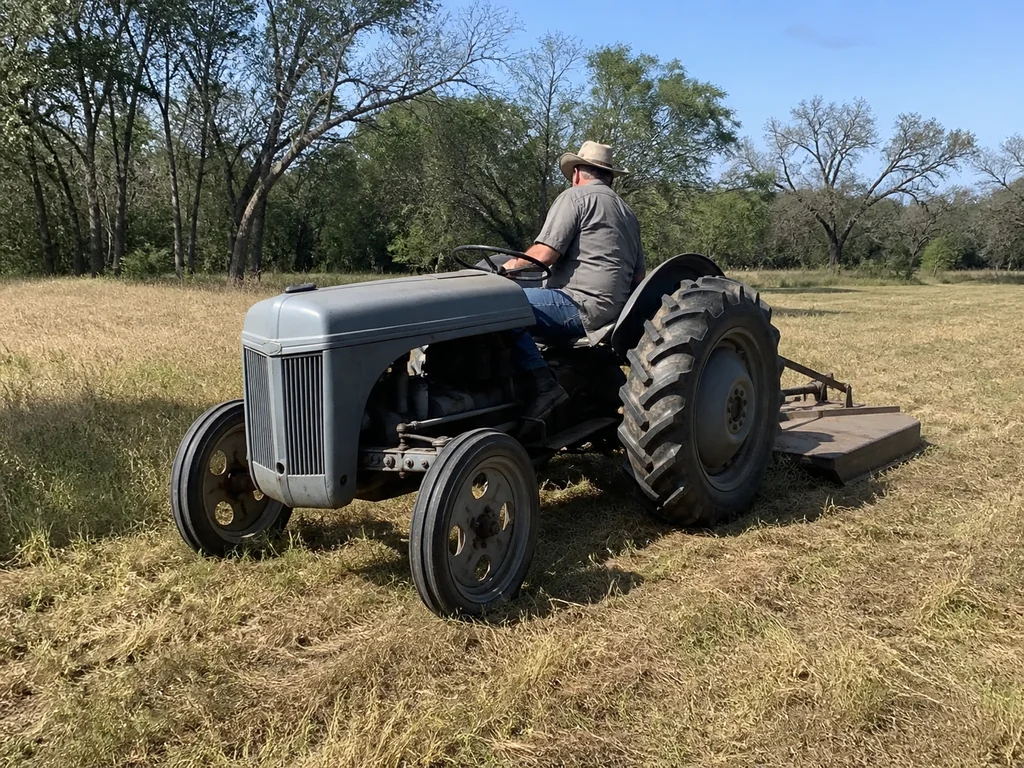
The supplied catalog does not provide controlled 2WD-versus-4WD field comparisons. The following is therefore a decision inference from the conditions for which its sources make the strongest 4WD case: deep tillage and wet-ground work3 (5) and combinations involving slopes, mud, hauling, and loaders1 (1).
Keep 2WD in the comparison when:
- Recurring work is light and usually performed on firm, level ground.
- Poor traction rarely limits completion of an important job.
- Draft work is within the proposed tractor and implement combination’s documented capability.
- Normal routes are firm, predictable, and not strongly sloped.
- Loader and hauling duties are limited rather than central to the workload.
- PTO, hydraulic, hitch, or lift requirements matter more than driven-wheel traction.
This is not evidence that 2WD is universally cheaper, more fuel-efficient, simpler to maintain, or more maneuverable; the supplied sources do not establish those comparisons. Obtain quotations, manuals, maintenance information, and local support details for the actual shortlisted machines.
The practical question is not whether a 2WD tractor can perform the task once. It is whether the proposed configuration can repeat the workload under the farm’s normal ground, terrain, load, and operating conditions. Where the answer is uncertain, compare 2WD and 4WD in a representative demonstration.
What Should You Compare Before Buying a 4WD Tractor?
Compare each option against a workload audit covering recurring jobs, ground, terrain, loads, and implements, then verify the complete proposed configuration.
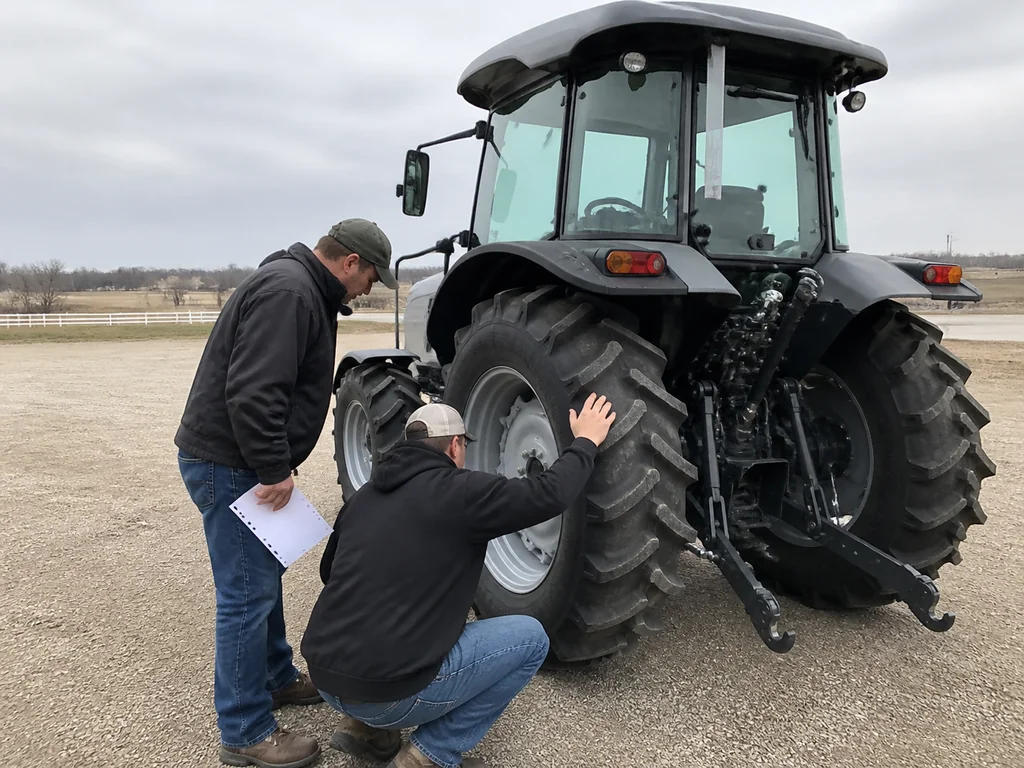
Start with a workload audit rather than a drivetrain preference. The supplied guidance spans tillage, slopes, mud, and hauling1 (1), seeding, irrigation, and harvesting2 (2), and task-specific implement work5 (3). That range makes the exact task-condition combination more useful than a generic list of capabilities.
| Audit item | Record and ask the supplier to verify |
|---|---|
| Recurring jobs | Frequency, working width and depth, intended speed, and operational priority |
| Ground | Surface firmness, moisture, mud, difficult areas, and representative working conditions |
| Terrain and routes | Slopes, rough sections, field entrances, loaded travel, and road duty |
| Loads | Loader materials, trailer loads, frequency, and the complete loaded configuration |
| Implements | Make, model, weight, hitch, PTO, hydraulic, lift, and power requirements |
| Tractor ratings | PTO and hydraulic capacity, lift, loader, drawbar, hitch, axle, tire, and braking limits |
| Tires and ballast | Approved sizes, measured axle loads, load-and-inflation data, and ballast instructions |
| MFWD setup | Approved front and rear tires and required front-wheel lead—the specified rolling relationship between the axles |
| Performance evidence | Pull, actual working speed, wheel slip, fuel use, and test conditions for the same setup |
| Ownership support | Manuals, front-drive maintenance needs, parts availability, trained service, and implement support |
Ask the supplier to identify the exact drivetrain configuration and provide model-specific documentation for the proposed tractor, tires, loader, trailer, and implements. Where available, request an official OECD, Nebraska, or equivalent tractor-test report. Treat hard-surface results as a comparison baseline, not a guarantee of performance in the buyer’s soil.
Any productivity or fuel claim should state the implement, working depth or load, surface, speed, tire setup, ballast, and other test conditions. Where traction is commercially important, request a representative field demonstration and record the setup rather than relying on an informal pass across a firm yard.
Finally, obtain written answers about manuals, front-drive maintenance, approved tire combinations, replacement parts, and local service capability. The supplied catalog establishes neither service quality nor ownership costs in any Latin American or African country, so those questions must be answered locally.
Choose a final option only after documentation and supplier answers confirm implement compatibility, required PTO and hydraulic capacity, loader and drawbar ratings, tire and ballast guidance, operating instructions, and support for front-drive maintenance, parts, and service.
Conclusion
The tasks best suited to 4WD are not defined by their names alone. The strongest candidates are heavy or deep tillage, loader work, substantial hauling, and other demanding duties that repeatedly coincide with weak traction, mud, slopes, or rough terrain. Those combinations are consistently represented in guidance on heavy-duty farm applications (5) and traction-demanding tractor tasks (1).
Seeding, irrigation, harvesting, cutting, baling, and other implement-led work need a second layer of analysis: drive type addresses traction, while PTO, hydraulics, hitch, lift, load ratings, tires, ballast, and operating limits require separate confirmation. When work is light and firm ground keeps traction from becoming the limiting requirement, 2WD remains reasonable to compare.
For buyers in Latin America and Africa, the defensible approach is local and specific: audit the actual tasks, surfaces, slopes, routes, loads, and implements. Then verify the complete configuration through model-specific documentation, written supplier answers, and a representative demonstration where practical.
References
Evidence note: All five supplied references are industry application guides. They support task and condition screening, but they do not replace model-specific manuals, recognized tractor tests, tire load data, or locally representative field evidence.
-
4WD tractor task applications — Detailed overview of the best 4WD tractor tasks, including tillage, loader work, slopes, muddy fields, hauling, snow clearing, and PTO-driven implements. ↩ ↩ ↩ ↩ ↩ ↩ ↩ ↩
-
Best Uses of 4x4 Tractors in Agriculture and Beyond - Indo Farm — Covers plowing, hauling, irrigation, seeding, harvesting in difficult terrain, and some non-farm uses like construction and site preparation. ↩ ↩ ↩ ↩
-
4 Wheel Drive Tractors for heavy farming - Indo Farm — Focuses on heavy-duty agricultural work such as deep ploughing, wet or hard land preparation, hauling, and hilly terrain. ↩ ↩ ↩ ↩
-
How to Utilize Four-Wheel Drive on a Tractor for Maximum Performance — Explains how 4WD helps with muddy terrain, heavy loads, hill climbing, and snow and ice conditions. ↩ ↩ ↩ ↩
-
Best Tractors by Task | Job-Specific Buying Guides - TractorIron — Task-based buying guide with examples such as loader work, snow blowing, brush cutting, hay cutting, and round baling, including when 4WD is recommended. ↩ ↩