Skip to content
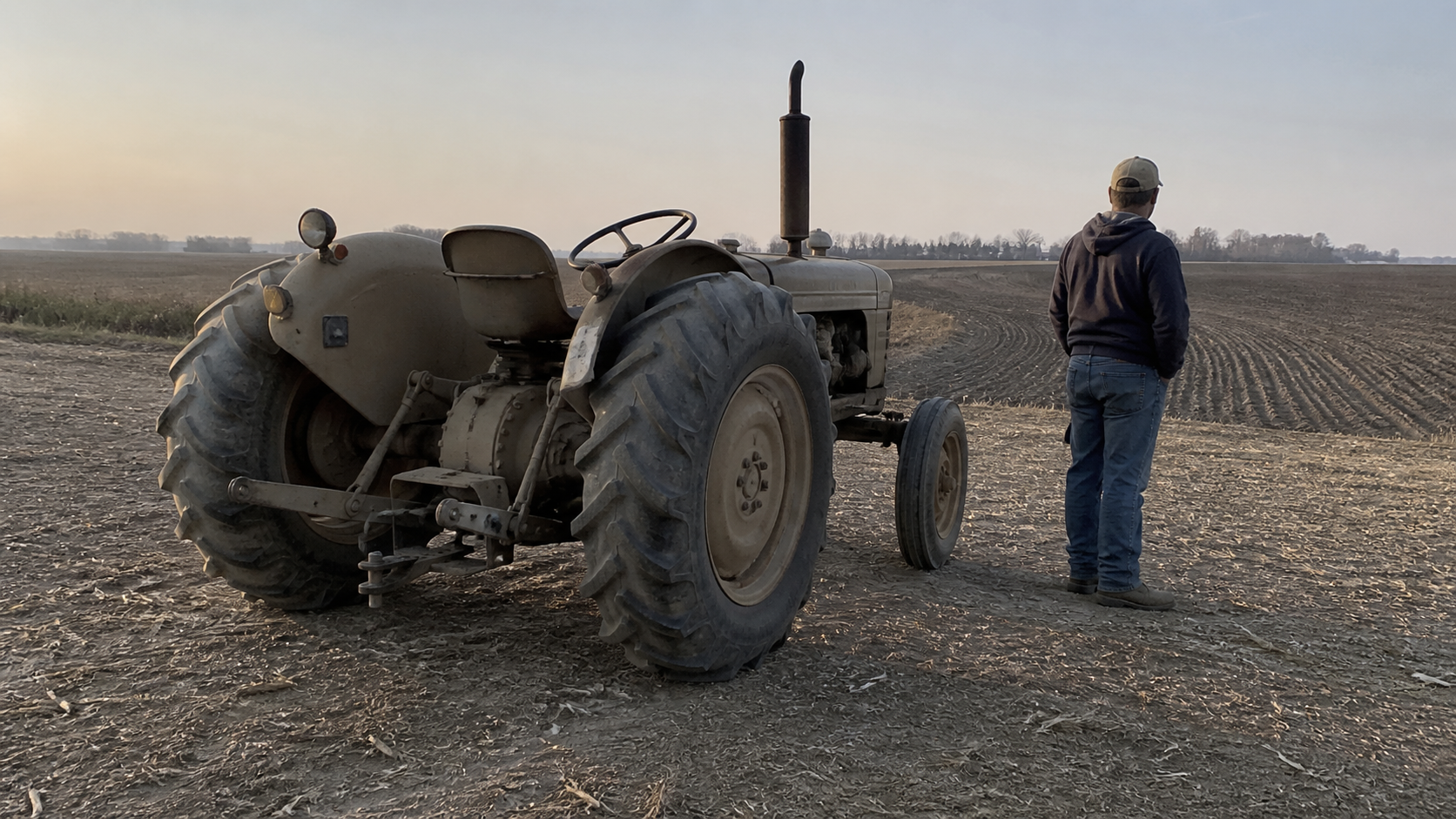
A 2WD tractor is not automatically the wrong tractor. Its central disadvantage is a narrower operating envelope—in plain English, fewer combinations of terrain, surface conditions, and demanding work before grip or pulling ability becomes the constraint. Industry comparisons repeatedly identify limited traction and pulling power, while presenting light tasks on flat land as the more favorable case for 2WD.
The useful buying question is therefore not whether 2WD is universally good or bad. It is whether the tractor’s recurring work stays within that favorable case. For buyers in Latin America, Africa, or elsewhere, the answer should come from the actual farm: local slopes, expected ground conditions, the heaviest routine pulling job, and intended implements—not assumptions about an entire country or region.
What is the core disadvantage of a 2WD tractor?
A 2WD tractor has a narrower operating envelope because traction and pulling performance become more limited as conditions grow difficult.
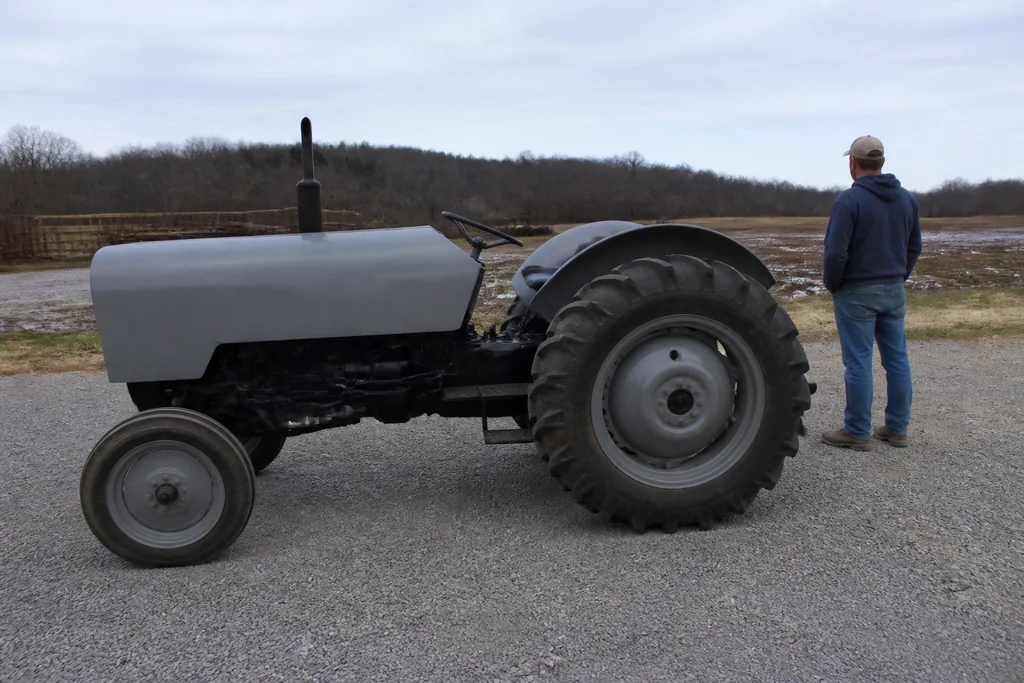
The core disadvantage is restricted traction, meaning less tire grip is available to convert engine power into forward movement and pulling force under difficult conditions. Comparative sources identify traction limits on wet or uneven ground1 and lower pulling power2 among the principal 2WD limitations.
This does not mean every 2WD tractor performs poorly. It means there is less margin when surfaces become slippery, terrain becomes difficult, or the work demands more pulling effort. Suitability should therefore be judged against the hardest job and least favorable ground encountered regularly—not only against operation on a dry, level field.
Choose 2WD only when its restricted traction and pulling ability still cover the tractor’s recurring work.
Which ground conditions expose 2WD limitations?
Wet, muddy, slippery, uneven, or mountainous ground can increase wheel slippage and the risk of becoming stuck.
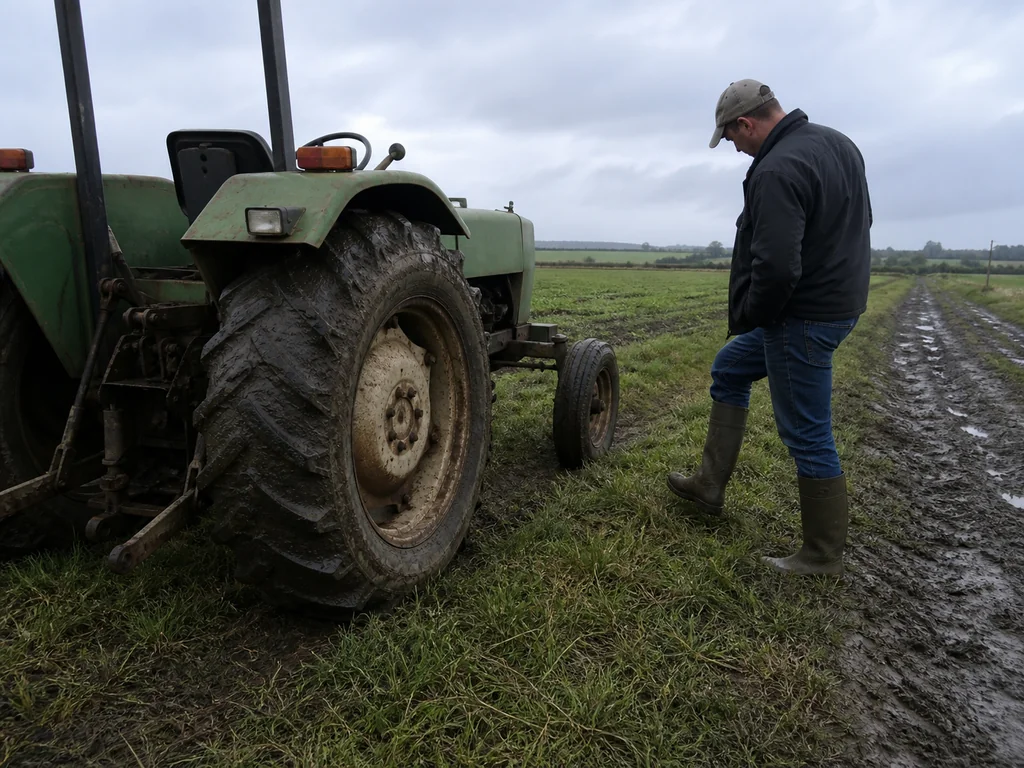
Ground condition should be the first selection filter. As the surface becomes more difficult, a 2WD tractor can face slippage on difficult ground3 or lose enough mobility to create a risk of getting stuck4.
| Ground condition | Limitation to examine | Buyer question |
|---|---|---|
| Flat, firm ground | Limitations are less exposed during light work | Does this describe normal operations? |
| Wet or slippery ground | Wheel slippage may increase2 | Must work continue in these conditions? |
| Muddy ground | Greater chance of becoming immobilized | How often does this condition recur? |
| Uneven or mountainous ground | Difficult-ground performance is weaker5 | Is challenging terrain part of routine work? |
For a specific farm in Latin America or Africa, inspect the actual slopes, field entrances, travel routes, and seasonally difficult surfaces. Regional labels alone cannot establish whether 2WD will have enough traction.
Use terrain and expected ground conditions as the first filter when deciding whether 2WD is suitable.
How does limited traction affect implements and pulling?
Reduced pulling ability can make a 2WD tractor a poor match for heavy implements or demanding drawbar work.
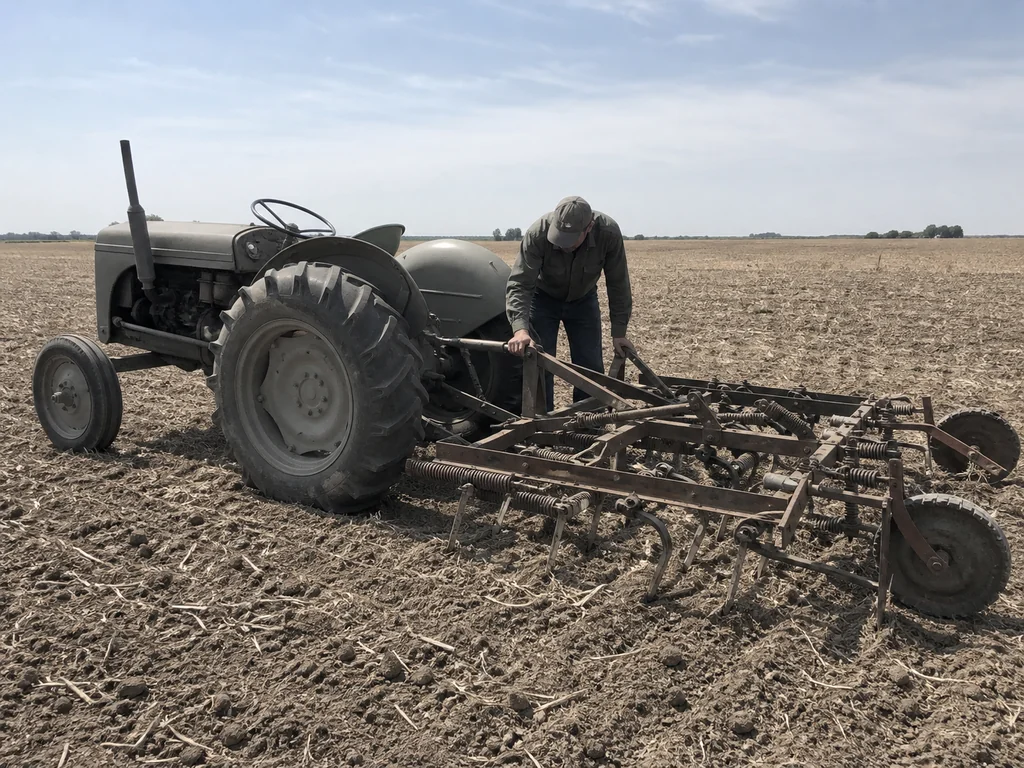
Drawbar work means pulling an implement from the tractor’s hitch. A 2WD tractor may be a poor match when recurring work requires substantial drawbar effort: industry comparisons associate the configuration with reduced pulling power1 and heavy-implement limitations3.
Do not select the drive configuration from engine power alone. Before choosing, identify:
- The heaviest task performed repeatedly.
- Every implement the tractor must pull or operate.
- The ground conditions under which those implements will be used.
- Whether demanding work must continue after rain or on slippery surfaces.
Ask the supplier to verify the exact tractor-and-implement combination for those conditions. Avoid relying on a general statement that an implement is “tractor compatible” without confirming the drive configuration and intended workload.
Implement check: Define the heaviest recurring task and intended implements before accepting a 2WD configuration.
Define the heaviest recurring task and intended implements before accepting a 2WD configuration.
When should stability become a concern?
Stability deserves closer attention when difficult terrain and demanding work combine, although unsupported accident or braking claims should not guide the comparison.
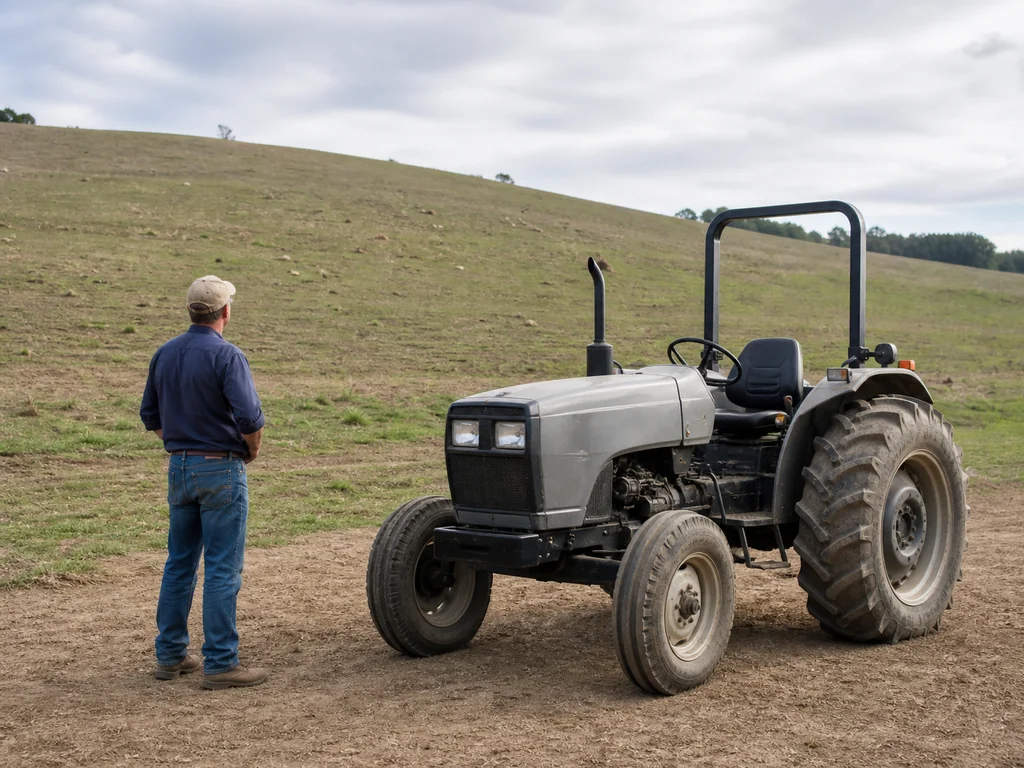
Stability deserves model-specific review when uneven or difficult terrain coincides with demanding implement work. The available comparisons associate 2WD with less traction and stability6 and discuss stability alongside slippage and heavy-implement limits3.
This evidence supports closer scrutiny; it does not establish rollover rates, injury outcomes, braking differences, or a universal safe-slope limit. Those unsupported claims should not be used to compare drive types.
If the tractor will regularly work on slopes, rough ground, or under demanding loads, consult the exact model’s operator manual and supplier guidance. Compare the recommended operating limits and the approved tractor, tire, ballast, and implement combination rather than applying a general rule to every 2WD model.
Compare model-specific stability guidance whenever the tractor will regularly work on difficult terrain or under demanding loads.
Is 2WD always cheaper to operate?
Fuel and maintenance outcomes depend on the tractor and workload, so neither drive type has a universal ownership-cost advantage.
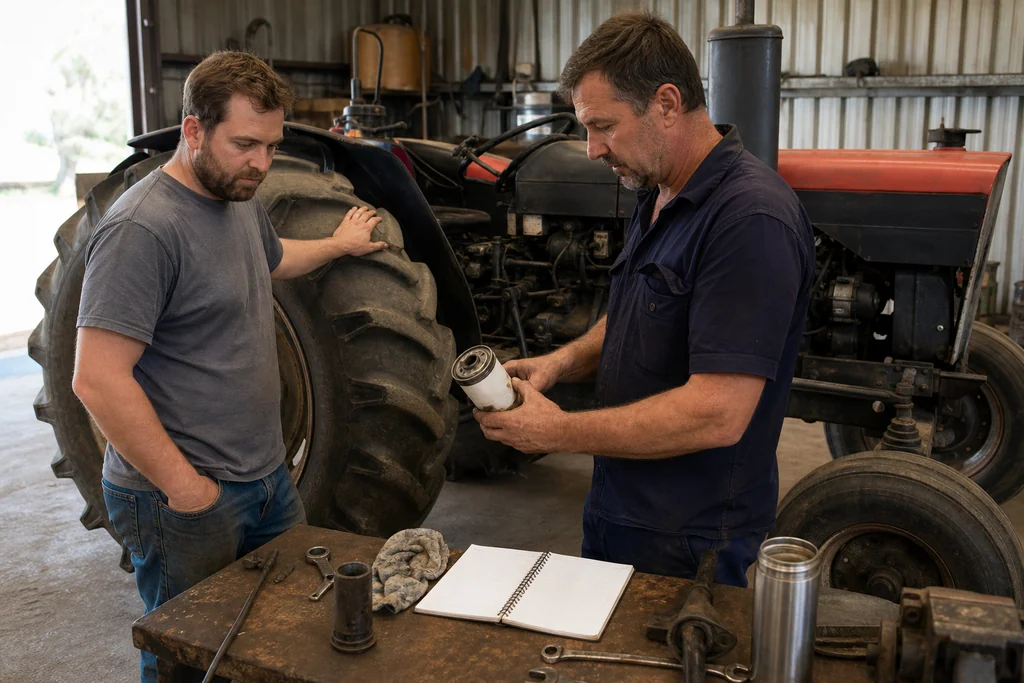
Not necessarily. The supplied comparisons mention maintenance-related concerns2 and fuel-efficiency implications6, but they provide no quantified, model-matched lifetime-cost comparison that establishes a universal winner.
Assumption check: A lower expected purchase or maintenance burden does not by itself prove that 2WD will be cheaper for a workload it struggles to complete. Conversely, demanding work does not automatically make every 4WD tractor the lower-cost choice.
Request comparable estimates for the exact models being considered, including fuel consumption at representative loads, scheduled maintenance, routine parts and service labor. Assess both configurations against the same recurring jobs and operating conditions.
Request workload-specific fuel and maintenance estimates instead of assuming 2WD will always cost less.
Does two-wheel tractor research prove a 2WD disadvantage?
Not necessarily, because a two-wheel tractor is a different equipment category from a conventional tractor with two-wheel drive.
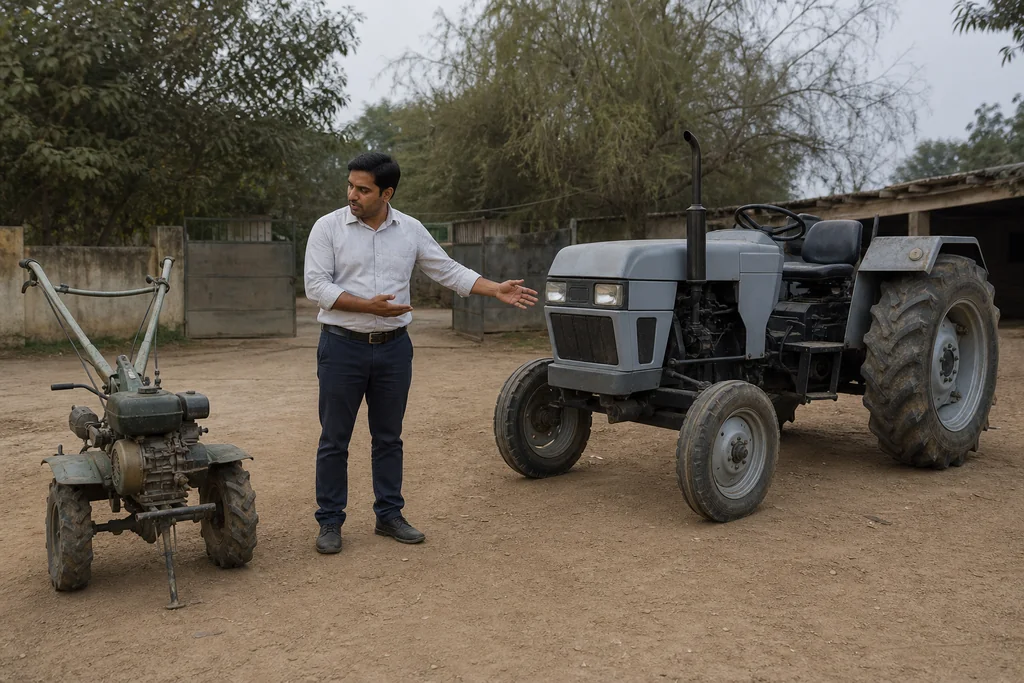
No. The cited research paper examines three equipment pathways7: animal traction, two-wheel tractors, and four-wheel tractors. In this article, however, “2WD” describes the drive configuration of a conventional tractor. Those are different comparisons.
The paper discusses how operating conditions affect equipment suitability, including heavy-soil power limits7 for two-wheel tractors. That finding may provide mechanization context, but it cannot be transferred directly into proof that a conventional 2WD tractor has the same disadvantage.
Before using any study in a purchase comparison, check what equipment each term describes, which tasks were evaluated, and whether the study actually compares two-wheel-drive and four-wheel-drive versions of conventional tractors.
Verify that any cited study compares drivetrain configurations before using it to judge 2WD performance.
A two-wheel tractor is the same equipment category as a conventional tractor with two-wheel drive.False
The cited research treats two-wheel tractors and four-wheel tractors as distinct equipment pathways; it does not use “two-wheel tractor” to mean a conventional tractor whose drivetrain is 2WD.
Research about two-wheel tractors directly proves the disadvantages of conventional 2WD tractors.False
Findings about two-wheel tractors, including heavy-soil power limits, cannot be transferred directly to a drivetrain comparison unless the study actually compares conventional 2WD and 4WD tractors.
When might the disadvantages of 2WD remain acceptable?
They may be acceptable when recurring work is light and the operating ground is predominantly flat and firm.
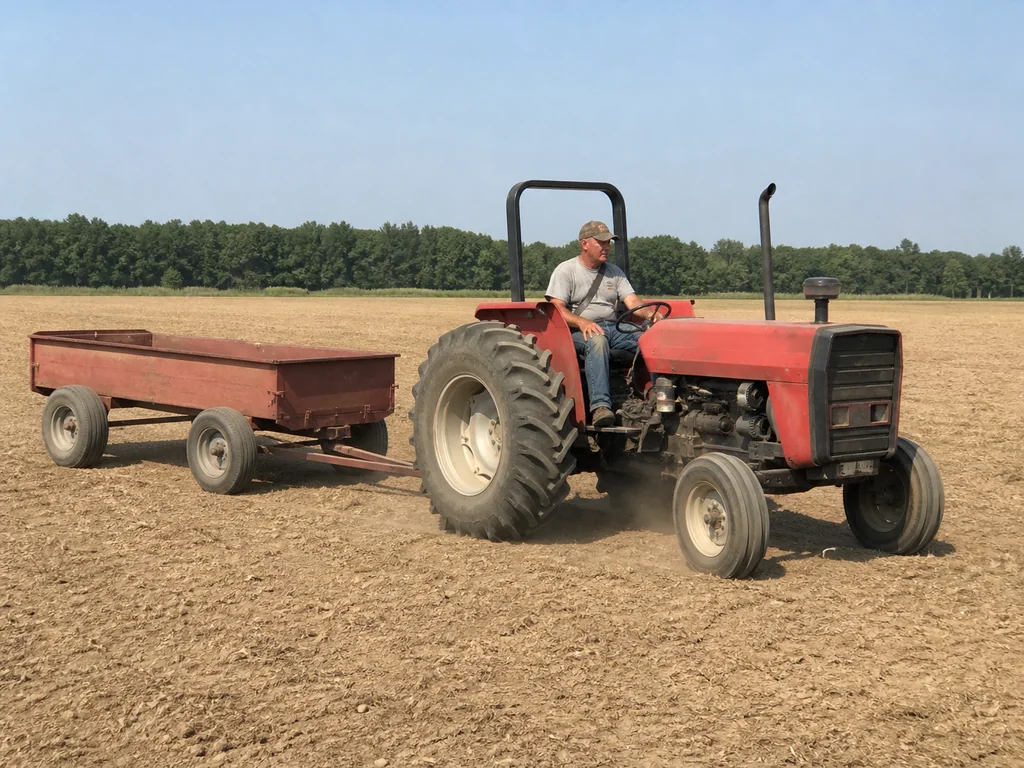
The disadvantages may remain acceptable when the tractor’s normal duties fit the configuration’s favorable operating case. One industry comparison positions 2WD for light work on flat land5.
Keep 2WD under consideration when:
- Recurring duties are light.
- Operating ground is predominantly flat and not regularly slippery.
- Heavy pulling and demanding implements are exceptions rather than normal requirements.
This is a screening rule, not a guarantee of performance. Judge the configuration by recurring work and include difficult conditions that occur often enough to affect operations.
Retain 2WD as an option when the tractor’s normal duties stay within this favorable operating case.
Which drive configuration fits your recurring workload?
2WD can suit predominantly flat, light-duty work, while regular exposure to slippery ground, difficult terrain, heavy pulling, or heavy implements warrants comparing 4WD.
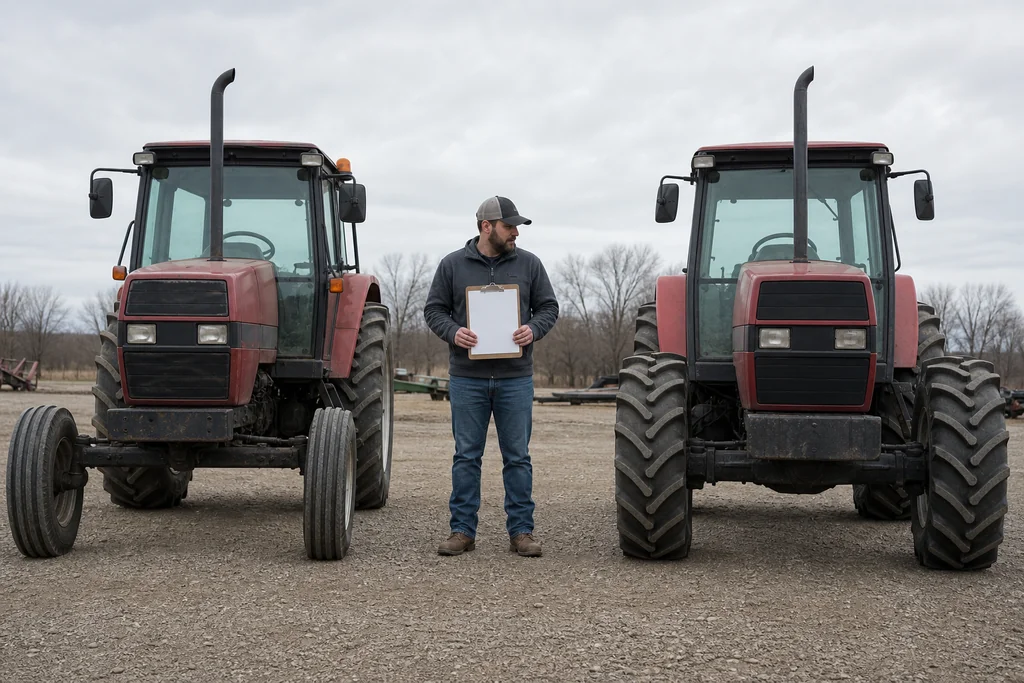
Use the farm’s recurring workload—not the tractor’s easiest demonstration—as the basis for comparison.
| Recurring operating case | Practical direction |
|---|---|
| Flat ground with light duties | Keep 2WD on the shortlist because this is its light-duty flat-land use case5 |
| Regular wet, slippery, or muddy work | Compare 4WD closely because sources report slippage and mud limitations4 for 2WD |
| Uneven or mountainous terrain | Compare terrain capability and model-specific stability guidance because of wet and uneven terrain limits1 |
| Heavy pulling or heavy implements | Verify the complete tractor–implement match and compare 4WD because 2WD has limited pulling capacity6 |
After this capability screen, compare fuel and maintenance estimates for the specific models. Do not let an assumed cost advantage override a recurring traction or implement mismatch.
Final decision rule: Choose 2WD only after verifying that local slopes, ground conditions, task intensity, and implement demands do not regularly require the wider operating range of 4WD.
Choose 2WD only after verifying that local slopes, ground conditions, task intensity, and implement demands do not regularly require the wider operating range of 4WD.
Conclusion
Treat 2WD as a conditional fit, not a default bargain or an automatically inferior choice. Predominantly flat ground and light recurring duties remain its strongest case, while regular exposure to wet-ground and pulling limits, wheel slippage, mud, difficult terrain, or heavy implements warrants a closer 4WD comparison.
Before deciding, answer four questions:
- What is the most difficult ground that recurs—not merely a rare extreme?
- Which routine task requires the most pulling effort?
- Which implements must the tractor handle?
- What do model-specific guidance and workload estimates say about stability, fuel use, and maintenance?
Choose 2WD only if the exact model covers both normal duties and the difficult conditions that occur regularly. If those conditions exceed its traction or pulling margin, the wider operating range of 4WD should carry more weight than an assumed ownership-cost advantage.
References
-
Pros and Cons of 2WD vs. 4WD Tractors: Which One Is Right for You — Clear summary of 2WD drawbacks including limited traction, reduced pulling power, and poor performance on uneven or wet terrain. ↩ ↩ ↩
-
2WD VS 4WD Tractor: Which Tractor Perfect for Farmers? — Lists low pulling power, wheel slippage, and maintenance concerns as major limitations. ↩ ↩ ↩
-
Which is a better choice for Farmers, 2WD or 4WD Tractors? — Explains why 2WD tractors can struggle with slippage, stability, and heavy implements. ↩ ↩ ↩
-
2WD vs 4WD Tractor: Choosing the Right Drive — Highlights traction limits, getting stuck in mud, and weaker suitability for heavy-duty projects. ↩ ↩
-
2WD vs 4WD Tractor: Which Is Better For Your Farming — Notes that 2WD tractors are better for light tasks and flat land, but limited on mountains, slippery ground, and heavy work. ↩ ↩ ↩
-
2WD VS 4WD Tractors In India - Know The Difference — Compares traction, stability, pulling capacity, and fuel-efficiency implications for 2WD tractors. ↩ ↩ ↩
-
Animal traction, two-wheel tractors, or four-wheel tractors? A comparative analysis — Academic discussion of when two-wheel tractors struggle in heavy soils and how operating conditions affect their usefulness. ↩ ↩