Skip to content
Popular Compact Farm Tractor Attachments: Practical Guide
One buying mistake shows up again and again: people choose tractor attachments by what looks useful in the yard, not by the jobs that repeat all year. On compact tractors, that usually means the loader comes first, but not every mower or rear tool deserves equal priority.
Compact farm tractor attachment demand is typically led by the front-end loader1 because it supports material handling, lifting, and transport across mixed agricultural and rural property tasks. Vegetation management is usually divided between finish mowers for maintained surfaces and rotary cutters for rough grass, weeds, and light brush. Common rear implements such as box blades, rear blades, rakes, and tillers address grading, leveling, debris control, and soil preparation.
Why Start With A Front-End Loader?
The front-end loader is usually the first compact tractor attachment because it handles the widest range of year-round jobs, including moving soil, gravel, mulch, manure, feed, and other bulk materials. It also supports multiple loader-mounted tools2 such as buckets, pallet forks, grapples, bale spears, and snow attachments, giving mixed-property owners broad utility and fast practical payback.
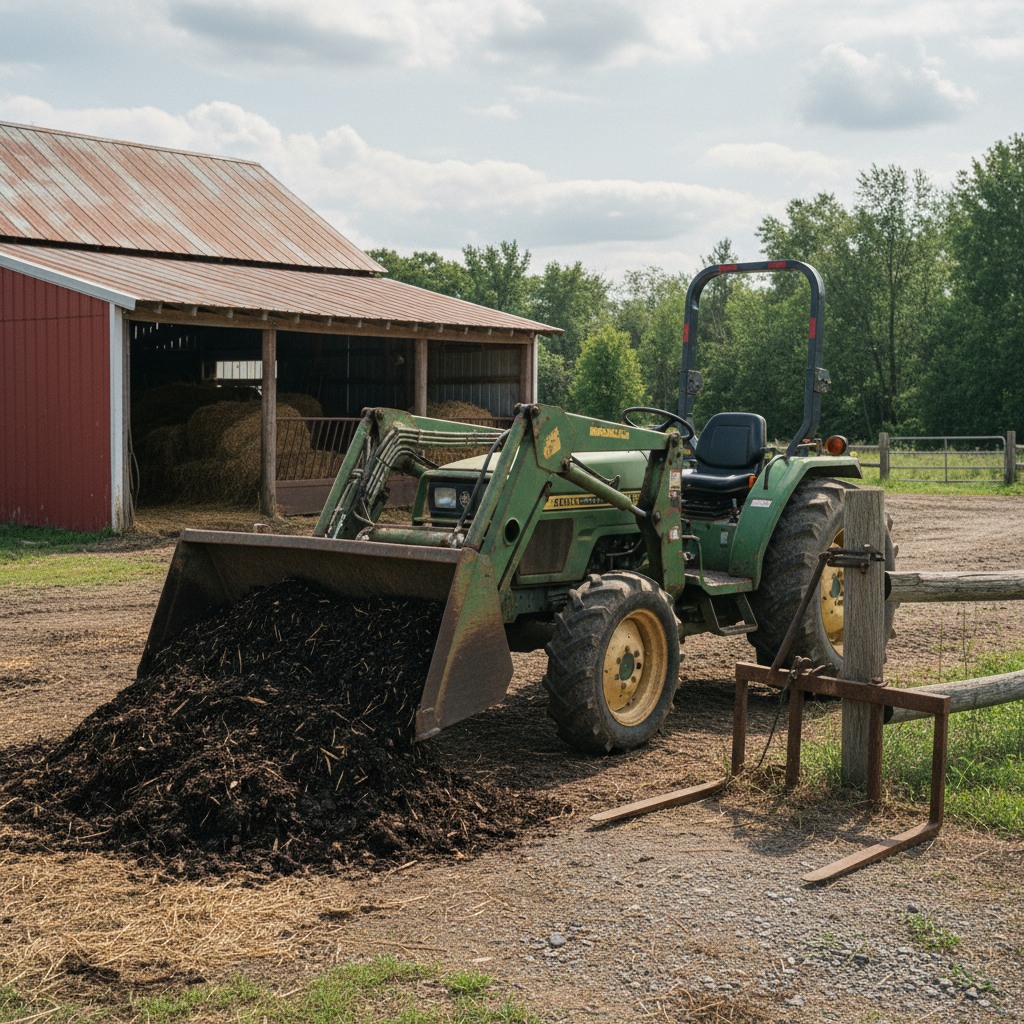
A front-end loader is usually the right place to start because it solves the most common jobs on a small farm. You use it to move soil, gravel, mulch, manure, feed, and bagged inputs almost all year. That matters more than a specialized implement that works only a few weeks each season. In field use, a 35 to 60 HP compact tractor with 4WD and a loader can already handle a large share of daily material movement, depending on bucket size and ballast.
The other advantage is flexibility. One loader frame opens the door to several useful tools:
- General bucket - for soil, sand, gravel, manure, and feed
- Pallet forks - for seed, fertilizer, drums, and crate handling
- Grapple - for brush, branches, and rough cleanup
- Bale spear - for moving round or square bales
- Snow blade or snow bucket - where winter clearing matters
I often tell buyers to look past lift height alone. Check the hydraulic response, rated lift capacity at the pivot pins, and whether the front axle and chassis match the loader’s working load. This is where the spec sheet gap appears: a tractor may look strong on paper, but poor balance or weak ballast setup cuts real lifting confidence fast.
In many African and Central Asian markets, mixed-property owners want one tractor that earns its keep every month. A loader does that better than most first attachments. I suggest starting with the loader, then adding loader-mounted tools as your work pattern becomes clearer. That path usually gives the fastest practical payback and fewer buying mistakes.
A properly ballasted front-end loader can safely handle heavier loads and maintain tractor stability, especially on uneven ground.True
Ballast, such as rear wheel weights or implements, counterbalances the loader, reducing the risk of tipping and improving traction, which is crucial for safe operation on slopes or rough terrain.
Front-end loaders are only compatible with tractors above 60 horsepower and cannot be installed on compact models.False
Many compact tractors in the 35 to 60 HP range are specifically designed to accept front-end loaders; compatibility depends on the tractor’s frame and hydraulic capacity, not just horsepower.
Key takeaway: A front-end loader is often the best starting attachment because it covers the most common lifting and material-handling tasks while creating compatibility with several useful loader-mounted tools.
Finish Mower Or Rotary Cutter?
Finish mowers deliver a smooth, even cut for lawns, estates, and maintained grass areas, while rotary cutters handle rough grass, weeds, pasture edges, trails, and light brush. The best choice depends on terrain, vegetation density, and required cut quality. Matching the attachment to actual field conditions prevents unnecessary cost, poor performance, and disappointing mowing results.
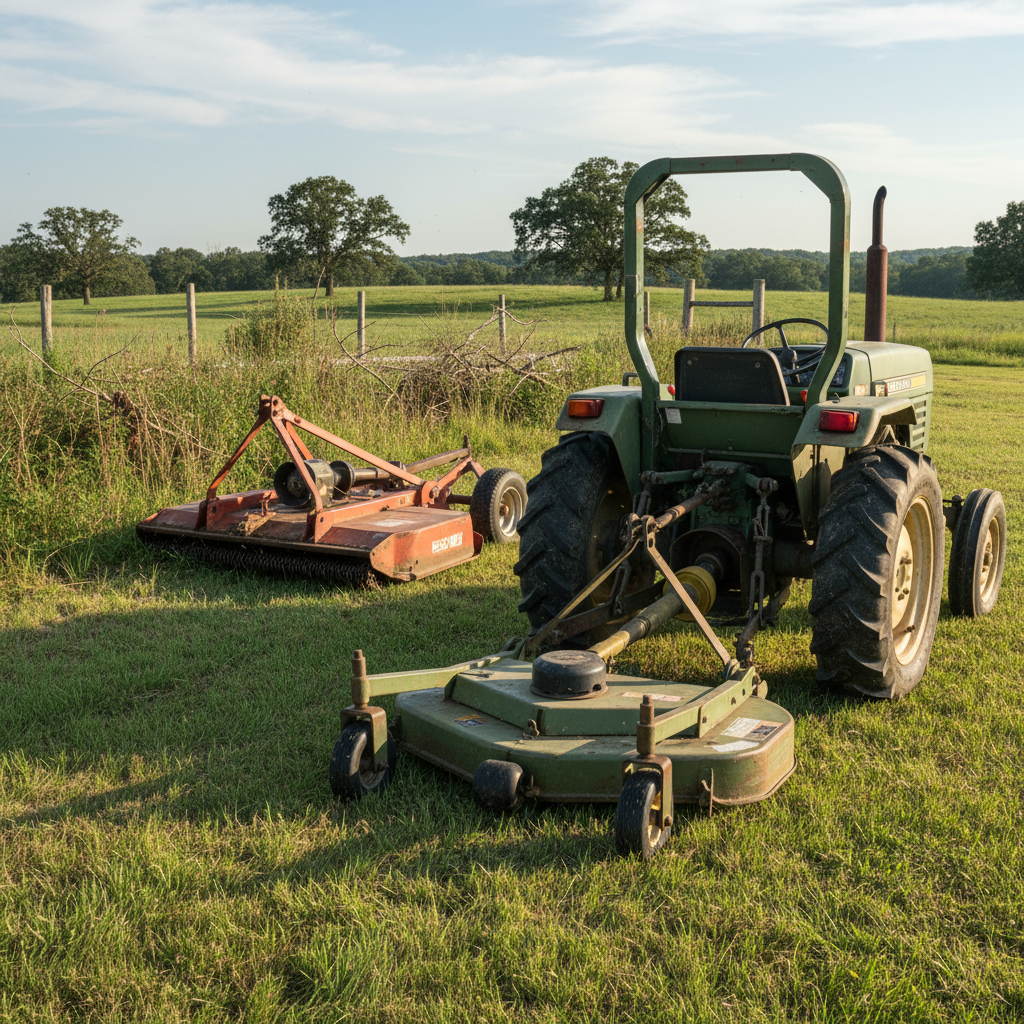
The practical issue is that these two mowers are built for different land, not different budgets. A finish mower cuts like a grooming tool. It uses multiple lighter blades and works best on fairly level ground with regularly maintained grass. If you want a smooth, even surface around a house, lodge, estate, or sports area, that is usually the better match.
A rotary cutter is the rough-work option. It has heavier blades, a stronger deck, and more tolerance for stalks, weeds, uneven pasture, and hidden debris. In many African and Latin American markets, this matters a lot because land around field edges, access roads, and grazing areas is rarely as clean as a lawn. A finish mower in that job often becomes a showroom hero, field zero—good appearance, poor survival.
One useful check is to walk the land before choosing. Are you cutting soft grass under ankle height most of the time, or mixed growth that can reach knee height or more? Do you need a tidy visual finish, or do you just need vegetation controlled safely and efficiently? I usually tell buyers to judge by the worst section of ground, not the best-looking corner.
Power and setup also matter in practice. A finish mower often needs steadier PTO speed—that's the power take-off driving the blades—and benefits from flatter terrain. A rotary cutter is less delicate and usually suits general maintenance better. If your land is mixed, rough, or only cut occasionally, I would lean rotary cutter first. If appearance is the priority and the ground is maintained, choose the finish mower.
A finish mower typically requires a smoother, well-maintained field because its multiple lighter blades and low cutting height can be damaged or clogged by thick weeds or uneven terrain.True
Finish mowers are designed for fine turf and lawns where the ground is fairly level and the vegetation is not overly dense. Their blades and deck are not built to handle debris, thick brush, or rough ground, which can lead to mechanical issues or poor cutting performance.
Rotary cutters provide a smoother, more uniform cut than finish mowers on manicured lawns and sports fields.False
Rotary cutters are designed for rough, uneven ground and heavy vegetation, using heavier blades that do not cut as finely as finish mowers. On manicured areas, rotary cutters typically leave a rougher appearance and are less suitable for achieving a uniform, groomed finish.
Key takeaway: Finish mowers are best where appearance and a clean surface matter, while rotary cutters are better for uneven ground, heavier growth, and rough maintenance work. Selection should be based on land condition, plant density, and desired finish rather than buying the cleaner-looking option by default.
Which Implements Handle Ground Work Best?
Box blades, rear blades, landscape rakes, and rotary tillers cover most compact tractor ground-engaging jobs. Box blades grade and level loose material, rear blades shape and drain surfaces, rakes collect debris and smooth top layers, and tillers prepare seedbeds. Matching the implement to material type, finish quality, and traction conditions prevents common buying mistakes and improves routine land maintenance efficiency.
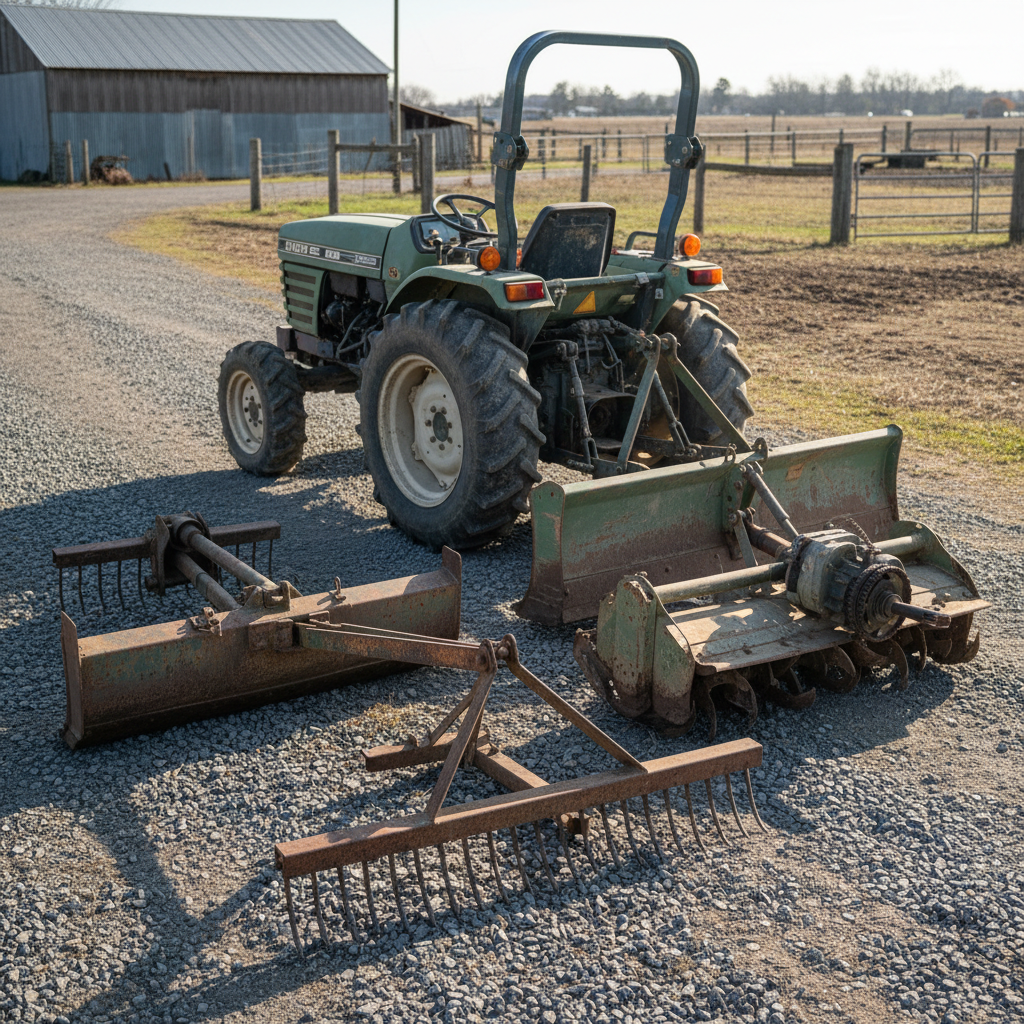
In field use, four implements handle most compact tractor ground work: box blades, rear blades, landscape rakes, and rotary tillers. The right choice depends less on horsepower alone and more on material, finish level, and traction.
| Implement | Best For | Works Best In | Main Limitation | Buying Note |
|---|---|---|---|---|
| Box blade | Leveling, driveway repair, spreading gravel | Loose soil, gravel | Poor in heavy trash | Good second purchase for general maintenance |
| Rear blade | Shaping, ditching, snow or light soil moving | Roads, drains, edges | Less control in rough leveling | Choose offset and angle adjustment if possible |
| Landscape rake | Debris cleanup, smoothing top layer | Stones, sticks, light residue | Will not cut hard ground | Best after clearing or grading |
| Rotary tiller | Seedbed prep, garden plots | Worked soil, softer ground | High PTO demand and slower work | Match width carefully to tractor PTO power |
A box blade is usually the best value if you maintain roads, yards, or building sites. Its side plates hold material, so it cuts high spots and fills low spots in one pass.
In many African and Latin American markets, this makes it more useful than a rear blade for routine gravel repair.
I usually suggest a box blade around the tractor’s tire width, not much wider. Rear blades do better where shaping and drainage matter.
A box blade is generally more effective than a rear blade for leveling uneven ground because its design allows it to both cut into high spots and carry material to low areas.True
Box blades have a forward-facing cutting edge and enclosed sides, enabling them to redistribute soil as they move, unlike rear blades which tend to push or pull material without containing it, making them less precise for leveling.
Landscape rakes are the preferred attachment for breaking up compacted soil before planting because their tines penetrate deeply and efficiently loosen hard ground.False
Landscape rakes are designed primarily for gathering debris and smoothing surfaces rather than for deep soil penetration; rotary tillers are the correct implement for effectively breaking up compacted soil before planting.
Key takeaway: A few rear implements handle most grading, leveling, cleanup, and soil-prep tasks. Box blades and rear blades are usually the most versatile value purchases, while rakes and tillers fit more specific surface and seedbed jobs.
Which Specialty Attachments Are Worth Buying?
Specialty compact tractor attachments are worth buying when they handle recurring annual jobs, match tractor lift, hitch, PTO, or hydraulic capacity, and replace frequent rental costs or downtime. Pallet forks, grapples, post hole diggers, snow tools, bale spears, and backhoes should be judged by use frequency, job importance, storage demands, and whether borrowing creates scheduling risk.
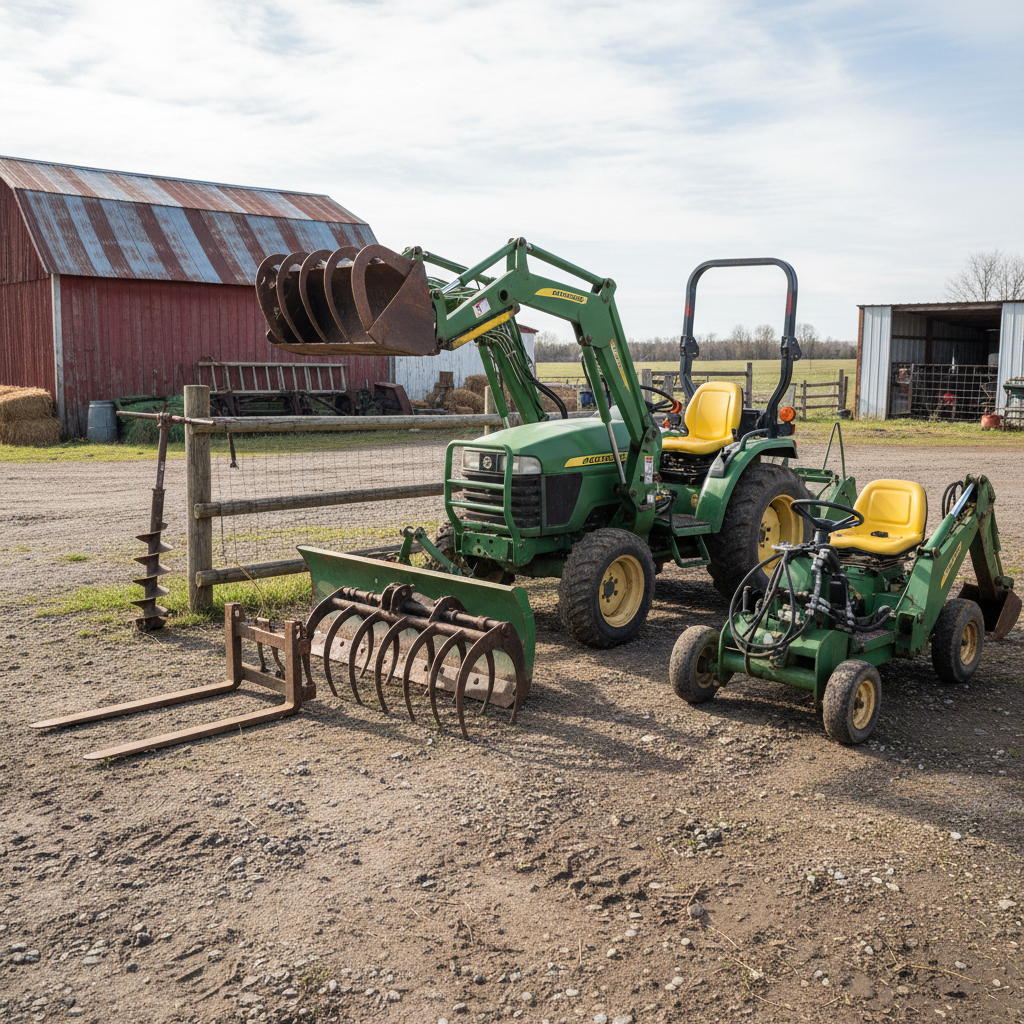
One useful check is whether the attachment solves a job you repeat every year. If the task comes back each season, ownership usually pays. If it is a one-off trench, stump, or fence line project, renting is often the better answer.
I usually tell buyers to rank specialty tools by frequency, not excitement.
Pallet forks are often worth buying early because they handle seed, fertilizer, crates, and repairs all year. A bale spear also makes sense on livestock farms with regular feed handling.
But a backhoe is different—it is expensive, heavy, slow to mount, and often becomes a showroom hero, field zero.
| Attachment | Worth Buying When | Key Check | Better to Rent/Borrow When |
|---|---|---|---|
| Pallet forks | Material handling happens often | Loader lift capacity | Use is occasional |
| Grapple | Brush, manure, logs are routine | Hydraulic flow and loader strength | Cleanup is seasonal only |
| Post hole digger | Fencing is regular work | PTO speed and hitch match | Only a few holes per year |
| Bale spear | Hay or silage moves often | Loader/frame rating | Few bales handled annually |
| Snow blade/blower | Winter access is critical | PTO power or front mounting | Snow is rare |
| Backhoe | Drainage or digging repeats yearly | Subframe fit and tractor weight | One project only |
Match the tool to the tractor before you buy.
Grapple attachments are especially valuable for compact tractors used in properties with frequent storm debris cleanup or brush management, because they allow secure handling of irregular materials that pallet forks or buckets struggle with.True
Unlike standard buckets or forks, grapples can clamp around uneven loads like branches, logs, or brush, making them ideal for repeated land maintenance tasks that involve bulky and irregular debris.
Backhoe attachments are considered essential purchases for most compact tractor owners because they are regularly used across all types of farms.False
Backhoes are specialty implements best suited for specific digging or trenching projects, which are typically infrequent on many farms. They are usually more cost-effective to rent unless the operator faces repeated excavation needs.
Key takeaway: Specialty implements should be prioritized by repeated yearly chores, not occasional projects. Ownership makes the most sense when an attachment is used often, supports essential farm work, and fits the tractor correctly. For lower-frequency tasks, renting or borrowing often prevents an expensive attachment collection from sitting idle.
How Is Attachment Fit Checked?
Attachment fit is determined by PTO horsepower, implement width, tractor weight, three-point hitch category, lift capacity, hydraulic flow, and ballast requirements. Correct matching prevents poor performance, unsafe handling, and driveline strain. Engine horsepower alone is not a reliable guide, especially when comparing brands, terrain conditions, or used implements with different weight and hydraulic demands.
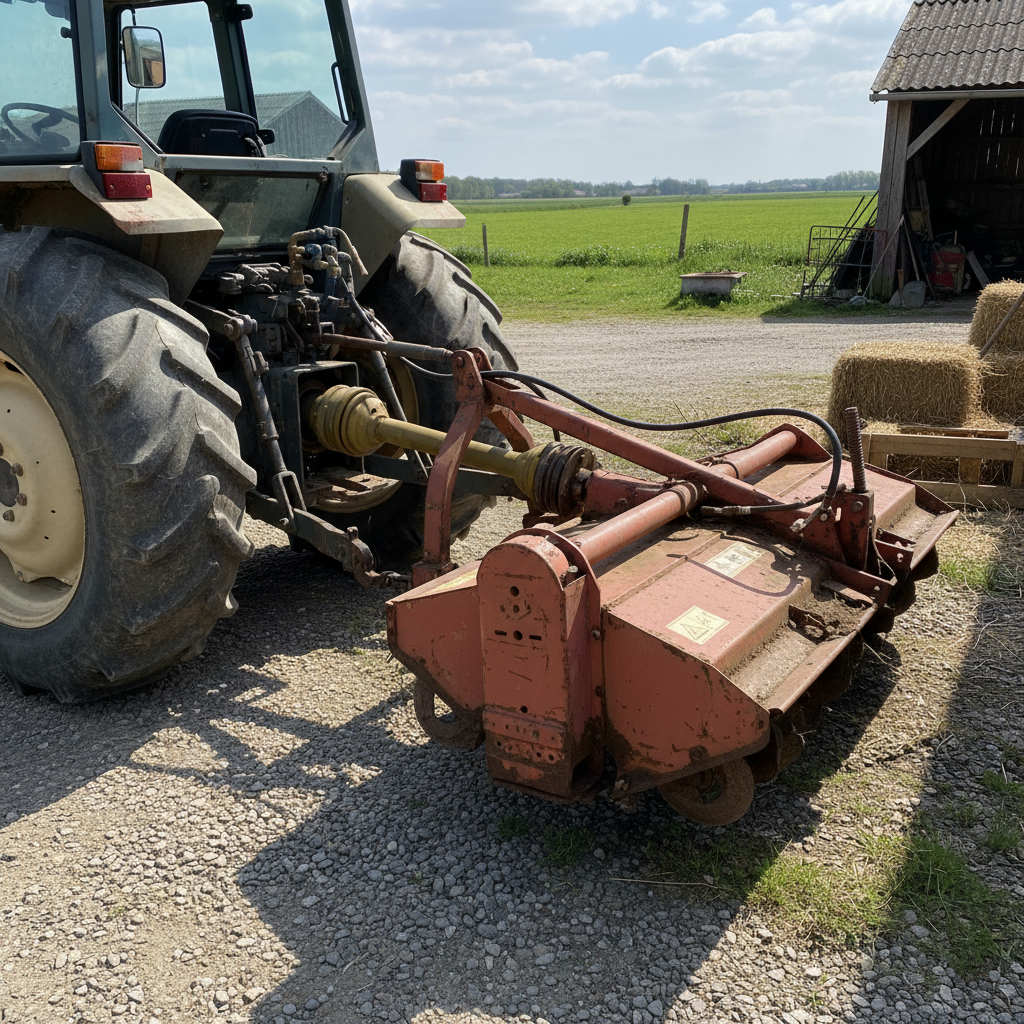
This matters because an attachment can be popular and still be a bad match for the tractor. I do not judge fit by engine horsepower alone. The real check starts with the PTO—that is the power take-off that actually runs mowers, rotavators, balers, and other driven implements.
Here is what I suggest checking together before you buy:
- PTO horsepower — enough usable power for the implement under load, not just brochure engine HP
- Implement width — matched to tractor power, soil condition, and working speed
- Tractor weight — enough mass for traction and control, especially on slopes or hard ground
- Three-point hitch category — pin size and linkage geometry must match
- Lift capacity — enough to raise the implement safely at transport height
- Hydraulic flow — important for loaders, tipping trailers, folding booms, and hydraulic offset tools
- Ballast needs — front weights or wheel ballast may be needed to keep steering stable
In my experience, lift capacity causes many expensive mistakes. A tractor may handle a light 1.8-meter mower well, but struggle with a heavy used disc mower that has more rear weight. In parts of Africa and Central Asia, this gets worse on uneven ground, where a wide or heavy implement can make the front axle feel light. That is where the spec sheet gap shows up.
I usually tell buyers to compare the implement’s actual weight, PTO demand, and hydraulic requirement on one page. Then compare that with the tractor’s hitch, pump, wheelbase, and ballast options. That gives a safer answer than horsepower alone.
A compact tractor can have enough engine horsepower to lift a heavy mower, but still fail to operate it effectively if the PTO horsepower is insufficient for the implement's requirements.True
Engine horsepower and PTO horsepower are not the same; PTO horsepower reflects the usable power available to drive implements. An implement like a mower may require more PTO power under load than the tractor can deliver, even if the tractor can physically lift it.
If an attachment is universally popular among compact tractor owners, it is always guaranteed to be a good match for any compact tractor regardless of its PTO specifications.False
Popularity does not guarantee compatibility; attachments must be matched to the tractor's PTO horsepower and implement width to ensure safe and effective operation. Using an ill-matched attachment can lead to poor performance or even damage to the tractor.
Key takeaway: Popular attachments are only useful when tractor and implement specifications match. PTO power, hitch category, lift limits, hydraulic capacity, width, weight, and ballast must be checked together to avoid unsafe operation, weak results, and costly compatibility mistakes.
Do Quick-Attach Systems Really Matter?
Quick-attach systems matter because attachment change time directly affects whether the correct tool gets used. Loader quick-attach couplers and three-point quick hitches reduce manual hookup steps, improve compatibility handling, and speed swaps between buckets, forks, cutters, and grading tools. Buyers often compare implement price but miss setup friction, which can reduce tractor productivity and long-term satisfaction.
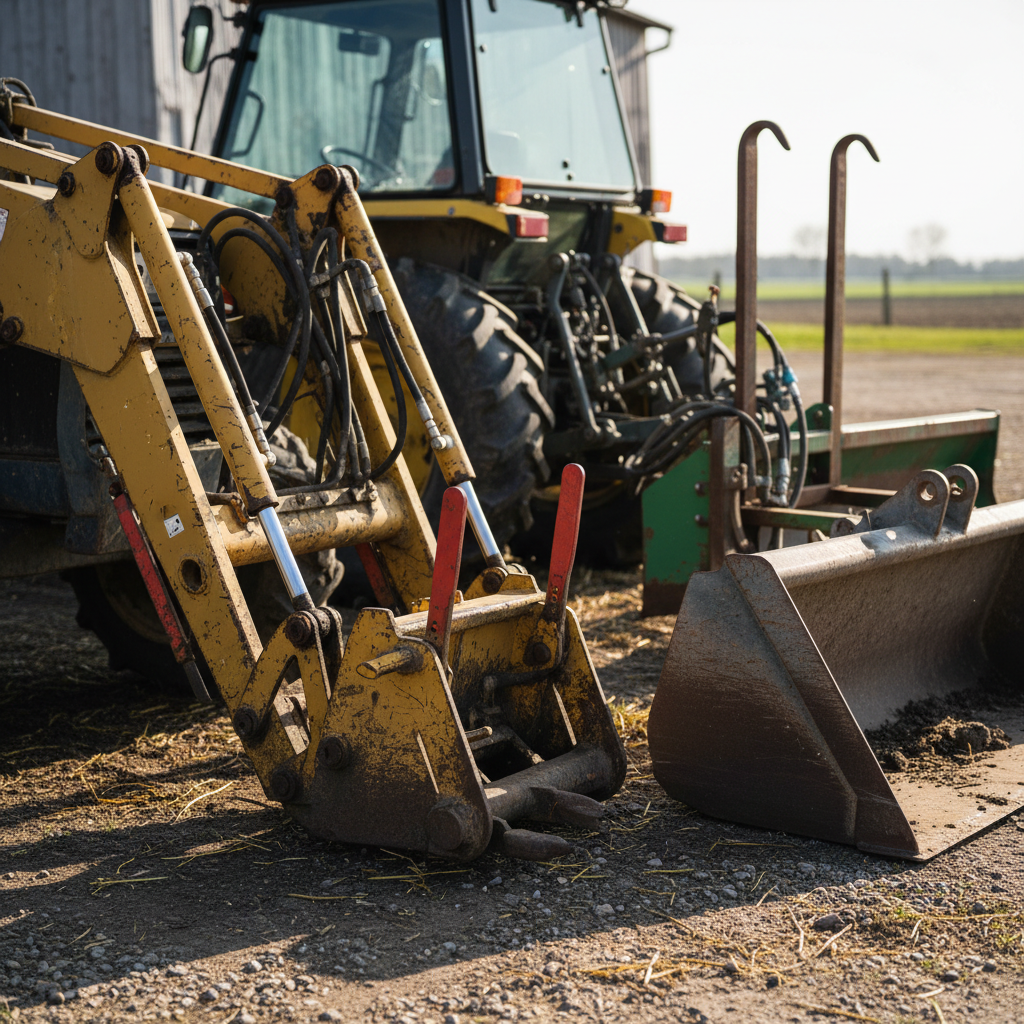
The practical issue is simple: if changing an attachment takes too much effort, many operators keep using the wrong tool. That wastes time every week. A loader quick-attach coupler lets you swap from bucket to pallet forks or a grading blade in minutes, not half an hour of lining pins, handling heavy hardware, and making repeated adjustments.
I see the same pattern on the rear hitch. A three-point quick hitch reduces the awkward part of connecting cutters, graders, post-hole diggers, or small tillage tools. Instead of backing up, climbing down, shifting the implement by hand, and fighting with link arm alignment, the operator can hook up faster and with less frustration. That matters on mixed-use farms in Africa and Latin America, where one compact tractor may load feed in the morning, cut grass later, and level a road before dark.
One importer in East Africa compared implement prices carefully but ignored hookup convenience on tractors around 50 to 70 HP. After delivery, farmers bought forks and rear blades, but many used them less than expected because changing over was slow. That is the spec sheet gap—buyers count attachment cost, but not attachment friction. In practice, easy swaps increase actual implement use, which is what makes the tractor more useful over the year.
I usually suggest checking two things before purchase: the front coupler standard and the three-point hitch compatibility. Ask whether common local implements fit directly, or need extra brackets and modification. Quick-attach systems are not luxury items. They are workflow tools, and they often decide whether an attachment earns its keep.
Front loader quick-attach systems enable operators to safely switch between a bucket and pallet forks without leaving the cab on many modern compact tractors.True
Some advanced quick-attach systems are designed for in-cab operation, reducing operator fatigue and exposure to hazards during attachment changes.
The majority of compact tractor attachments require hydraulic tools for installation and removal, making quick-attach systems unnecessary for most users.False
Most compact tractor attachments, especially those like buckets, pallet forks, and grading blades, are designed for mechanical quick-attach systems and do not require hydraulic tools for installation or removal.
Key takeaway: Quick-attach convenience is not just a comfort feature. Faster, simpler attachment changes increase actual implement use, reduce downtime between tasks, and make a compact tractor more practical across loader, mowing, grading, and material-handling work.
How Should Attachment Ownership Be Evaluated?
Attachment ownership should be evaluated by total cost, safe operation, and maintenance demands rather than purchase price alone. Buyers should compare steel quality, gearbox durability, grease points, storage footprint, ballast requirements, PTO shielding, hydraulic add-ons, and repair downtime. The most economical implement is often the one that matches tractor capacity, stores cleanly, needs fewer repairs, and reduces rollover or driveline injury risk in regular use.
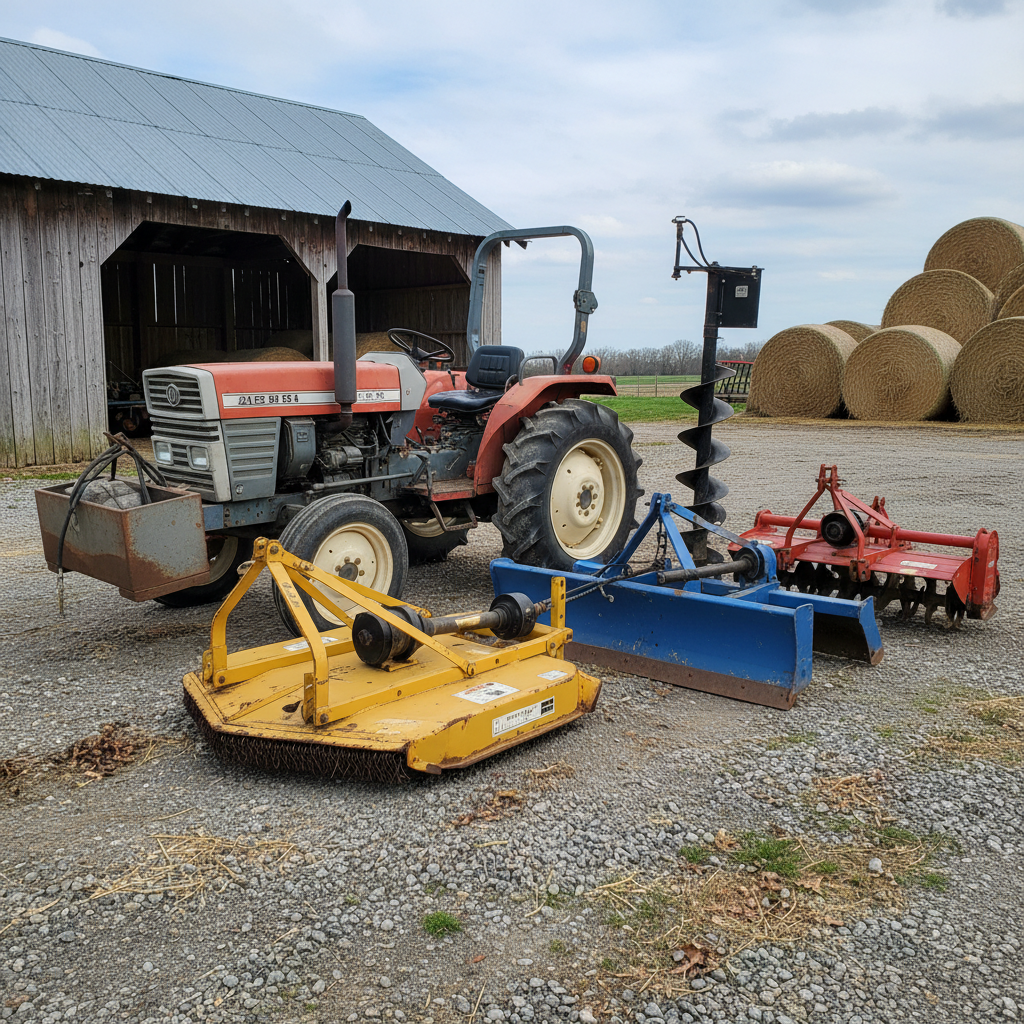
The next step is to price the attachment as a working tool over several seasons, not as a cheap add-on on delivery day. A low sticker price often hides thin steel, weak welds, light gearboxes, or poor paint that fails after one rainy season. I have seen this problem in African and Central Asian markets where imported implements look good in the yard, then loosen, crack, or rust quickly under daily work. That is the second-year surprise.
When comparing attachments, I suggest checking these points first:
- Steel thickness and weld quality — light frames twist sooner in rough ground
- Gearbox durability — especially on rotary tillers, slashers, and post hole diggers
- Grease points and bearing access — easy service means better real-life upkeep
- PTO shielding — the power take-off driveline must stay guarded during work
- Ballast needs — heavy rear or front loads can upset tractor balance
- Hydraulic add-ons — some tools need extra valves, hoses, or couplers
- Storage footprint — large implements often deteriorate faster when left outside
- Repair downtime — simple local parts usually beat special imported components
Safety changes the ownership cost too. A loader carrying wet soil or fertilizer can make a compact tractor unstable on slopes, and a heavy rear implement may lighten the front axle more than buyers expect. In Latin America, I often tell buyers to match implement weight to real tractor capacity, not brochure optimism. The most economical attachment is usually the one that fits the tractor cleanly, stores dry, needs fewer repairs, and keeps operators away from rollover or PTO driveline injuries.
The long-term durability of a tractor attachment is often better assessed by inspecting weld quality and paint thickness than by relying on the initial appearance or low purchase price.True
A cheap or shiny finish can mask poor build quality, but close inspection of welds and protective coatings often reveals if the attachment will withstand repeated use and harsh conditions.
Attachments with a universal quick-hitch system are always built with stronger materials and last longer than proprietary-mount attachments from the tractor manufacturer.False
While quick-hitch systems offer compatibility and convenience, material strength and durability depend on the manufacturer's design and build quality, not the hitch type. Some proprietary attachments may use superior materials and construction.
Key takeaway: The best compact tractor attachment is not simply the cheapest or most popular. Long-term value depends on durability, upkeep, storage, compatibility, ballast needs, and operating safety, especially with PTO-driven tools, heavy loader loads, and hillside work.
Conclusion
We’ve covered the most useful compact tractor attachments and why a front-end loader is often the best place to start for everyday lifting, loading, and material handling.
From what I usually see, buyers do better when they choose attachments around their actual jobs, not just what looks versatile on paper. A loader can open the door to several other useful tools, but I still suggest checking lift capacity, hydraulic flow, and how easily attachments can be fitted and serviced.
If you want, feel free to share your application, tractor model, horsepower, or working conditions. I’m happy to help you match this explanation to your machine setup and decide what makes sense for your farm.