Skip to content
Compact Farm Tractor Maintenance: What Owners Should Expect
One maintenance question decides a lot of compact tractor purchases: is this machine simple enough to service at home, or will every small problem send it back to the dealer? I usually tell buyers the answer depends more on routine than horsepower.
Compact farm tractors are generally easier to maintain than larger agricultural machines because service points are fewer, mechanical layouts are simpler, and routine upkeep follows predictable hour-based intervals. Most owner maintenance consists of fluid level inspection, engine oil and filter replacement, air cleaner and radiator cleaning, greasing, tire and battery checks, and minor troubleshooting. Maintenance burden is shaped less by tractor size alone than by component access, system complexity, operating conditions, and adherence to scheduled service procedures.
Is Compact Tractor Maintenance Easy?
Compact tractor maintenance is generally manageable for most owners because service points are fewer, systems are simpler than larger farm machines, and routine tasks follow repeatable intervals. Typical owner work includes daily inspections, greasing, fluid and filter changes, and basic troubleshooting. Ease depends more on following a maintenance routine and recognizing dealer-level repairs than on horsepower alone.
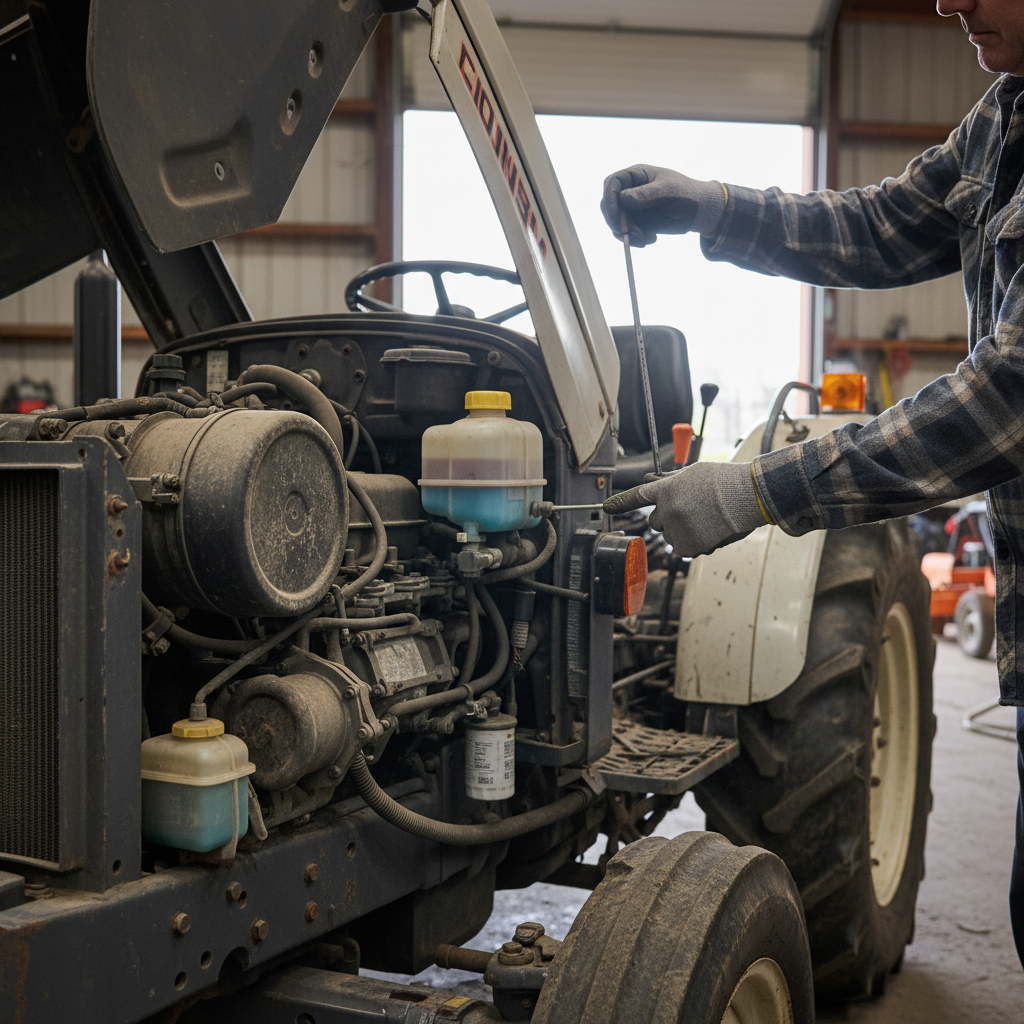
Yes—compact tractor maintenance is usually easy for most owners, especially on conventional machines. You are not dealing with the service load of a large field tractor, and the layout is often simpler to understand. Most routine work stays predictable: daily walk-around checks, greasing pins and joints, checking coolant and engine oil, and watching for leaks, loose belts, or damaged hoses. If an owner can follow a schedule, maintenance feels manageable.
What does “easy” mean in practice? Usually it means doing repeatable jobs at roughly 50-hour, 250-hour, or annual intervals, depending on use. That includes engine oil and filter changes, fuel and air filter service, front axle oil checks on 4WD models, and clutch or brake adjustment on some mechanical units. I suggest checking whether grease points, filters, battery terminals, and the radiator screen are easy to reach before buying. Good access saves time every month.
The real difference is not 25HP versus 45HP. It is whether the tractor uses straightforward mechanical systems and whether parts are easy to get. In many African and Central Asian markets, owners prefer tractors that local mechanics can open with standard tools. That avoids dealer dependence for small problems and reduces parts roulette.
Still, not every repair is owner work. Hydraulic pump faults, transmission noise, injector problems, and internal PTO issues usually need trained hands. My advice is simple: handle the routine service yourself, keep a written hour-based schedule, and ask the dealer clearly which repairs belong in their workshop. That is what makes compact tractor ownership stay easy.
Most compact tractors allow tool-free access to primary maintenance points like engine oil dipsticks, air filters, and battery terminals, making regular upkeep easier for owners without specialized tools.True
Manufacturers design compact tractors with maintenance in mind, often providing panels or hoods that open without tools so owners can quickly check and service key components, which is less common on larger or more complex machines.
Compact tractors never require hydraulic fluid changes as part of their regular maintenance schedule.False
Hydraulic fluid changes are a standard part of compact tractor maintenance, as contaminated or degraded fluid can harm performance and cause premature wear on hydraulic components. Skipping these changes can lead to costly repairs.
Key takeaway: Compact tractor maintenance is usually straightforward when owners stay consistent with inspections, lubrication, and scheduled service intervals. The practical difference is understanding which tasks are normal owner upkeep and which problems require dealer support or trained technicians.
How much upkeep by operating hours?
Compact tractor maintenance is best measured by operating hours, not calendar time. Typical upkeep includes daily inspections, a 50-hour initial service, 250-hour routine oil and filter changes, and 500-hour fluid services. Annual owner time is usually modest for inspections and lubrication, while costs rise mainly at longer fluid-service intervals or when dealer labor is used.
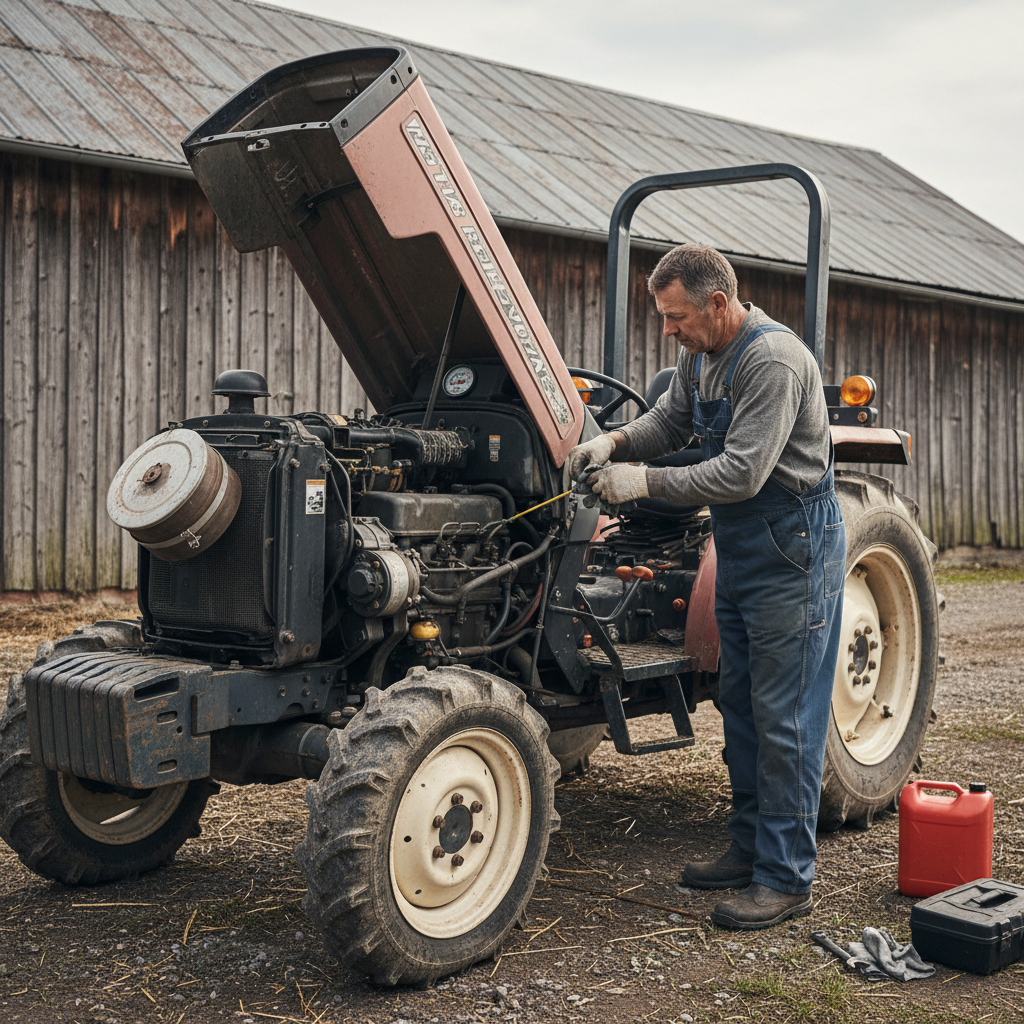
The practical issue is that compact tractor upkeep follows engine hours, not the calendar. A tractor used 80 hours a year may need little beyond checks, greasing, and one oil service, while a unit running 400 hours reaches several maintenance points quickly. In practice, most owners spend a few minutes before work checking engine oil, coolant, air filter condition, tire pressure, and visible leaks. That routine is light, but it prevents expensive trouble.
The first real milestone is usually around 50 hours. I treat that as the break-in service—engine oil, oil filter, and a close inspection of belts, hose clamps, axle bolts, and loader or three-point hitch pins. After that, many compact tractors fall into a roughly 250-hour pattern for engine oil and filters, then around 500 hours for hydraulic oil, transmission fluid, and related filters, depending on the model. Those 500-hour services cost more because fluid volume adds up fast.
For a hands-on owner in markets like Kenya or Peru, annual maintenance is often manageable with basic tools, a grease gun, drain pans, and clean storage for fluids. A low-hour owner might spend a modest amount each year on grease, filters, and oil, while a 500-hour operator should budget several times more once hydraulic and transmission service comes due. Dealer service saves time, but labor can easily double the bill. My advice is simple: ask for the hour-based service chart before buying, then price the 250-hour and 500-hour parts kits early.
Compact tractors typically require more frequent routine checks as their annual operating hours increase, regardless of their age.True
Maintenance intervals for compact tractors are set by engine hours, meaning that tractors used more intensively need more frequent servicing, regardless of how many years old the machine is.
Compact tractors only need major maintenance services once every five years, regardless of how often they are used.False
Major maintenance points are based on operating hours, not years. A tractor used heavily can reach service milestones within a single year, making the five-year interval inaccurate.
Key takeaway: Compact tractor ownership usually involves light, repeatable inspection work plus periodic higher-cost fluid services. The main planning factors are annual operating hours, service interval milestones, basic tool needs, and whether maintenance is handled in-house or through a dealer.
What maintenance tasks prevent tractor problems?
Most compact tractor problems are prevented by a short routine: daily walkarounds, engine oil and coolant checks, radiator screen and air cleaner cleaning, grease-point lubrication1, tire inspection, battery terminal attention, and scheduled oil and filter service. Failures often develop from skipped small tasks, especially in dusty, hot, muddy, or loader-heavy operation where service intervals may need to be shortened.
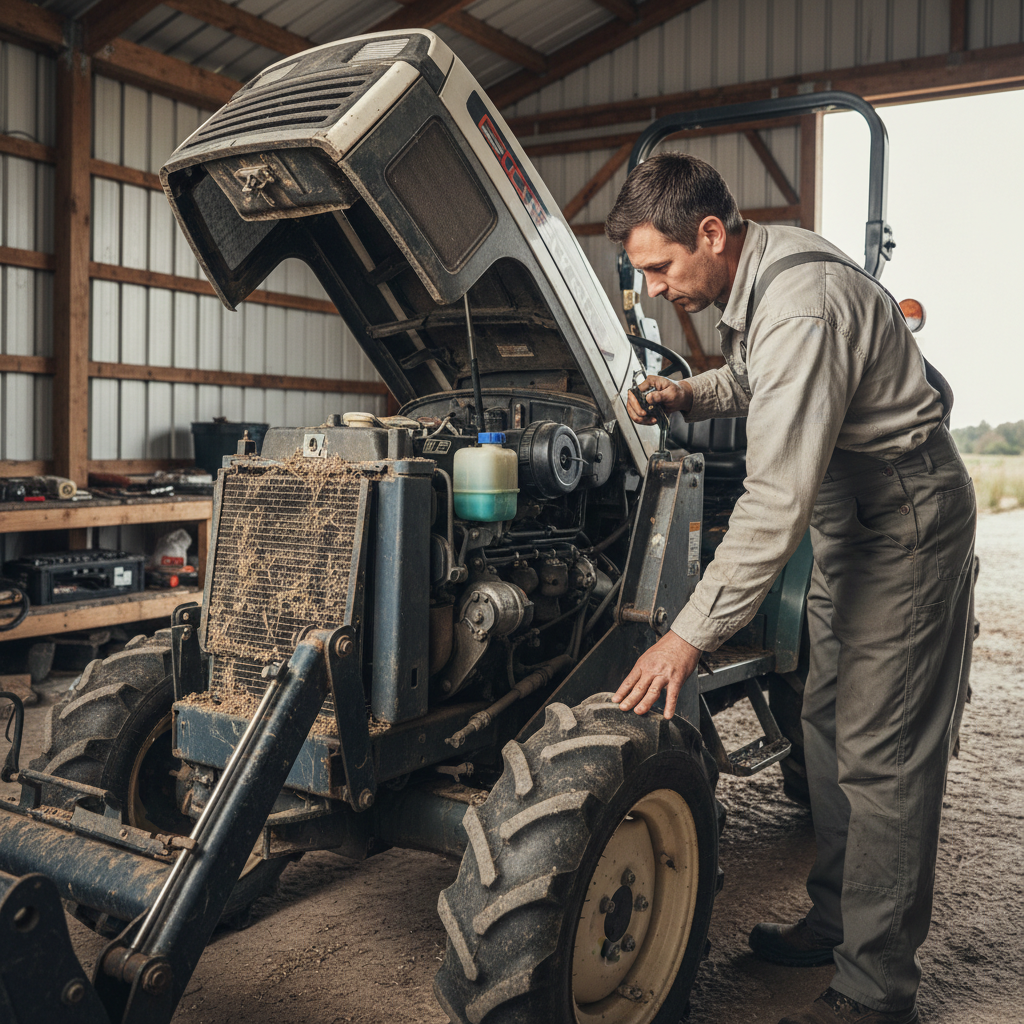
In field use, most tractor trouble starts as a small maintenance miss, not a sudden major failure. A five-minute walkaround each morning catches most of it: oil drips, loose hoses, damaged lights, cracked fan belts, and mud packed around the front axle or loader pins. I also suggest checking engine oil, coolant level, and fuel sediment bowl before startup. If any level drops repeatedly, treat that as an early warning.
Dust and heat are especially hard on compact tractors. Clean the radiator screen and air cleaner often—sometimes daily in dry field work, orchard mowing, or road hauling. If the cooling fins plug up, engine temperature climbs fast, and power drops before the operator notices the real cause. In many African and Central Asian working conditions, I would shorten cleaning intervals first, even before changing anything else in the service plan.
Greasing matters more than many owners expect. Loader pivots, steering joints, and front axle points wear quickly if grease is skipped, especially on 4WD machines doing loader work. Tire checks are just as practical: look for cuts, sidewall cracks, and uneven pressure, because a soft front tire can damage handling and overload the axle. Battery terminals also need attention—clean corrosion, tighten clamps, and make sure the ground connection is solid.
Then keep the scheduled service honest. Change engine oil and filters on time, and shorten the interval in muddy, loader-heavy, or very dusty use. A compact tractor with around 50 service hours after break-in, then regular oil and filter service every few hundred hours in practice, usually stays dependable. Small habits prevent expensive repairs.
Inspecting and cleaning the radiator screen daily during dusty operations can significantly reduce the risk of engine overheating in compact tractors.True
Dust buildup on the radiator screen restricts airflow, causing the engine to run hotter. Regular cleaning prevents this, which is especially important for compact tractors with smaller cooling systems.
It is safe to skip checking the fuel sediment bowl if the tractor uses clean, fresh diesel fuel.False
Even with clean fuel, sediment and water can accumulate in the bowl over time. Regular inspection prevents contaminants from reaching the engine and causing performance issues or damage.
Key takeaway: Compact tractor reliability depends more on consistent daily checks and on-schedule service than on complex repairs. The highest-priority tasks are fluid checks, cooling and air intake cleaning, greasing, tire inspection, battery care, and timely oil and filter changes, with closer attention required in harsh working conditions.
Which Repairs Can Owners Handle?
Compact tractor owners can usually manage routine issues such as battery checks, fuel-related hard starts, clogged air or fuel filters, low fluid levels, minor hydraulic seepage, corroded electrical terminals, and basic attachment upkeep. The practical limit is whether inspection, adjustment, or replacement can be done safely with basic tools, service intervals, and the operator manual, without opening major engine, transmission, or hydraulic components.
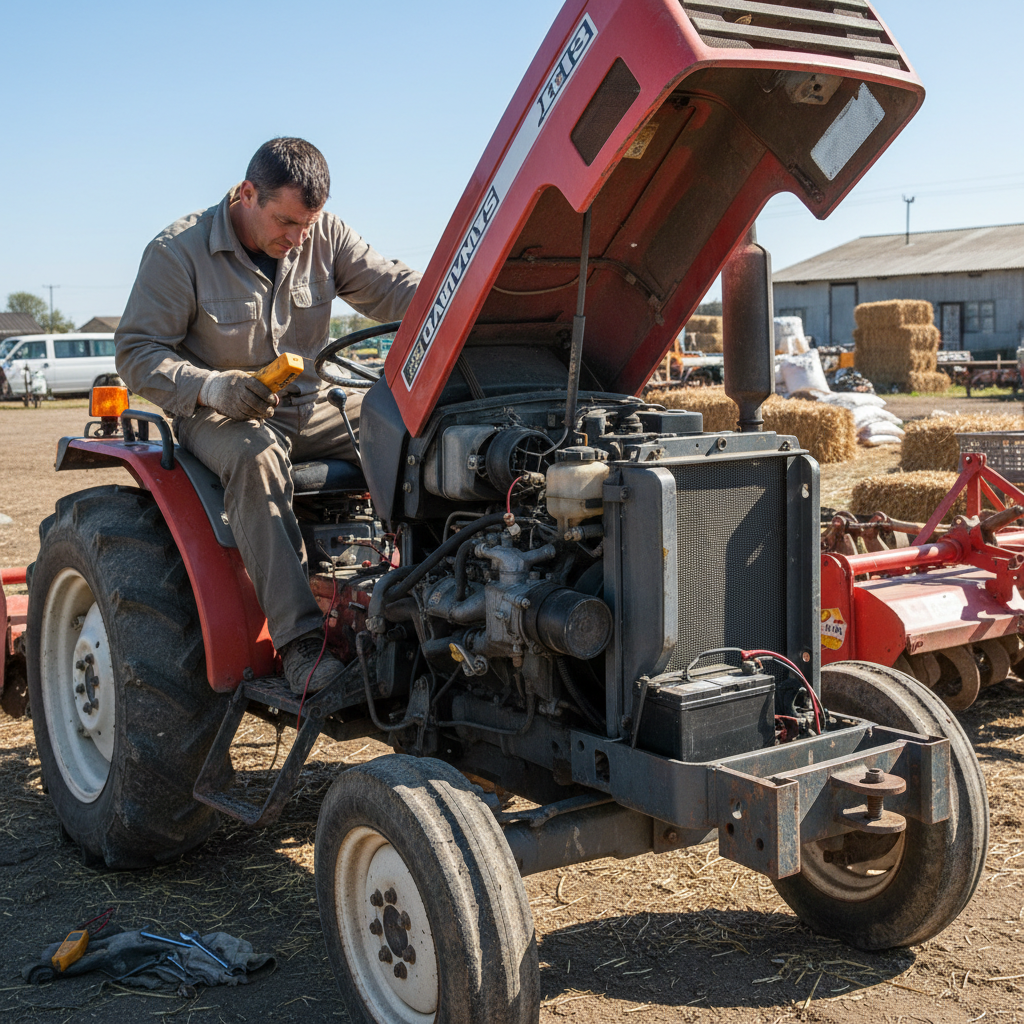
One useful check is whether the job stops at inspection, adjustment, or simple replacement. If it does, most owners can handle it with a wrench set, a grease gun, and the operator manual.
The common owner jobs are predictable: weak battery, dirty terminals, clogged air or fuel filters, low engine oil, low coolant, and hard starting after poor fuel storage.
In many African and Central Asian markets, this matters because field service may be far away, so self-sufficiency saves working days.
I usually tell buyers to think in layers—can you see the part, reach the part, and replace it safely without opening the engine, transmission, or hydraulic pump?
| Issue | Usually owner-manageable? | Basic check | Next action |
|---|---|---|---|
| Hard start | Yes, often | Battery charge, fuel flow, filter condition | Clean terminals, bleed fuel, replace filters |
| Minor hydraulic seepage | Sometimes | Check hose ends, fittings, fluid level | Tighten fitting, monitor leak, top up fluid |
| Low fluid levels | Yes | Engine oil, coolant, hydraulic oil dipsticks | Refill to spec and inspect for cause |
| Corroded electrical connection | Yes | Battery posts, ground points, fuse contacts | Clean, tighten, protect terminals |
| Internal engine knock | No | Listen, stop operation | Send to repair shop |
A practical boundary appears when the repair needs special pullers, pressure testing, internal seals, or gearbox disassembly.
Most compact tractor owners can replace clogged fuel filters themselves using only basic hand tools and guidance from the operator manual.True
Fuel filter replacement in compact tractors is generally designed to be straightforward, requiring only basic hand tools and following instructions in the operator manual; this keeps maintenance accessible for owners, especially where professional service is not nearby.
Diagnosing and repairing electronic control unit (ECU) faults on compact tractors is a routine task that most owners can perform with standard hand tools.False
ECU faults often require specialized diagnostic equipment and technical knowledge beyond what is provided in the operator manual, making these repairs unsuitable for most owners to perform without professional assistance.
Key takeaway: Most compact tractor maintenance needs consistency more than advanced mechanical skill. If the task involves filters, fluids, terminals, minor leaks, or attachment inspection, it is often owner-manageable. Internal engine, transmission, and major hydraulic repairs usually belong in a repair shop.
Which Compact Tractors Are Easier Service?
Compact tractors are easier to maintain when filters, dipsticks, grease points, battery, and radiator screen are reached quickly without removing panels or loader parts. Buyers should also compare drivetrain simplicity, hydraulic hose routing2, electronics dependence, and access to routine inspection points. Two tractors with similar horsepower can differ sharply in service time, downtime risk, and long-term ownership effort.
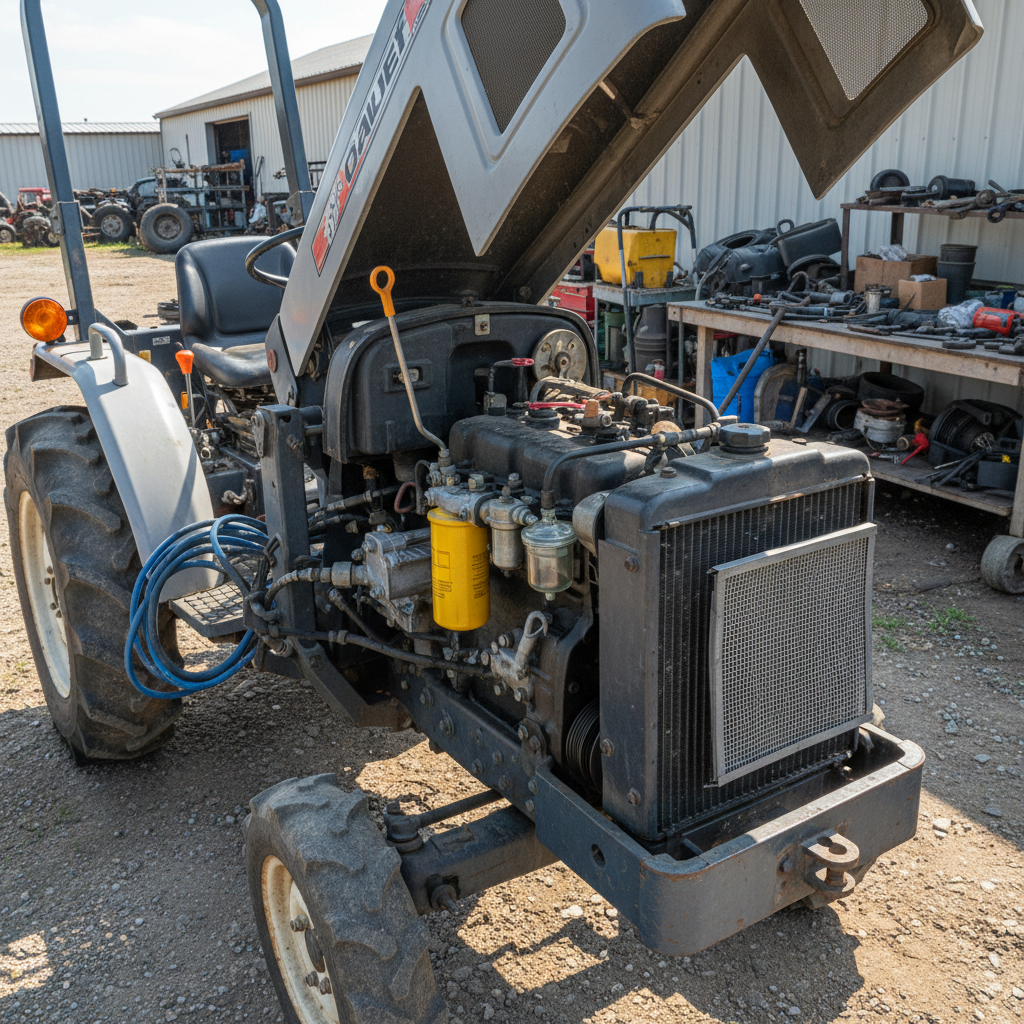
This matters because two 40HP compact tractors can ask for very different service time over a season.
I judge maintenance friendliness first by access—engine oil filter, fuel filter, dipstick, air cleaner, battery, fuse box, radiator screen, and front axle fill points.
If a mechanic must remove side panels, loader brackets, or a step plate just to do daily checks, that tractor will cost more in downtime.
| Check point | Easier-service tractor | Harder-service tractor | What to do at dealer |
|---|---|---|---|
| Filters and dipsticks | Reached from ground level | Hidden behind panels or loader frame | Open hood and touch each item |
| Grease points | Clear and grouped | Buried under guards | Count how many are easy to reach |
| Battery and fuses | Open access | Under seat or tight cover | Ask for jump-start and fuse check access |
| Radiator screen | Slides out quickly | Needs tools to remove | Remove and refit it yourself |
| Hydraulics and wiring | Short, tidy routing | Crossed hoses and extra connectors | Inspect for rubbing and pinch points |
I also prefer simple drivetrains: mechanical shuttle, basic gear transmission, and a clear clutch linkage are usually easier for local workshops to repair.
In many African and Central Asian markets, that matters more than a polished dashboard.
More sensors and tightly packed wiring can become the second-year surprise when dust, heat, and washing start causing faults.
Compact tractors with vertically mounted engine oil filters typically allow for cleaner and faster oil changes compared to those with horizontally mounted filters hidden behind loader frames.True
Vertically mounted oil filters are easier to reach and less likely to spill oil during removal, which reduces mess and service time. Loader frames and horizontal placements often require additional disassembly or awkward tool angles, increasing downtime.
All compact tractors require removal of the loader assembly to access the engine oil dipstick for daily checks.False
Many compact tractors are designed with routine maintenance access in mind, providing openings or cutouts for reaching the oil dipstick without removing the loader. Only poorly designed or older models may force such extensive disassembly, which is not an industry standard.
Key takeaway: Maintenance-friendly compact tractors reduce service time through accessible routine service points, simpler mechanical layouts, fewer electronics, and cleaner hydraulic routing. Dealership evaluation should focus on what can be inspected, cleaned, lubricated, or replaced quickly before purchase, not only on horsepower.
How do workload and storage matter?
Maintenance difficulty depends heavily on duty cycle and storage conditions3. Light mowing under cover creates a lower service burden than loader work, orchard operation, dusty cutting, mud exposure, or outdoor parking. Harsher use requires more frequent cleaning, lubrication, front axle inspection4, seal checks, and fuel-system service, while poor storage accelerates corrosion, wiring faults, hose deterioration, and fuel contamination.
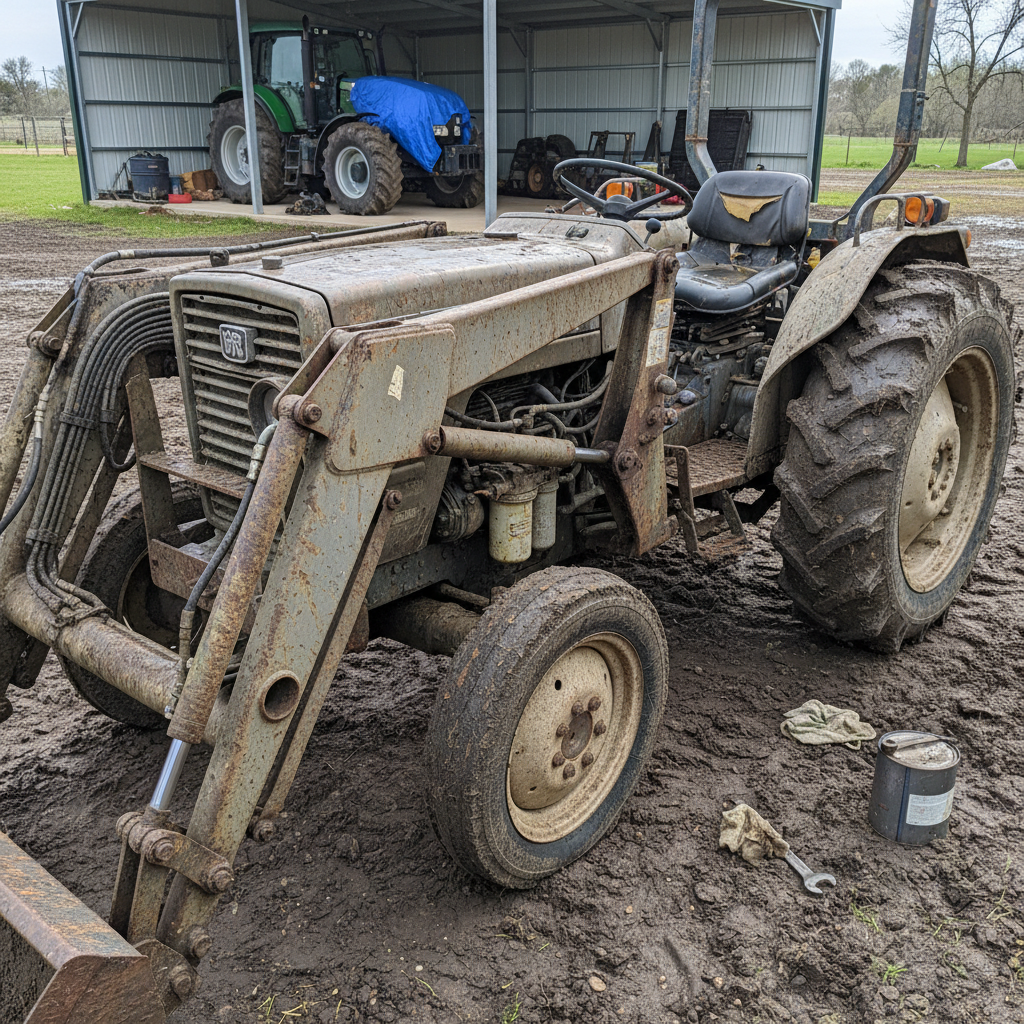
A clear sign is how fast the tractor gets dirty and how often the front axle works at full load. A compact tractor used for light mowing on dry ground, then parked under a roof, usually stays easy to maintain. Service is mostly routine—engine oil, filters, coolant level, and normal greasing. The picture changes quickly once you add loader work, orchard turns, dusty cutting, or wet fields.
Loader work puts extra strain on the front axle, steering joints, hub seals, and grease points. In orchard use, branches, leaves, and fine dust collect around the radiator screen, battery area, and wiring, so cleaning takes more time. Mud is worse. It hides oil leaks, wears seals faster, and pushes water into pivot points if lubrication is delayed. I suggest checking front axle oil, kingpin play, and any fresh seepage around seals at least every busy week in hard use.
Storage matters just as much. Outdoor parking in rain and sun accelerates rust on linkages, cracks hoses earlier, and creates wiring faults from moisture and corrosion. In many African and Central Asian markets, tractors also sit through seasonal gaps, and that raises another problem—fuel contamination from condensation or dirty cans. Then the easy tractor becomes the “second-year surprise.”
So judge maintenance difficulty by your real conditions, not by a brochure average. If the tractor will work in dust, mud, heavy loader duty, or open-air storage, plan shorter service intervals from day one. I usually recommend a simple routine: wash it, grease it, inspect seals and wiring, and drain water from the fuel system before trouble starts.
Loader work with a compact tractor significantly increases wear on the front axle and steering components compared to light mowing.True
Loader work places more weight and dynamic stress on the front axle and steering joints, accelerating wear on these parts, which leads to more frequent maintenance needs than tasks like mowing.
Storing a compact tractor outdoors has no effect on how often its grease points require servicing.False
Outdoor storage exposes a tractor to rain and humidity, which can wash away or degrade lubricants at grease points, increasing the need for more frequent servicing compared to indoor storage.
Key takeaway: Compact tractor maintenance is shaped less by generic averages than by actual workload and storage. Heavy, dirty, wet, or outdoor use shortens service intervals and raises inspection priority for lubrication points, axle components, seals, wiring, hoses, and the fuel system.
What parts support should owners check?
Parts support and dealer backup directly affect real-world maintainability. Owners should verify availability of filters, belts, seals, fluids, and scheduled service kits, along with average delivery times and workshop backlog5. A compact tractor that is simple to service can still create downtime if wear parts are delayed or only one dealer can provide repairs.
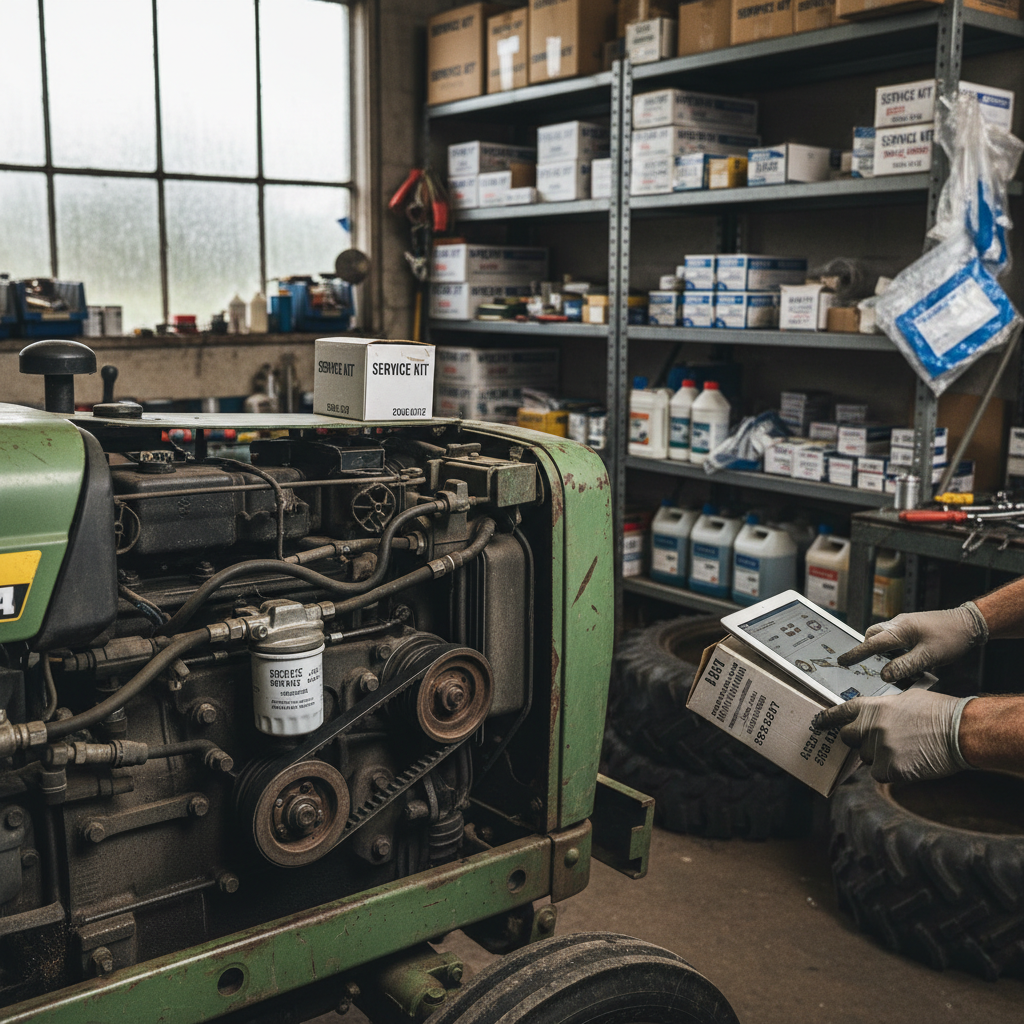
The next step is to treat parts support as part of the tractor itself. A simple mechanical tractor is only easy to own if filters, belts, seals, hoses, fluids, and clutch parts are available without a long wait. I suggest asking the dealer for a written list of routine service items and whether they keep them in local stock. If they cannot answer clearly, that is a warning.
Check the basics first. Ask how quickly they can supply engine oil filters, fuel filters, air filters, fan belts, hydraulic seals, brake parts, coolant hoses, and scheduled service kits for the 50-hour, 250-hour, and 500-hour intervals. In many African and Central Asian markets, a wait of three to five days for common parts is manageable. Three weeks is not. That is how easy maintenance turns into parts roulette.
Workshop support matters just as much. Ask the dealer how long tractors usually wait before a mechanic starts work, not just when the tractor arrives. A machine can lose a full planting window if the workshop backlog is already one to two weeks. I also recommend asking whether local independent mechanics can handle clutch work, injector service, hydraulic pump repairs, and seal replacement with normal tools.
Here’s what matters most: avoid being tied to one dealer for every small job. In rural areas, that dependence creates downtime even on reliable tractors. Good ownership support means routine parts are close, service kits are planned, and repair options exist beyond the main dealer.
If a dealer cannot provide a written list of routine service parts that are stocked locally, it often indicates future difficulty in obtaining essential maintenance items.True
Dealers who have strong parts support are transparent about availability. A lack of clear information or written parts lists is a known warning sign of weak inventory management, which can lead to long downtimes during repairs.
The availability of advanced electronic diagnostic tools is more important than having common service parts like filters or belts in stock for maintaining compact farm tractors.False
For most compact tractors, especially simple mechanical models, regular maintenance relies on timely access to basic parts such as filters, belts, and fluids. Advanced diagnostic tools are less critical than immediate access to routine service items in these machines.
Key takeaway: Maintenance planning should include parts access, dealer response time, and independent repair options. Strong support reduces downtime between service intervals and makes routine upkeep practical, especially in rural areas where dependence on a single dealer can turn simple maintenance into extended equipment downtime.
Conclusion
We’ve covered what compact tractor owners should expect from routine maintenance, from regular checks and lubrication to knowing when a repair is no longer simple owner upkeep.
From what I usually see, the tractors that stay dependable are not always the newest or most expensive ones. They are the ones maintained on schedule, with small warning signs handled early before they turn into the second-year surprise.
If you want help sorting out the next step, feel free to share your working conditions, service history, usage hours, or any fault symptoms. I’m happy to help you prioritize the next checks or maintenance actions so you can reduce avoidable downtime. Every farm works a little differently.
References
-
Details how regular greasing protects loader pivots and steering joints, extending tractor lifespan and preventing costly repairs. ↩
-
Details how tidy and short hydraulic hose routing lowers downtime risk and simplifies inspections, enhancing tractor maintenance efficiency. ↩
-
Explains how proper storage prevents corrosion, wiring faults, and hose deterioration, extending tractor lifespan and reducing repair costs. ↩
-
Detailed guidance on inspecting front axles to prevent wear and maintain tractor performance under heavy workloads and harsh conditions. ↩
-
Understand how workshop backlog impacts repair times and productivity, with tips to manage service delays effectively. ↩