Skip to content
What Are Worn-Out Farm Tractor Tire Signs?
One thing that surprises many buyers is this: a tractor tire can be finished in the field long before it looks finished in the yard. I’ve seen decent-looking tires lose grip, waste fuel, and start hiding casing problems that get expensive fast.
Worn-out farm tractor tires are identified not only by reduced lug height1, but also by rounded tread bars, poor self-cleaning2 in wet soil, rising wheel slip, and uneven wear patterns linked to inflation, ballast, or driveline setup. Tire condition must also be judged by structural warning signs such as sidewall cracking, weather checking, bulges, exposed cords, bead damage, and deep cuts into the casing.
Is Lug Wear Too Low?
Tractor tires may be effectively worn out before appearing bald. Reduced lug height, rounded edges, chipping, and poor self-cleaning in wet soil all indicate traction loss. A practical inspection checks remaining lug height against new-tire specifications when available, then evaluates whether field grip, pull, and cleaning performance have already declined below acceptable working standards.
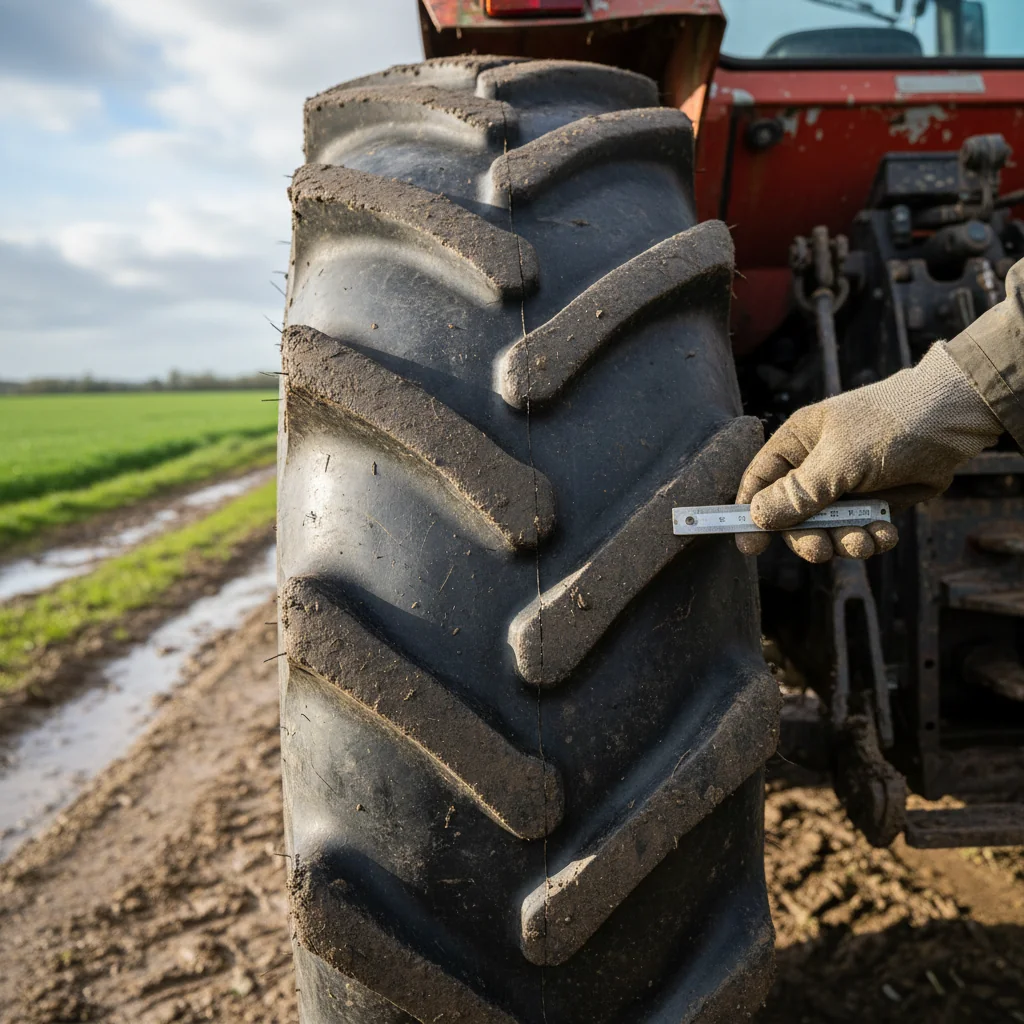
Most people don’t realize that a tractor tire can lose useful grip long before it looks bald. Low lug height is the first warning, but tread shape matters just as much. If the lugs are rounded, chipped, or polished smooth, the tire will slip earlier under load. In many African import markets, this shows up first on 60 to 90 HP tractors doing plowing or pulling trailers on mixed soil.
A practical check starts with measuring lug height at the center of the bar and comparing it with the new-tire spec, if you can get it. I suggest checking several points around the tire, not just one spot, because wear is often uneven from road transport, loader work, or poor inflation. If a new rear tire started around 45 to 50 mm and now measures closer to 20 to 25 mm, traction has usually dropped a lot in real field work. But measurement alone is not enough. Here’s what matters most—watch how the tire works in soil.
I always tell buyers to look at self-cleaning first. In wet ground, a healthy lug should throw mud clear as the wheel turns. If mud packs between the bars and stays there, the tire has already lost bite, even if some tread remains. In Latin America and Central Asia, that problem often appears during primary tillage, where differential lock use increases and fuel burn goes up. To be honest, this is where the spec sheet gap appears.
"AFalse
"Lug
As long as the center of the tire lugs still shows visible tread, the tire will maintain optimal grip for plowing and heavy pulling.False
Visible tread at the center does not guarantee effective traction if the lugs are worn, rounded, or damaged; optimal grip depends on both tread depth and lug condition.
Key takeaway: Low lug height is only part of the assessment. Rounded, chipped, or mud-packed lugs can signal that a tractor tire has lost useful traction even before it looks bald, so inspection should combine lug measurement with actual field performance.
Is Tire Wear Reducing Traction?
Worn farm tractor tires often reduce traction before severe visual damage appears. Common field signs include higher wheel slip, weaker draft performance, more soil smearing or dirt buildup behind lugs, slower operation, and increased fuel consumption under load. When traction loss starts lowering productivity and raising compaction risk, tire replacement may be justified based on performance cost, not appearance alone.
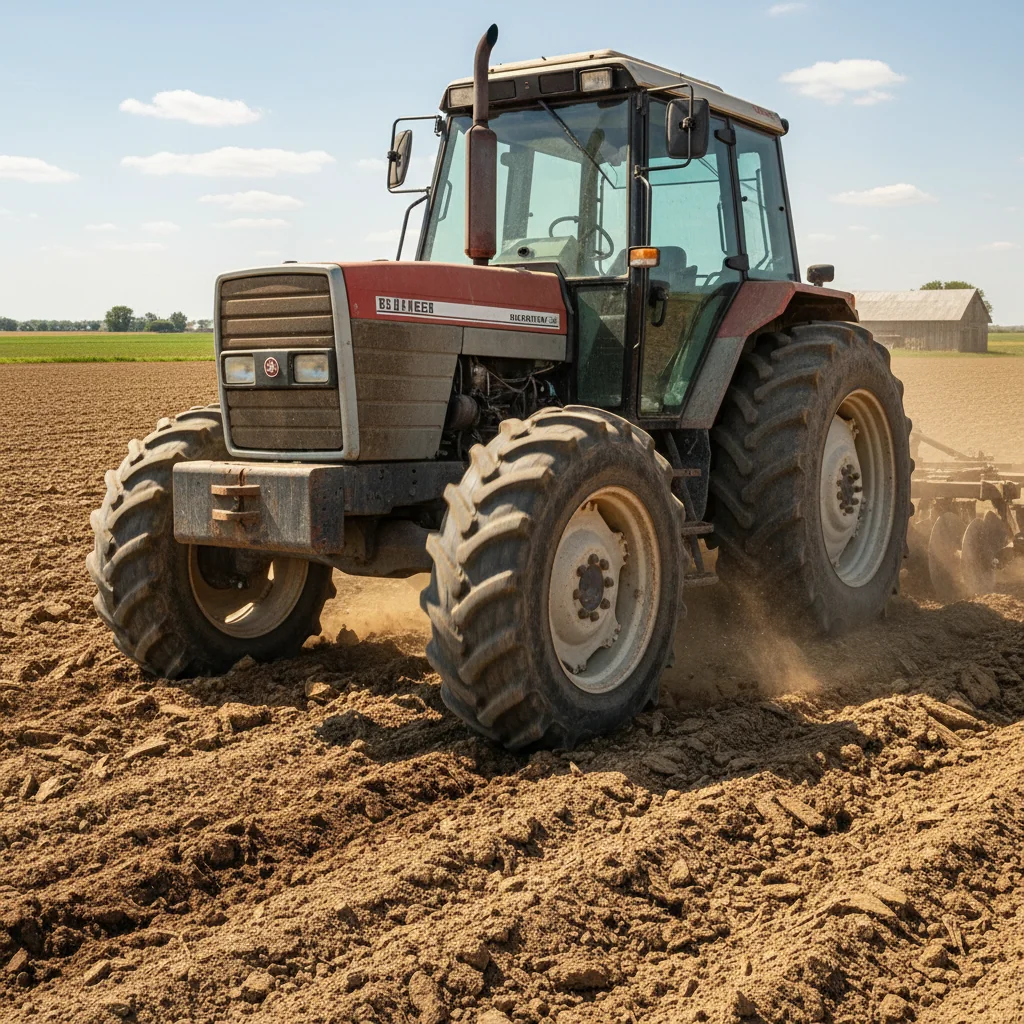
Let me share something important about tractor tires: traction usually drops before the tire looks completely worn out. I see farmers judge only by lug height, but field behavior tells the truth sooner. If a 75 to 100HP 4WD tractor starts slipping more under the same disc plow or cultivator load, the tires may already be costing money.
In many African import markets, tractors work on dry ground one season and sticky soil the next. That mix exposes worn tires quickly. Instead of biting cleanly, the lugs start smearing the soil, and dirt packs between them. You often notice weaker draft performance first—that is the tractor’s pulling ability under load. Slip can climb from a normal range around 8 to 12% up toward 15 to 20%, and fuel use rises because the engine keeps working while forward progress slows.
Here’s the thing: worn tires also change how weight transfers through the axle to the soil. The operator may add ballast, lower gear, or engage differential lock more often, but that only partly covers the problem. I usually tell buyers in Latin America and Central Asia to compare fuel per hectare, working speed, and finished area per day before deciding. If the tractor now needs an extra hour to cover the same field, tire wear is no longer a cosmetic issue.
To be honest, replacement makes sense when lost traction starts cutting output and increasing compaction risk. I suggest watching performance, not appearance alone.
A common sign of worn-out farm tractor tires is an increase in wheel slip even when the tread appears to have some lug depth left.True
Tire rubber can harden and lugs can become rounded before the tread is visually 'bald,' reducing their ability to grip soil effectively. Increased wheel slip under the same load and conditions indicates traction loss before obvious visual wear.
If tractor tires still have visible tread, they will always provide adequate traction regardless of soil conditions.False
Visible tread does not guarantee optimal traction, especially if the lugs are rounded, rubber is hardened, or the tread pattern is clogged with mud. Soil type and tire condition together determine traction, so relying solely on visible tread is misleading.
Key takeaway: Tractor tire wear should be judged by field performance as well as tread appearance. If slip increases, pulling power drops, work slows, and fuel use rises, worn tires may already be increasing operating cost and harming soil conditions.
When Are Tire Cracks Unsafe?
Farm tractor tire cracks become unsafe when weathering extends beyond light surface checking into deeper sidewall, bead, or lug-area splits. Sunlight, ozone, heat, chemicals, age, and outdoor storage can harden rubber and weaken the casing even when tread remains. Deep cracking may admit moisture into the tire structure and signal replacement.
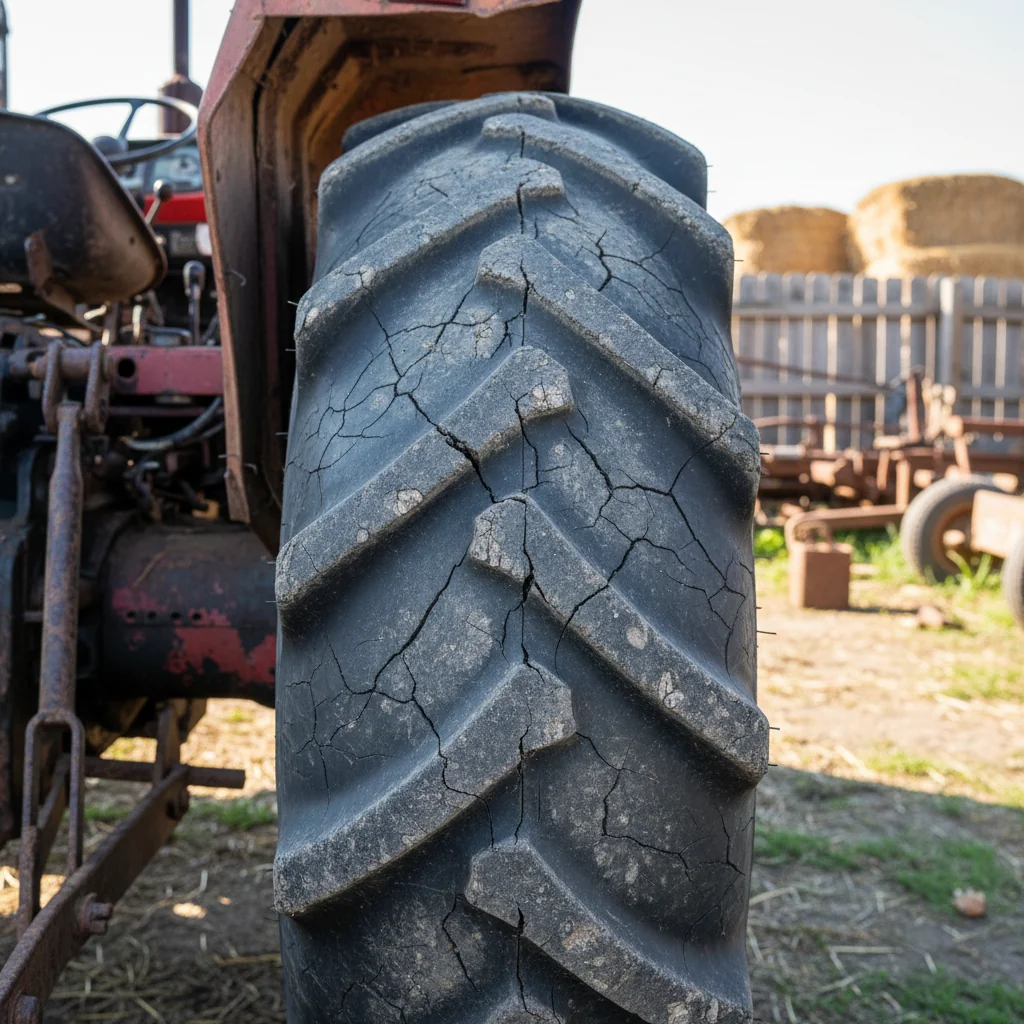
Here's what matters most when judging tire cracks: tread depth alone does not tell the full story. I see many low-hour tractors, especially 50 to 90HP units, with plenty of lug left but rubber already aged out from sun, heat, and outdoor storage.
Light weather checking is usually cosmetic. You often see fine hairline cracks on the sidewall surface, and the tire can still work for light seasonal use. But once cracks deepen, spread around the bead, or open between the lugs, I treat that as a structural warning. The bead is the area that seals against the rim, and damage there can lead to air loss, casing weakness, and harder field vibration.
In many African import markets and parts of Latin America, tractors may sit outside for years before resale. That creates hard, faded, brittle rubber even if the hour meter shows only 1,200 to 1,800 hours. I also tell buyers to press the sidewall by hand—aged rubber often feels stiff, not flexible. If you see splits deep enough to catch a fingernail, or cords starting to show, replacement is usually the safer decision.
Here’s the practical line: shallow surface checking may buy some time, but deep cracking means the casing may already be compromised. Moisture can enter through those splits and weaken the internal layers long before a tire fully fails. I always suggest budgeting for replacement if cracks reach the bead, shoulder, or lug base. A tractor tire can look usable in the yard and still become a field problem under load.
Cracks that extend to the bead area of a tractor tire are a strong indicator that the structural integrity of the tire is compromised, even if the tread appears usable.True
The bead is critical for maintaining an air-tight seal and proper mounting on the rim; cracks in this area can lead to sudden tire failure and are more serious than superficial weather checking.
As long as there is sufficient tread depth, deep cracks on the sidewall do not affect the safety or performance of farm tractor tires.False
Deep sidewall cracks can indicate internal rubber degradation and may lead to blowouts or rapid air loss, regardless of tread depth. Tread depth alone does not guarantee tire safety.
Key takeaway: Low-hour farm tractor tires can age out before tread wears down. Light cosmetic weather checking is less serious, but deep cracks, brittle rubber, bead splits, and lug-area separations usually indicate structural weakening and a real replacement need.
Which Tire Damage Requires Immediate Replacement?
Farm tractor tires require immediate replacement when they show sidewall bulges, blisters, exposed plies or cords, bead damage, or cuts and punctures that reach the casing. These defects indicate structural failure risk rather than normal tread wear. Continued use during transport or heavy field work can lead to sudden air loss, loss of control, downtime, and costly equipment damage.
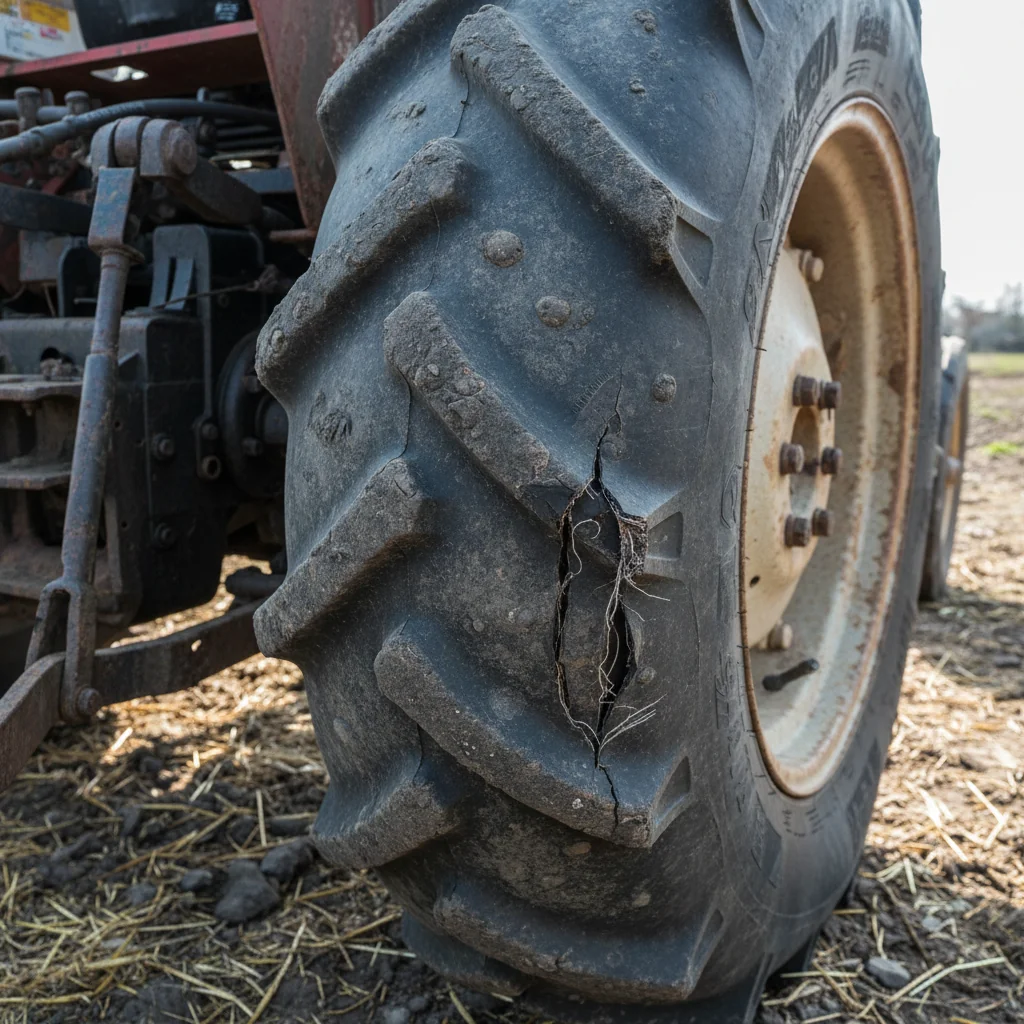
The biggest mistake I see is treating structural tire damage like normal wear. A worn tread may reduce traction gradually, but a bulge, blister, or exposed cord means the casing has already weakened. At that point, the tire can fail under load. I would not keep it in service for road transport or heavy draft work.
Here’s a simple way to judge the difference:
| Damage type | What it means | Replace now? | Main risk |
|---|---|---|---|
| Sidewall bulge or blister | Internal cord separation | Yes | Sudden rupture |
| Exposed plies or cords | Casing is open and weakened | Yes | Rapid failure |
| Bead damage | Tire cannot seal or seat correctly on the rim | Yes | Air loss, rim damage |
| Deep cut or puncture into casing | Structural layers are compromised | Yes | Blowout under load |
| Surface tread wear only | Normal service wear | Usually no | Lower traction |
In many African and Central Asian markets, tractors often haul grain, water, or trailers for 10 to 30 km on rough roads. Road heat and side loading make damaged tires fail faster than many operators expect. A 70HP to 90HP tractor carrying a front loader or pulling a loaded trailer puts significant stress on the sidewall and bead. One damaged tire can also affect the rim, axle load balance, and steering control.
A tractor tire with exposed cords in the sidewall should be replaced immediately, even if the tread still looks usable.True
Exposed cords indicate that the tire's structural integrity is compromised; continuing to use it can lead to sudden blowouts or complete tire failure, especially under heavy loads.
A tire with a minor cut in the tread area but no visible cords or bulges is just as urgent to replace as one with a sidewall blister.False
Minor tread cuts that do not expose cords or cause bulges typically do not compromise the tire’s structural strength, whereas sidewall blisters indicate internal damage and a much higher risk of sudden failure.
Key takeaway: Bulges, exposed cords, bead damage, and deep casing cuts are clear replacement signs, not monitor-and-wait issues. A tractor tire with structural damage can fail without warning and should be removed from service before road transport, heavy draft work, or prolonged field operation.
Does Uneven Tire Wear Signal Setup Problems?
Uneven farm tractor tire wear often indicates both tire deterioration and machine setup faults. Center wear points to overinflation, shoulder wear to underinflation, and lug step wear to alignment, road travel, or driveline mismatch. Left-right differences can result from slope work or ballast imbalance. Reading the pattern helps determine serviceability and identifies corrections needed before tire replacement.
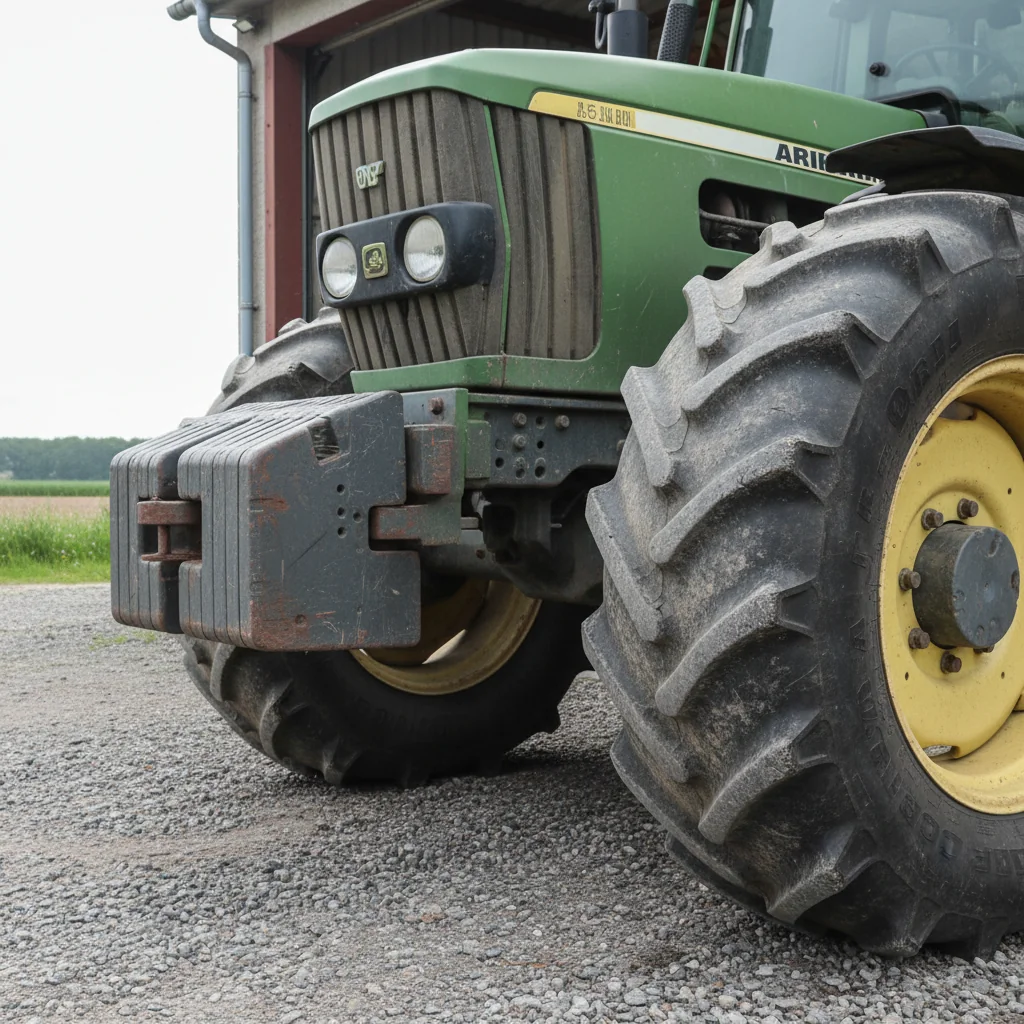
Here's how we usually frame this for buyers: uneven tire wear is not just a bad tire story. It is often a tractor setup story too. If the center of the tread wears faster, pressure is usually too high for the load. If both shoulders wear first, the tire has likely been running soft, which also hurts traction and fuel use.
Lug wear tells you even more. I often look for step wear across the lugs—one edge rounded, the other sharp. On a 70HP to 90HP 4WD tractor, that pattern can point to front axle alignment issues, too much road travel, or a rolling circumference mismatch between front and rear tires. That mismatch matters because the driveline depends on the correct lead ratio. If the ratio is off, the front axle pulls or drags, and the lugs wear in a pattern instead of evenly.
Left-right differences are another clue. In many African and Central Asian markets, tractors spend long hours working on side slopes, rough shoulders, and mixed road surfaces. One rear tire may carry more load, especially if ballast is uneven or an implement on the three-point hitch is offset. I suggest checking ballast first, then rim settings, then inflation with the tractor in real working condition—not empty in the yard.
A worn tire may still be serviceable if the casing is sound and lug loss is limited. But I would not fit a new set before checking pressure, toe-in, ballast, and driveline matching. If not, the replacement tires may wear the same way within 500 to 800 hours.
Step wear across the lugs—where one edge is rounded and the other remains sharp—can indicate that the front and rear tire circumferences are mismatched on 4WD tractors, causing drivetrain wind-up and abnormal tire wear.True
On 4WD tractors, if the rolling circumferences of front and rear tires are not correctly matched, it can cause excessive stress in the drivetrain, leading to characteristic step wear on the lugs due to scrubbing effects.
Shoulder wear on both sides of a tractor tire always indicates that the tire has been overinflated for field conditions.False
Shoulder wear on both sides is more typically a sign of underinflation, not overinflation. Underinflated tires flex excessively, causing the outer shoulders to contact the ground more and wear faster, while overinflation usually causes the center of the tread to wear first.
Key takeaway: Uneven wear is a diagnostic pattern, not just a tire defect. Inflation, alignment, ballast balance, operating surface, and driveline setup should be checked before fitting new tires, or the replacement set may wear the same way.
Is poor air retention tire failure?
Poor air retention can indicate farm tractor tire failure when repeated reinflation is needed or pressure drops consistently. Air loss may result from bead damage, valve stem leaks, punctures, casing fatigue, or age-related rubber deterioration. This symptom affects traction, footprint, handling, and wear patterns while also signaling possible internal structural weakness that may require repair, close monitoring, or full replacement.
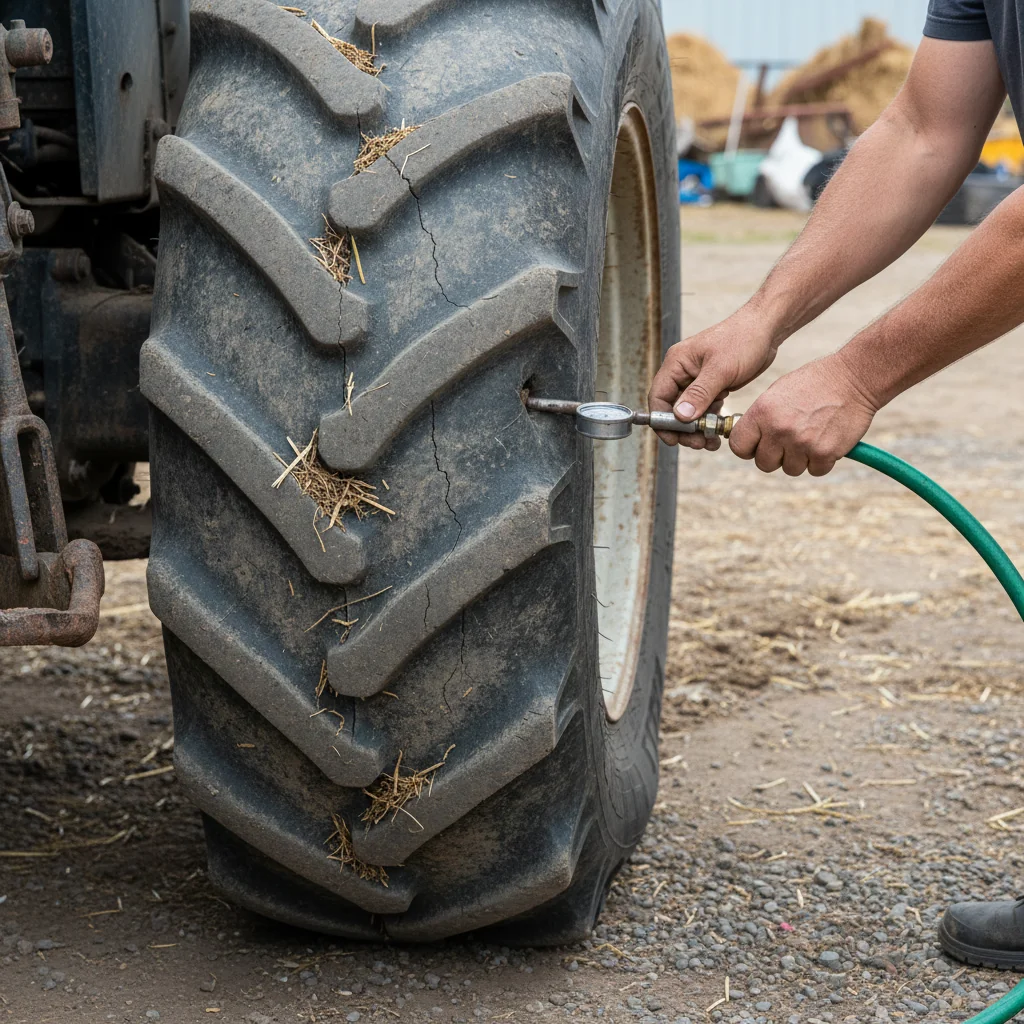
To be honest, poor air retention is often an early warning, not a minor inconvenience. If a farm tractor tire needs air every few days, or drops pressure noticeably over one or two weeks, I treat that as a condition issue worth checking closely.
The air loss may come from a simple valve stem leak, but I also see bead damage, small punctures, cracked sidewalls, and casing fatigue behind the same symptom. On a 70HP to 90HP tractor, even a drop of 4 to 6 psi can change the tire footprint enough to reduce traction in soft soil. That means more wheel slip, uneven lug wear, and extra fuel use. In many African import markets, this shows up on tractors parked through the dry season, then returned to field work without a proper tire inspection.
Age matters too. Rubber hardens over time, even if tread still looks acceptable. A used tractor may show 60% tread depth, but if the tire is eight or ten years old, slow air loss can point to internal separation or weakened cords. I suggest checking the bead seat on the rim, inspecting the valve area, and looking for bulges or weather cracking around the sidewall.
For buyers inspecting seasonal or second-hand machines, this is a very practical sign. A tire that will not hold pressure consistently can affect steering stability, pulling power, and transport safety on rough roads. Sometimes a repair is enough. But if reinflation becomes routine, I would monitor it very carefully or budget for replacement before serious field use.
On farm tractor tires, consistently poor air retention can be an early sign of internal casing fatigue, which may not be externally visible until more severe damage occurs.True
Internal casing fatigue weakens the tire structure, often leading to slow air leaks before visible cracks or bulges appear. Early detection through air retention monitoring helps prevent unexpected tire failures.
A tractor tire that loses air slowly over several days is always caused by a faulty valve stem and does not require inspection for other issues.False
Slow air loss can result from multiple causes such as bead leaks, minor punctures, or internal damage, not just valve stem problems. Overlooking other potential issues can lead to missed signs of serious tire deterioration.
Key takeaway: A tractor tire that will not hold pressure should not be dismissed as routine maintenance. Persistent air loss often points to hidden damage or aging that reduces traction, alters handling, and shortens tire life, making inspection essential before continued field use or equipment purchase.
Does Tire Age Require Replacement?
Tire age alone does not always require immediate replacement, but aging rubber loses flexibility, grip, and structural resilience even when tread depth appears acceptable. Farm tractor tires stored outdoors or used seasonally face faster weathering, oxidation, and cracking. Older tires should trigger closer inspection, cautious transport use, and replacement planning before demanding field work or resale.
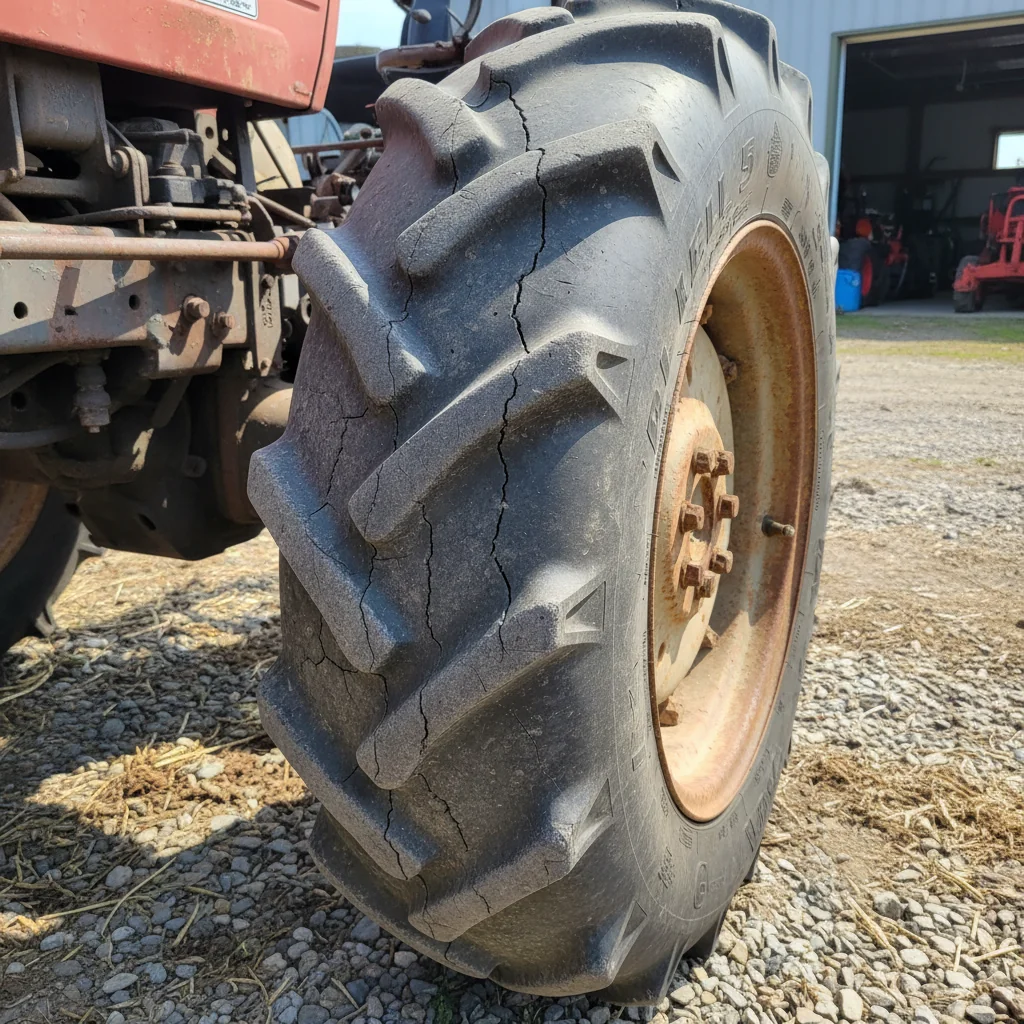
The biggest mistake I see is judging a tractor tire by tread alone. A rear tire can still show deep lugs after 8 to 12 years, yet the rubber may already be hard, dry, and less able to flex under load. That matters because farm tires do more than roll—they carry ballast, absorb shock, and transfer torque to the soil.
In many African import markets, this issue shows up on low-hour tractors that spent long periods parked outdoors. Sun, heat, rain, and ozone age the rubber faster than many buyers expect. I usually tell buyers to look at the sidewall first: fine weather cracks, bead cracking near the rim, and small splits between lugs often reveal more than tread depth. On a 70HP to 90HP tractor carrying a loader or pulling a 2-bottom plow, an older tire has less structural margin once field loads and road speed increase.
Seasonal use creates another problem. A tractor that works only during planting and harvest may sit for six or eight months with the same contact patch on the ground, especially if inflation pressure is low. I have seen old tires that looked acceptable in the yard but started showing chunking and deeper cracking after a few transport runs with a trailer.
So, does age alone mean automatic replacement? Not always. But once a tire reaches advanced age, I suggest moving from casual use to careful inspection and replacement planning. If the tractor will handle road transport, heavy draft work, or resale inspection, older tires deserve extra caution—even when the tread still looks usable.
A farm tractor tire can still have deep tread lugs but require replacement if the rubber has become hard and brittle due to age and environmental exposure.True
Tire age and exposure to elements like sun and ozone can degrade the rubber compound, making it less flexible and more prone to cracking, even if the tread depth appears sufficient. Flexibility is essential for load carrying and shock absorption.
If a tractor tire does not show visible sidewall cracks, it is always safe to continue using regardless of age.False
Rubber can deteriorate internally and lose its elasticity or load-bearing ability even without external cracks. Aging and environmental factors can compromise safety and performance before visible damage appears.
Key takeaway: Tread depth is only part of tire condition. As tractor tires age, rubber hardens and becomes more crack-prone, especially after outdoor storage or low-use seasons. Older tires with decent tread may still need inspection, cautious use, or replacement planning before transport, field loads, or resale.
Should tire replacement match pressure and axles?
Farm tractor tire replacement should not be based on tread wear alone. Pressure history must be checked first, because chronic underinflation4 or overinflation can mimic wear-out and continue damaging the next tire. Replacement planning should also match work type, axle load, and the correct front-to-rear rolling ratio5 on MFWD or 4WD tractors to prevent uneven wear, handling issues, and driveline strain.
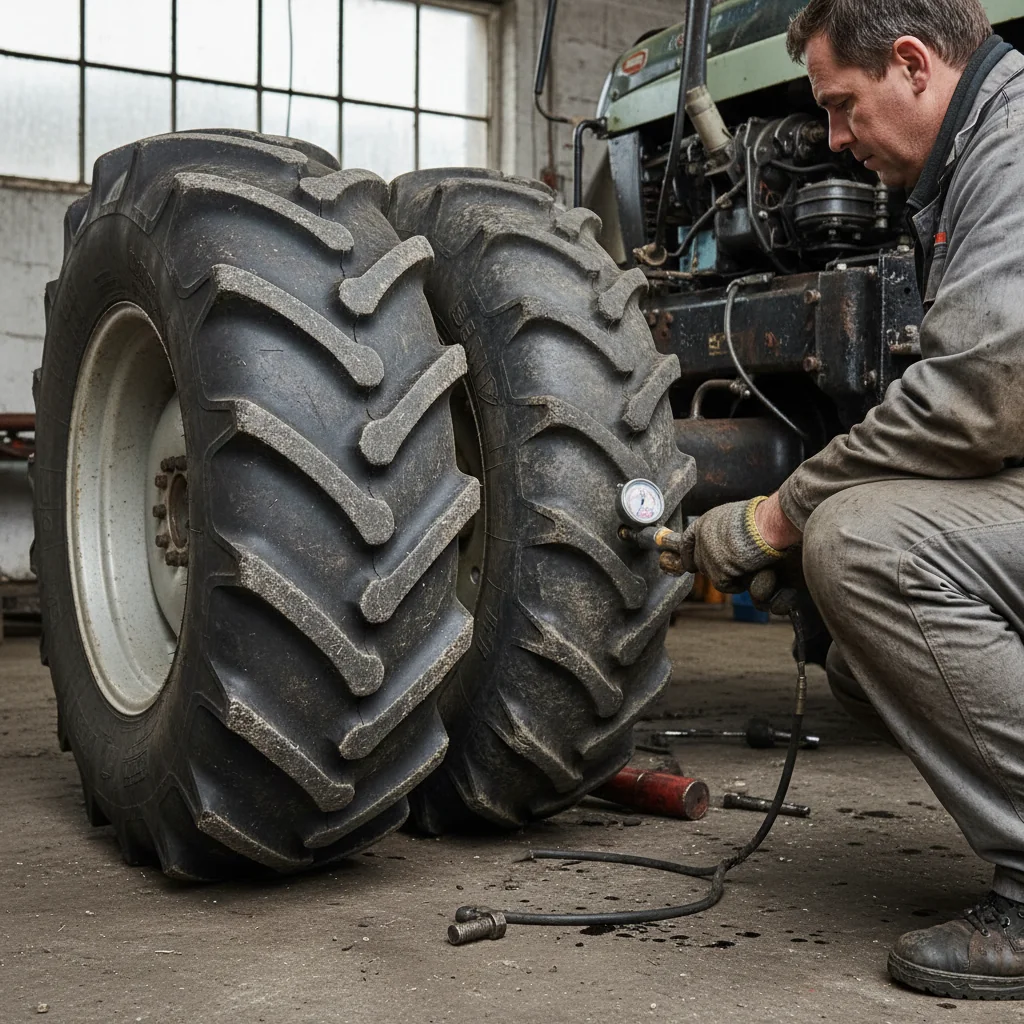
To be honest, the spec that actually matters is not tread depth by itself. A tire can look finished, but the real cause may be months of running at the wrong pressure. I always suggest checking inflation records, valve leaks, and sidewall shape first. Chronic underinflation rounds the shoulders and overheats the casing, while overinflation wears the center lugs and reduces traction in the field.
In many African import markets, tractors work on mixed jobs—plowing in the rainy season, then road transport with trailers for months. That changes tire stress a lot. A 75HP 4WD tractor pulling loads near 3 tons on the road will need a different replacement choice than the same tractor doing light cultivation only. I usually tell buyers to match the new tire to actual axle load, transport speed, ballast, and soil condition, not just to the old size stamped on the sidewall.
Here’s where expensive mistakes happen on MFWD or 4WD tractors. Front and rear tires must keep the correct rolling ratio, or lead-lag gets out of range and the driveline starts fighting itself. Then you see hard steering, front tire scrub, and extra strain on the differential and transfer gears. I have seen buyers replace only one axle with a cheaper pattern, then wonder why wear returns in one season.
So yes, replacement plans should include fit, pressure history, and axle matching together. I suggest checking the tractor manual, measuring loaded radius if needed, and buying tires as a working set when ratios are sensitive. That costs more upfront. It usually saves a gearbox repair later.
Matching tire replacement across an axle is important because uneven tire sizes or pressures can lead to differential stress and premature drivetrain wear.True
When tires on the same axle differ in diameter due to wear or pressure variation, they rotate at slightly different speeds. This can cause excessive strain on differential gears and axles, especially in 4WD tractors, potentially leading to costly mechanical problems.
As long as the tread depth is acceptable, mismatched tire pressures on the same axle have minimal effect on tractor performance or wear.False
Mismatched tire pressures cause uneven load distribution and rolling circumference, which can reduce traction, accelerate tire wear, and put additional stress on drivetrain components. Consistent pressure across an axle is critical for optimal performance and longevity.
Key takeaway: A worn-looking tire is not always a worn-out tire. Check inflation history before replacement, then select tires by job, load, and axle compatibility. On MFWD or 4WD tractors, incorrect front and rear tire matching can create costly wear and driveline problems.
Conclusion
We’ve covered the main signs of tractor tire wear, from low lug height to rounded edges, chips, and mud-packed tread that reduces grip before a tire looks bald.
From what I usually see, many owners wait too long because they judge tires by appearance alone. I suggest checking tread condition together with how the tractor actually pulls, brakes, and cleans itself in the field. That helps avoid the spec sheet gap between what a tire seems to have left and what it can still do.
If you have questions about tire wear, replacement timing, or matching tires to your working conditions, feel free to reach out. I’m happy to help with a no-pressure discussion. Every farm is different—choose what actually works for your needs.
References
-
Detailed insights on how lug height impacts tire grip and field performance, crucial for maintaining tractor efficiency and safety. ↩
-
Explains the role of self-cleaning in preventing mud buildup, enhancing traction and reducing tire slippage in challenging soil conditions. ↩
-
Explains why relying solely on tread depth can be misleading and highlights the importance of inspecting tire rubber condition. ↩
-
Explore how chronic underinflation damages tire casing and causes uneven wear, impacting tractor performance and tire lifespan. ↩
-
Understand the impact of front-to-rear rolling ratio on driveline strain and handling issues in MFWD and 4WD tractors. ↩