Skip to content
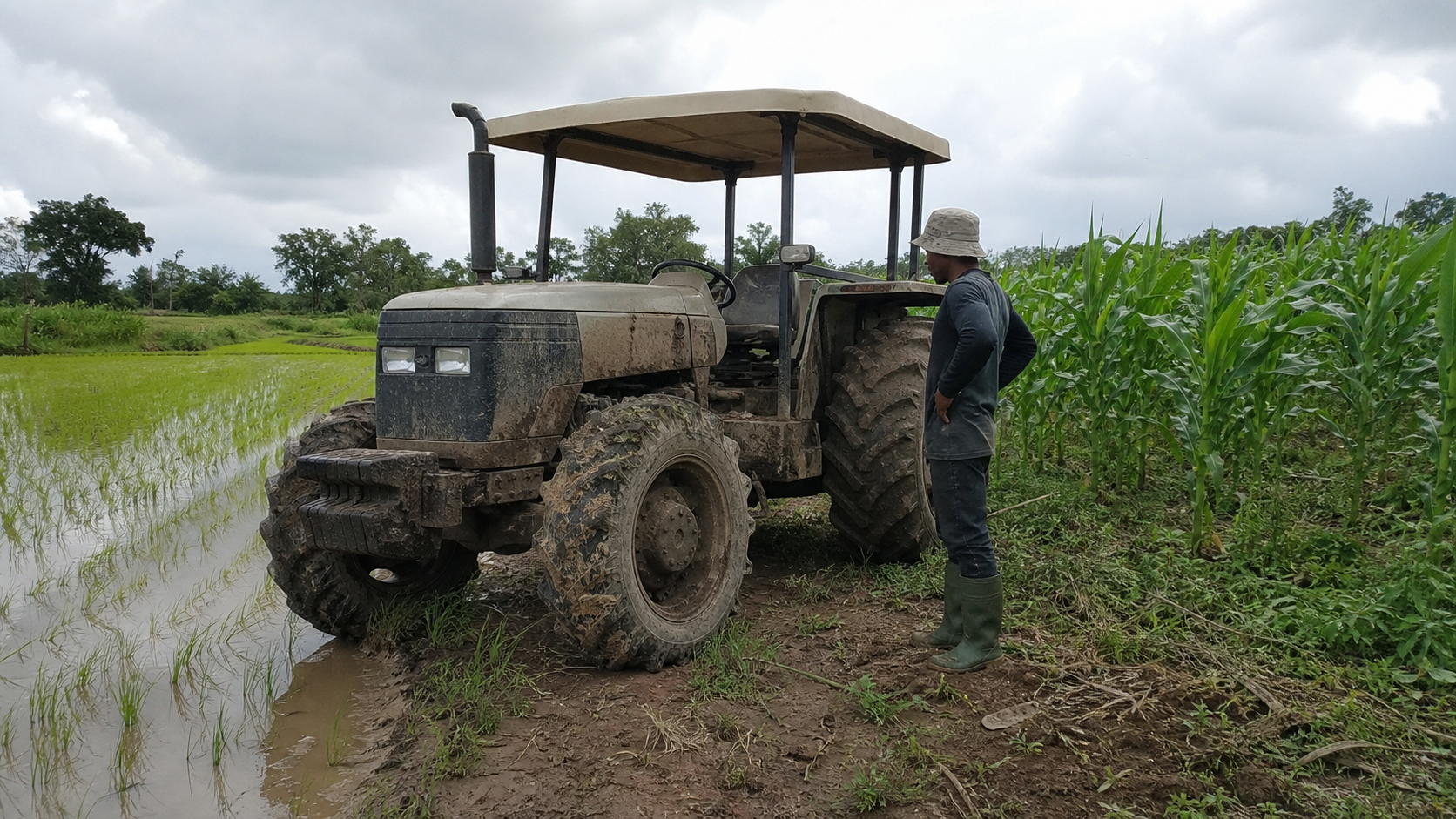
Yes—but field conditions and recurring operations matter more than the crop name. Wet paddy presents the clearest case for 4WD because mechanized work may take place in waterlogged or heavy-clay soil. Sugarcane and maize become stronger candidates where heavy soil, deep tillage, slopes, or difficult terrain repeatedly limit traction. Soybeans, vegetables, and pulses require a more cautious, field-specific assessment.
The supplied evidence is commercial industry guidance developed mainly for India. It consistently connects 4WD with wet soil and difficult terrain, while retaining 2WD for firm and level fields. These sources provide useful screening criteria, but they do not establish universal performance, savings, or buying rules for farms in Latin America or Africa. Final selection should be based on representative local conditions and model-specific documentation.
What Really Makes a Crop Benefit From 4WD?
Crop name is only the starting point; 4WD becomes relevant when wet or sticky soil, slopes, deep tillage, or demanding implements regularly limit traction.
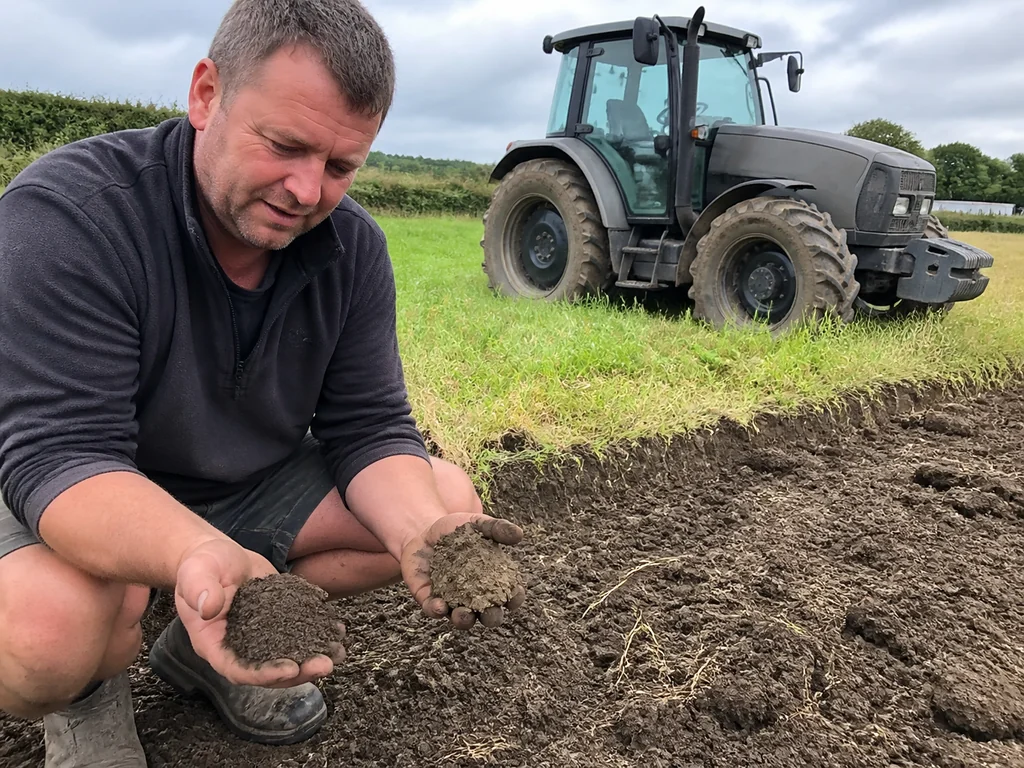
Start with the job, not the crop. A crop benefits from 4WD indirectly when the tractor has difficulty converting available drive-axle power into useful forward pull. The supplied guidance makes land, soil, terrain, and operations part of the crop and drivetrain choice1.
Assess five factors:
- Soil and moisture: Does the tractor regularly enter saturated, muddy, heavy, or sticky soil? These are recurring wet and heavy-soil applications1.
- Slope and surface: Must the tractor pull or maintain control on gradients, terraces, uneven ground, or slippery tracks? Industry guidance identifies slopes and difficult terrain2 as demanding conditions.
- Draft demand: Are deep ploughing, subsoiling, or other high-draft soil-working jobs central to the annual workload? The cited guidance associates 4WD with deep tillage and heavy implements3.
- Implement package: Does the intended work require a heavy plough, rotavator, trailer, or specialist wet-field equipment? Paddy guidance, for example, treats cage-wheel compatibility4 as part of the complete setup.
- Frequency: Are these conditions present during important recurring operations, or only during an occasional exceptional job? General comparisons recommend matching the drivetrain to terrain and application demands5.
Also identify what is limiting performance. A tractor is traction-limited when it loses usable speed or pull through excessive slip even though engine power remains available. It is power-limited when the engine cannot sustain the required load, and resistance-limited when sinkage or rolling resistance consumes much of the available pull. Additional driven wheels may help the first condition, but they do not create more engine power or automatically remove soil resistance.
Shortlist 4WD when representative operations are repeatedly traction-limited. Keep 2WD in the comparison when fields are firm and level, draft loads are moderate, and demanding conditions occur too rarely to justify the additional drivetrain cost and service requirements.
A crop’s name alone determines whether it needs a 4WD tractor.False
Soil moisture, terrain, tillage depth, implement demand, and how often traction problems occur are more decisive than the crop label.
Wet paddy is one of the strongest crop-related cases for 4WD.True
Waterlogged ground, heavy clay, and puddling can create recurring traction demands that favor driving both axles.
Sugarcane, maize, vegetables, and pulses inherently require 4WD.False
Their case for 4WD is conditional, becoming stronger mainly on heavy or wet soils, slopes, or during demanding tillage and implement work.
Compare each crop’s soil, wetness, slope, operations, and implement demands before deciding whether 4WD offers a practical advantage.
Why Is Wet Paddy the Strongest 4WD Case?
Waterlogged fields and heavy clay create the clearest case for 4WD during mechanized paddy work, although firm, flat paddies may remain suitable for 2WD.
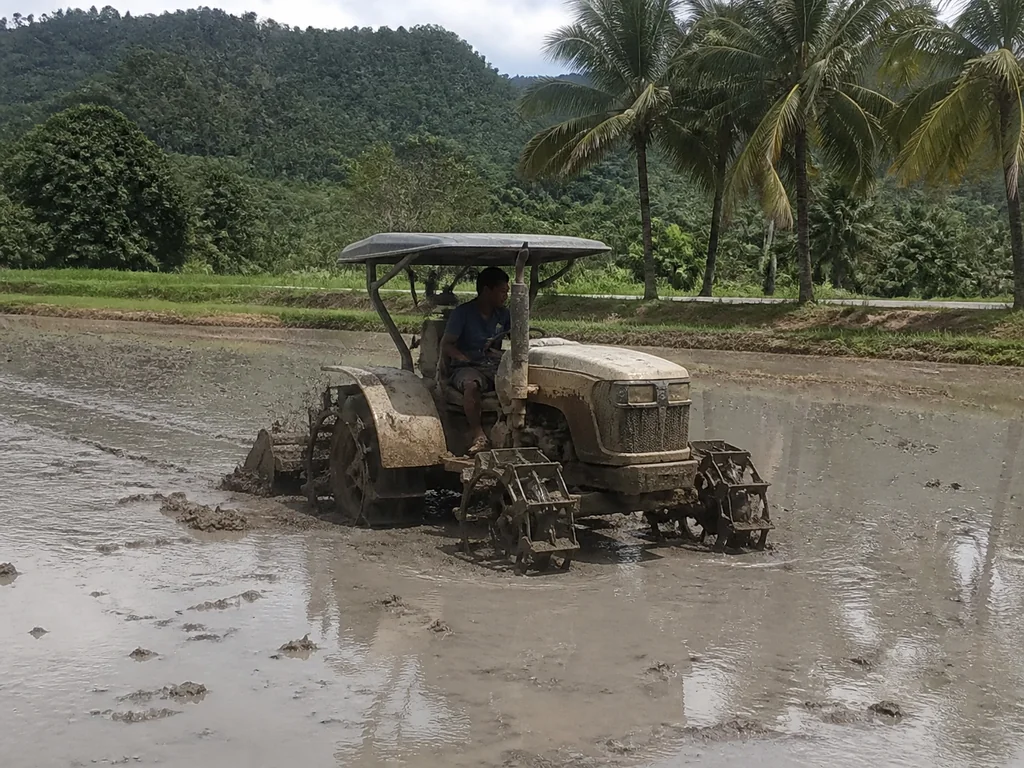
Wet paddy presents the strongest crop-related case because the soil condition and the operation can create a traction problem at the same time. Waterlogged ground, mud, and heavy clay can restrict mobility during mechanized land preparation; this combination appears repeatedly in guidance on mechanized paddy operations3 and wet heavy-clay paddies4.
The advantage becomes especially relevant during wet tillage and puddling. Puddling means churning water-saturated soil to prepare a paddy field. Driving both axles may help the tractor maintain forward movement when rear-wheel traction alone is inadequate. Industry comparisons consequently place waterlogged paddy work1 among the stronger 4WD applications.
Some paddy operations use cage wheels—open steel wheel attachments designed to grip and work wet soil. Their suitability must be confirmed for the exact tractor, rims, axles, and operating method. The available guidance discusses cage wheels for puddling4, but it does not prove that every 4WD tractor accepts front or rear cage wheels.
Rice production does not automatically require 4WD. Flat, firm, or better-drained paddies with lighter operations may remain suitable for 2WD; the supplied comparisons distinguish these from wet and traction-demanding paddies5. Compare both configurations under representative field conditions and record actual working speed, slip, bogging, rutting, implement performance, and fuel used per completed area—not fuel per hour alone.
A tractor’s ability to keep moving does not prove that the soil is fit for traffic. Wet-soil rutting and compaction should therefore remain part of the operating decision, regardless of drivetrain.
When Do Sugarcane and Maize Favor 4WD?
Sugarcane may benefit in heavy soil or deep-tillage work, while maize may benefit on steep or difficult ground and during deep ploughing.
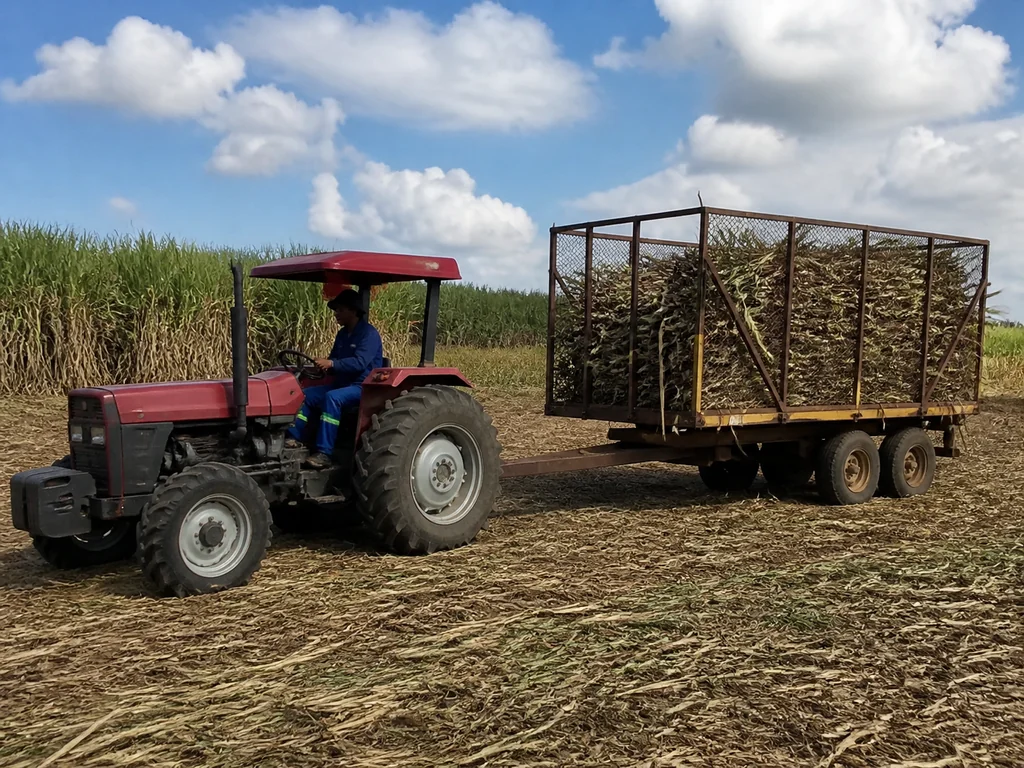
Sugarcane: The stronger case is recurring work in wet, heavy, or sticky soil rather than the crop itself. Crop-specific guidance associates sugarcane with heavy-soil traction demands1, while broader guidance identifies deep ploughing and subsoiling3 as demanding 4WD applications. Implement-heavy operations and haulage may strengthen the case, but PTO, hydraulic, hitch, tire, and braking capacity must be checked separately.
Maize: Give greater weight to terrain and tillage. Industry examples identify maize on steep slopes2 and describe 4WD as more relevant for difficult wet patches, slopes, or deeper soil work. Flat, well-drained maize fields with moderate draft demand may still suit 2WD, as reflected in the crop-specific drivetrain guidance1.
For either crop, base the decision on the hardest recurring operation rather than the easiest field or a rare emergency. Ask the supplier to demonstrate the proposed tractor with a representative implement and document the tires, ballast, axle loads, working depth, speed, and drivetrain settings used during the comparison.
Choose 4WD for sugarcane or maize only when representative fields and recurring operations create demanding traction requirements.
How Should You Assess Soybeans, Vegetables, and Pulses?
These crops warrant conditional assessment based on difficult soil, wetness, or hills rather than a broad assumption that they need 4WD.
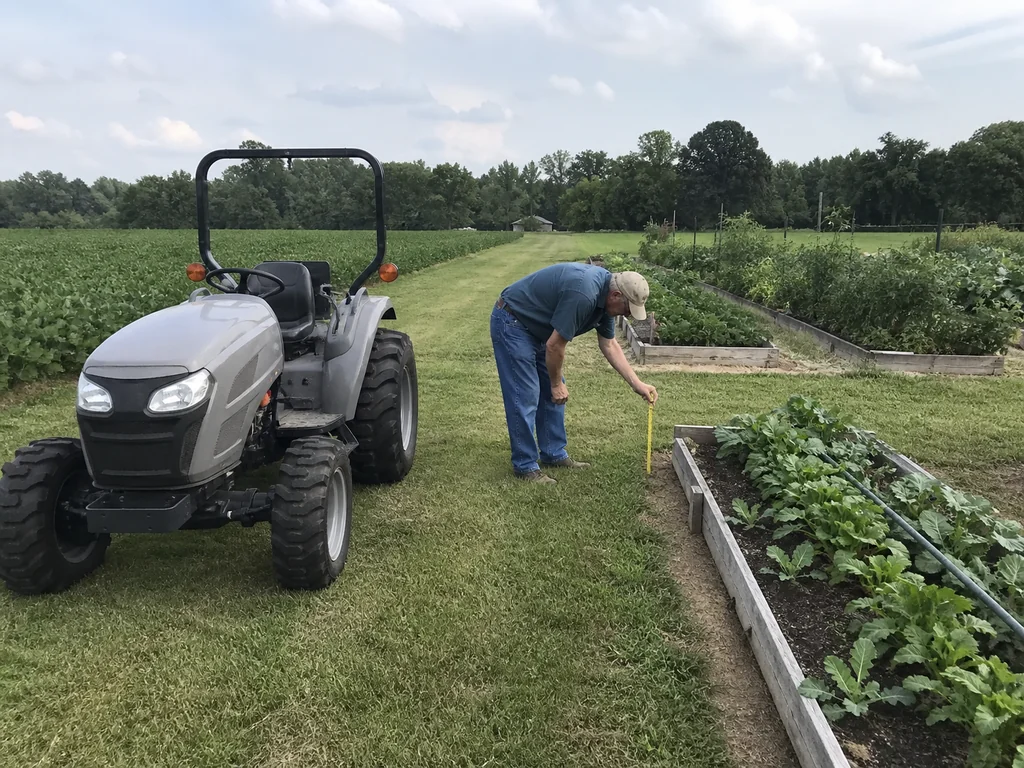
Soybeans, vegetables, and pulses are conditional candidates for 4WD, not crops that inherently require it.
Soybeans: The supplied crop guidance generally keeps 2WD viable on medium, firm ground but identifies soybeans in difficult soil1 as a possible 4WD case, particularly where heavy soil or slopes limit traction.
Vegetables: Bed layout, row spacing, clearance, and turning room may be as important as pulling ability. The evidence mentions vegetables only in connection with wet or hilly fields5; it does not support a crop-wide 4WD recommendation.
Pulses: The available comparison similarly links pulses to difficult terrain rather than claiming an inherent drivetrain need. Treat pulses on wet or hilly ground5 as a screening example only.
Separate high-draft work from lighter crop-care passes. A tractor used for deep tillage on difficult ground has a different duty profile from one used mainly for planting, spraying, or inter-row cultivation. Test the proposed machine with the intended implement under representative soil moisture, slope, row spacing, and working depth. Record which annual operations actually need front-axle traction and how often they occur.
Require locally representative field evidence before treating 4WD as the default for soybean, vegetable, or pulse production.
When Is 2WD Still the Better Buy?
Flat, firm fields and lighter operations may not justify the additional price and complexity of 4WD.
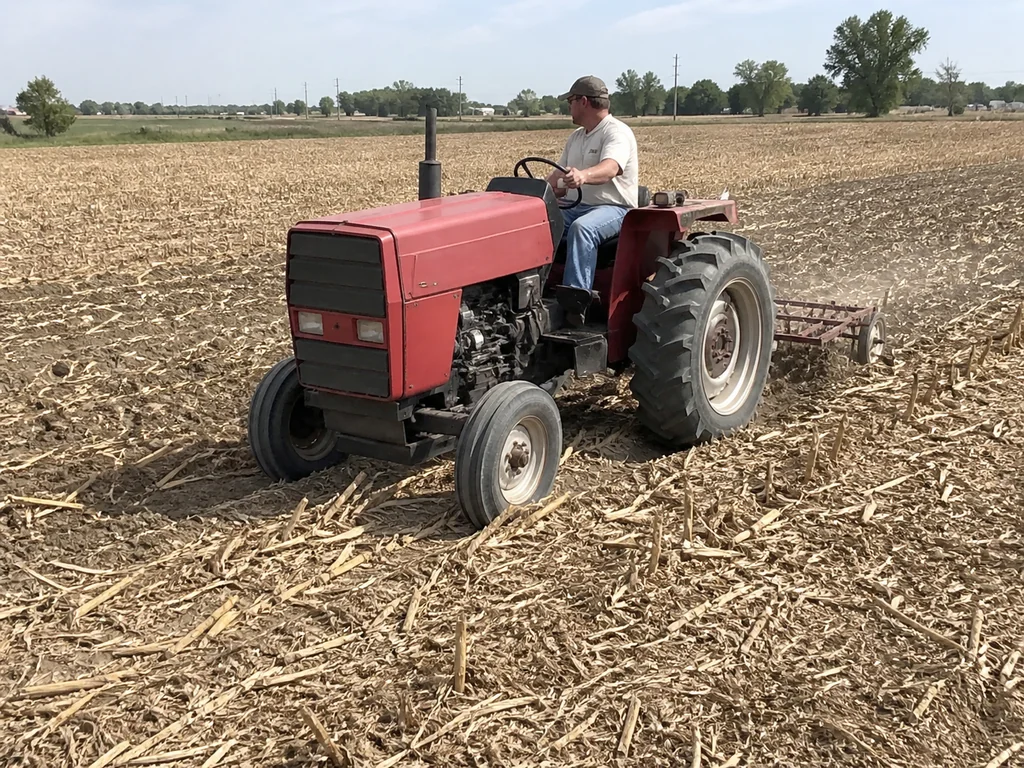
A 2WD tractor normally drives the rear axle and can remain the better-value choice where most work occurs on flat, firm ground. The supplied comparison positions 2WD for lighter fieldwork5, including sowing, inter-cultivation, spraying, light tillage, and transport on supportive surfaces.
Keep 2WD on the shortlist when wet, sticky, or steep-field work is uncommon; the intended implements impose moderate draft; and a representative demonstration shows that the tractor can maintain the required speed and implement depth without excessive slip. It must still have suitable engine and PTO power, hydraulics, hitch capacity, tires, ballast limits, clearance, and braking capacity.
The same comparison associates 2WD with lower cost and simpler maintenance5, as well as easier maneuvering in smaller or narrower plots. These advantages can outweigh occasional 4WD capability when the front driveline would seldom be used.
The practical question is not whether 4WD could help in the farm’s worst field. It is how many recurring, economically important operations genuinely need it. Where difficult work is rare, compare ownership with rescheduling the job, hiring an appropriately configured tractor, or using a contractor where those options are locally available.
What Should You Check Before Buying a 4WD Tractor?
Confirm the annual crop mix, field conditions, tillage, implements, haulage, PTO, hydraulics, clearance, wheel compatibility, maneuverability, and front-axle service requirements.
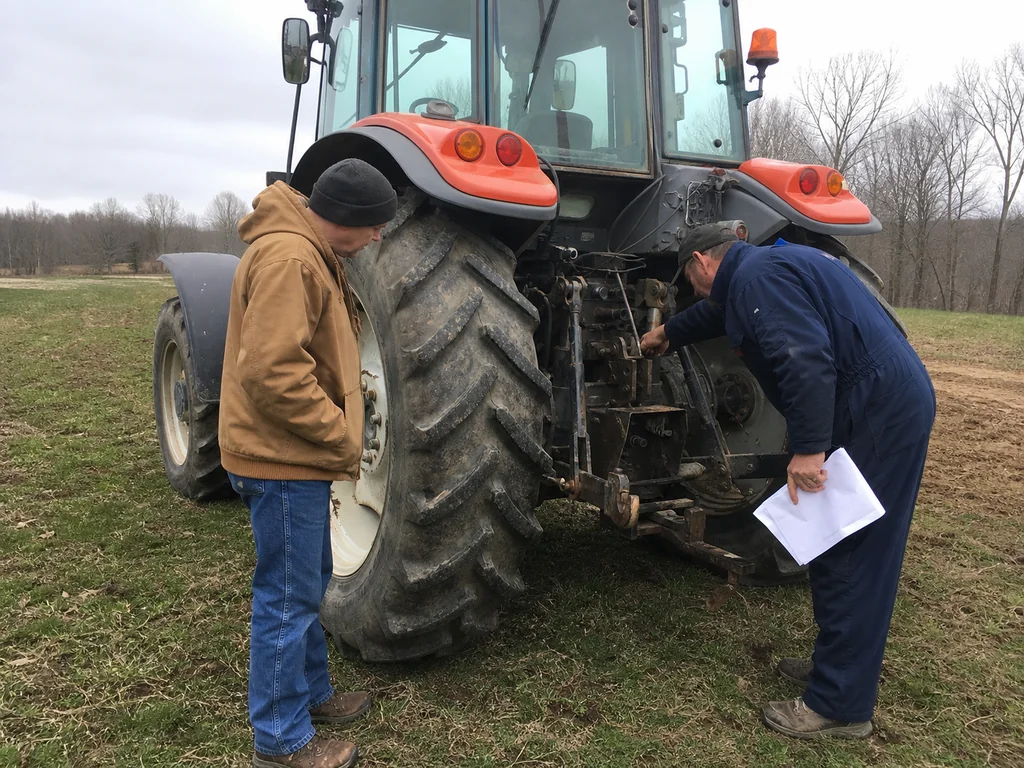
First, confirm what the seller means by 4WD. Many conventional tractors are described as MFWD—mechanical front-wheel drive—or front-wheel assist, while some larger tractors use equal-sized driven wheels or an articulated chassis. Obtain the model’s official terminology and operating instructions rather than assuming these configurations are interchangeable.
Then verify the complete working package:
- Annual duty profile: List the crops, cultivated area, operating windows, soil conditions, slopes, tillage depth, haulage duties, and expected use for each task. Guidance covering wet soil, slopes, and heavy ground1 shows why field conditions must accompany the crop name.
- Performance limit: Determine whether the current problem is traction-limited, power-limited, or resistance-limited. Additional driven wheels do not compensate for inadequate engine or PTO power.
- Implement match: Confirm working width and depth, hitch category, drawbar requirements, PTO speed and power, hydraulic flow, lift capacity, and permissible implement weight. Guidance on deep work and heavy implements3 illustrates why the drivetrain cannot be selected independently of the implement.
- Tires, wheels, and ballast: Obtain the manufacturer’s approved front-and-rear tire combinations, rolling-circumference requirements, front-wheel lead limits, inflation guidance, and ballast limits. Select pressure from actual axle load, tire model, and operating speed—not one general recommendation.
- Paddy equipment: Where relevant, verify rim, tire, axle, and driveline compatibility before fitting specialist equipment. The supplied guidance discusses cage wheels in wet paddies4, but installation approval must come from the equipment and tractor manufacturers.
- Clearance and maneuverability: Check crop clearance, overall width, row spacing, turning room, headlands, entrances, and transport access. Paddy guidance identifies clearance and turning considerations4, while 2WD comparisons also emphasize maneuverability.
- Slope and haulage control: Demonstrate steering, braking, stability, and implement or trailer behavior in the intended working and transport configurations. General slope and tough-field examples2 do not establish a safe slope limit for a particular tractor.
- Front-driveline service: Ask about axle and hub lubrication, inspections, permitted MFWD use on firm surfaces, tire-replacement matching, parts availability, technician capability, warranty coverage, and maintenance cost. The supplied comparison acknowledges additional front-axle servicing5.
- Representative verification: Request the operator’s manual and an official OECD or equivalent recognized tractor-test report where available. Then arrange a demonstration with the intended implement in representative soil and moisture. Compare actual speed, wheel slip, controllability, engine response, implement depth, fuel per completed area or task, and the quality of the finished operation.
Do not approve the purchase from rated horsepower, a crop label, or a dry dealer-lot demonstration alone. Evaluate the tractor, tires, axle loads, implement, soil, slope, operator requirements, and service support as one working system.
Buy 4WD only after the complete tractor–implement package and its service requirements are verified against the farm’s recurring duty profile.
Conclusion
No crop automatically requires 4WD. Wet paddy presents the clearest recurring case because waterlogged or heavy-clay soil can make traction central to mechanized work. Sugarcane and maize become stronger candidates only where heavy soil, deep tillage, slopes, or difficult terrain are regular parts of the duty profile. Soybeans, vegetables, and pulses require locally representative assessment.
For farms in Latin America and Africa, use these crop examples as a screening hierarchy—not as imported buying rules. Choose 4WD when representative work repeatedly becomes traction-limited and the complete tractor–implement package is correctly matched. Keep 2WD under consideration when fields are firm and level, operations are lighter, and a proper demonstration confirms that additional driven-axle capability would seldom be used.
References
-
Paddy and Kharif drivetrain guidance — Strong crop-by-crop guidance for paddy, sugarcane, soybean, and maize, with clear notes on wet soil, slopes, and heavy black cotton soil. ↩ ↩ ↩ ↩ ↩ ↩ ↩
-
Why do Farmers Prefer a 4-Wheel Drive Tractor for Tough Fields? — General use-case overview showing how 4WD supports paddy, maize on steep slopes, sugarcane, and heavy soils. ↩ ↩ ↩
-
Wet-paddy tractor guidance — Explains where 4WD helps most, including deep ploughing and mechanized paddy farming in major rice-growing states. - mahindratractor.com. ↩ ↩ ↩ ↩
-
Two-wheel-drive and 4WD comparison — Focuses on wet paddy fields, heavy clay soils, cage wheels, and when 4WD becomes an operational necessity. - tractorforeveryone.com. ↩ ↩ ↩ ↩ ↩
-
Four-wheel-drive application guidance — Compares best-use cases by terrain and application, including paddy, vegetables, pulses, and hilly fields. - eichertractors.in. ↩ ↩ ↩ ↩ ↩ ↩ ↩