Skip to content
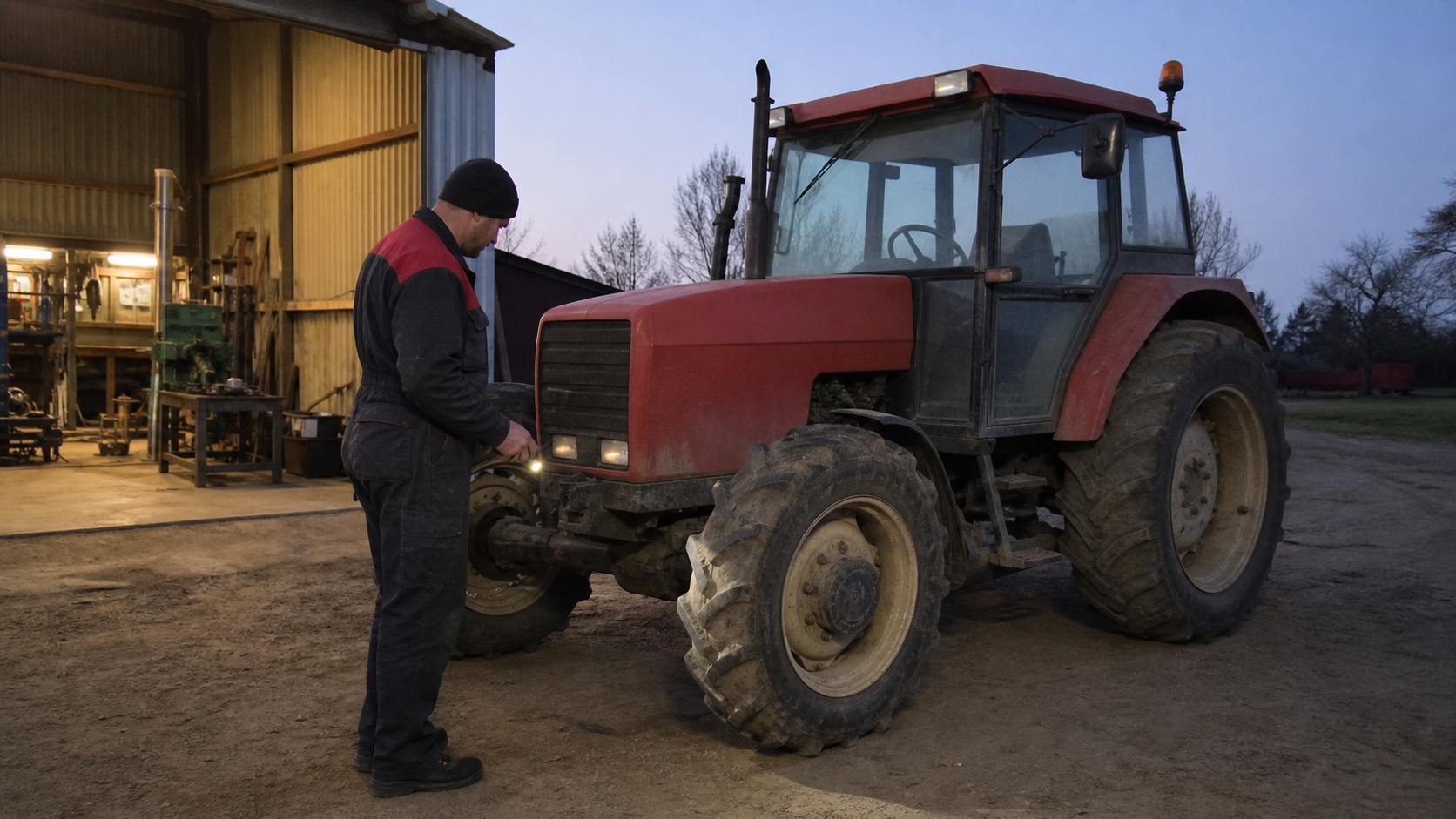
A 4WD tractor requires the same engine, cooling, hydraulic, electrical, tire, and safety care as other tractors, but it may also have a driven front axle and additional drivetrain components. Published guidance identifies the front differential, axle oil, drive shaft, and universal joints among the additional front-drive components² that may need attention.
A practical maintenance plan has three layers: readiness checks before use, scheduled servicing based on operating hours and calendar time, and periodic condition and safety inspections. However, generic schedules are only planning references. The operator manual for the exact model must determine every fluid, quantity, interval, adjustment, and procedure; even a detailed maintenance guide emphasizes this operator-manual priority¹.
For owners and buyers in Latin America and Africa, maintenance supportability is also a decision gate. The required fluids, filters, replacement parts, technical information, tools, and qualified service must be verified for the actual operating location rather than inferred from unsupported regional assumptions.
What Maintenance Is Unique to a 4WD Tractor?
Beyond routine tractor care, 4WD models add front-axle oil, differential, drive-shaft, universal-joint, planetary-drive, steering, and related control checks.

The unique workload comes from the additional components that transmit power to another axle. Depending on the tractor’s design, these can include the front differential, axle-oil compartments, drive shaft, universal joints, front-axle joints, steering components, wheel bearings, and wheel-end planetary drives. A planetary drive is a reduction-gear assembly at the wheel end, while a universal joint is the flexible coupling that allows a drive shaft to operate through changing angles.
Manufacturer guidance identifies front differential and shaft checks1². A more extensive planetary and differential inspection2³ also covers the front-drive switch, steering, toe-in, bearings, tires, and wheel lugs. Not every 4WD tractor has every listed component or a separately serviceable joint, so confirm what is actually fitted.
For the exact model, establish:
- Whether the axle, differential, and wheel-end drives use separate oil compartments
- The approved fluid, capacity, checking method, and change interval for each compartment
- Which pivots, steering joints, shafts, or universal joints require grease
- How seals, axle housings, bearings, and joints should be checked for leakage, damage, or excessive movement
- How the 4WD engagement control and indicator should be tested
- Which inspections are operator tasks and which require qualified service
Do not transfer oil grades, fill levels, tightening values, or service intervals from another axle design. One generic guide includes separate 4WD front-axle service points3¹, but the model’s manual remains authoritative.
Confirm every model-specific front-drivetrain inspection, lubrication, and fluid requirement before assessing the tractor’s maintenance burden.
What Belongs in the Daily Readiness Routine?
Check specified fluid levels, tires, leaks, belts, hoses, air filtration, battery condition, radiator cleanliness, and lubrication points, then remove accumulated mud and debris after work.
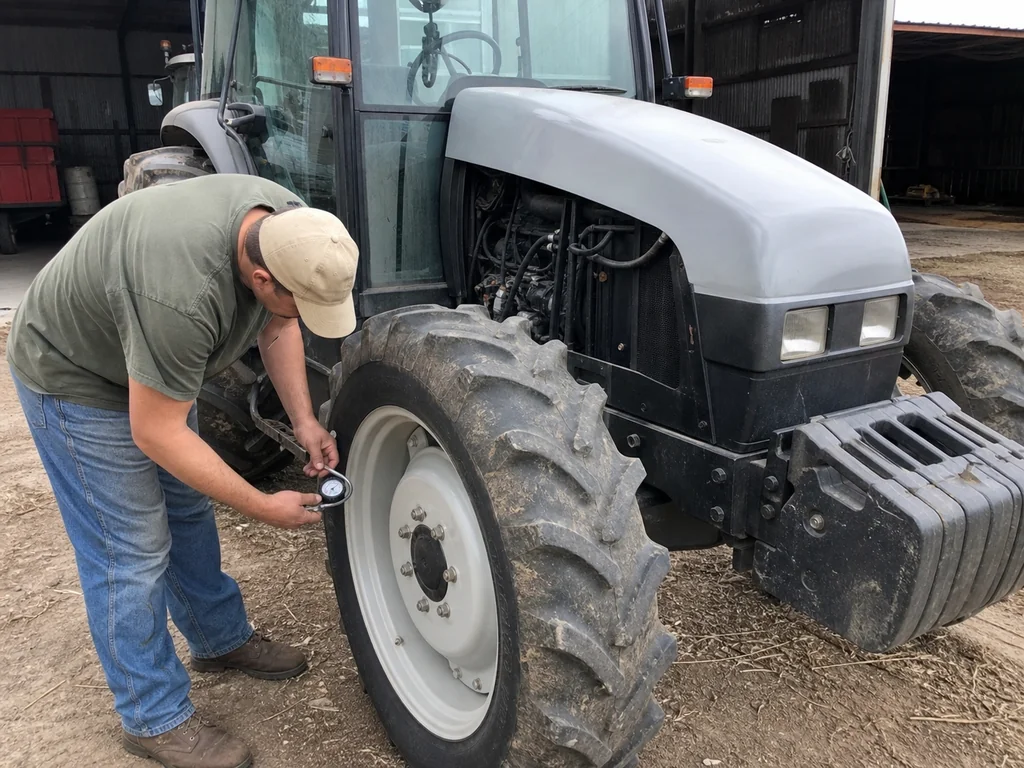
The readiness routine should determine whether the tractor can start work without an unresolved fluid shortage, leak, cooling restriction, damaged component, or overdue lubrication task. It should follow the exact model’s instructions rather than treating every possible service item as a universal daily procedure.
Before use, check:
- Engine oil, coolant, hydraulic oil, transmission oil, and other levels designated for pre-use inspection
- The tractor and ground beneath it for visible oil, coolant, hydraulic-fluid, or fuel leakage
- Tires for damage, abnormal wear, embedded debris, and the specified pressure
- Belts and hoses for visible deterioration, looseness, or damage
- The seat belt and other pre-use safety items required by the manual
- The air cleaner or restriction warning, radiator screen, and cooling passages as specified
- Battery security, cable condition, terminals, and electrolyte level if the battery is serviceable
- Any grease points or drivetrain-lubrication tasks due at the current operating-hour interval
The core every-use list is supported by guidance covering fluids, tires, leaks, and hoses3¹. A supplementary four-wheel tractor daily guide4⁴ also groups oil, filtration, tires, battery condition, lubrication, and cooling care.
Air-filter servicing, radiator cleaning, battery maintenance, and greasing are not necessarily required every day on every model. Treat them as visual, condition-triggered, or scheduled checks according to the manual. Available guidance separately identifies radiator, battery, and lubrication care1².
After work, remove accumulated mud, dust, and debris from the areas specified by the manufacturer, then look for new damage or leakage. This post-use cleaning practice5⁵ should be followed by a written defect record when corrective work is needed. Operate again only after any condition that affects safe or reliable use has been addressed.
How Should Service Intervals Be Set?
Organize maintenance by operating hours and calendar time, using an illustrative interval schedule only as a reference because the exact operator manual governs every task.

Build the schedule from the tractor’s hourmeter and calendar dates. Give each task its own deadline because fluids, filters, adjustments, inspections, and safety checks may not become due together.
Illustrative reference—do not copy without manual confirmation. One published schedule contains the following selected tasks:
- Every use: Check engine and hydraulic oil, coolant, tires, seat belt, visible leaks, belts, hoses, and general damage.
- 50 hours: Check the radiator screen, tire pressure, switches, lights, and ROPS mounting or hinge hardware. At 100 hours, it adds battery electrolyte where applicable, grease fittings, clutch and brake pedal play, the air filter, drive belts, and minor lubrication. These are 50- and 100-hour tasks3¹.
- 200 hours: Change engine oil and filter; check steering linkage, toe-in, transmission oil, and the 4WD front-axle oil level. At 300 hours, the same guide lists transmission fluid, hydraulic-filter service, fuel filters, any transmission filter, and 4WD front-axle fluid replacement. These are 200- and 300-hour tasks3¹.
- 400 hours: Inspect or adjust the steering gear and service its lubricant where applicable. At 1,000 hours or annually, the guide lists coolant replacement and exterior care among its tasks. These are 400-hour and annual tasks3¹.
These intervals belong only to that illustrative guide. Another tractor may specify different tasks, initial-service requirements, fluids, or deadlines.
The working service register should record:
- Model and product identification number
- Current operating hours and inspection date
- Task and corresponding manual section
- Hour-based and calendar deadline
- Approved fluid, quantity, filter, or part number
- Responsible operator, technician, or external provider
- Completion hours and date, observations, materials used, and next due point
When the manual gives both an hour and calendar requirement, apply its stated rule. Plan consumables and service appointments before the deadline instead of waiting for the hourmeter to reach it.
Maintenance deadlines may be based on operating hours or calendar time.True
The reference schedule combines hour-based tasks with annual maintenance, so both types of deadline must be tracked.
One published 50-, 100-, 200-, or 300-hour schedule can be treated as universal for every 4WD tractor.False
The cited schedule is a reference example; exact tasks and intervals must come from the applicable tractor documentation.
Periodic 4WD maintenance can include checking and replacing front-axle oil.True
The reference schedule includes a front-axle oil-level check and a later fluid-replacement task.
Build the service calendar from the exact model’s manual, record operating hours, and complete each task before its stated hour-based or annual deadline.
Which Periodic Inspections Protect Safe Operation?
ROPS, restraints, brakes, warning devices, PTO shielding, mirrors, tires, and wheel lugs require condition checks alongside mechanical servicing.
Fluid and filter service does not replace a safety inspection. ROPS means rollover protective structure, and PTO means power take-off—the rotating connection used to drive compatible implements. A comprehensive 4WD safety-equipment checklist2³ includes restraints, ROPS, warning devices, braking controls, PTO shielding, mirrors, tires, rims, and wheel lugs. General guidance also includes seat-belt and ROPS checks3¹.
| Inspection system | Verify | Reason to hold operation |
|---|---|---|
| ROPS and restraint | Structure, mounts, hinges, belt, buckle, and anchors | Damage, alteration, insecure mounting, or unusable restraint |
| Brakes and steering | Service and parking brakes, pedal controls, steering response, hoses, and linkage | Unreliable response, leakage, damage, or an unexplained fault |
| Warnings and visibility | Horn, lights, indicators, reflectors, mirrors, windows, and wipers if fitted | A function required for the intended work is unavailable |
| PTO protection | Shield condition, security, and engagement controls | Missing or damaged protection, or uncertain control operation |
| Tires and wheels | Tire condition and pressure, rims, bearings, and wheel-lug retention | Unsafe tire condition or loose, missing, or damaged wheel hardware |
Use this as an inspection framework, not as a universal specification. The cited PDF is a brand-specific checklist, so the exact tractor manual must supply inspection intervals, adjustment limits, and tightening values. Record defects and identify who is qualified to assess or repair them before releasing the tractor.
Approve operation only after the tractor’s protective structures, controls, visibility aids, tires, and wheel retention pass inspection.
How Does Missed Maintenance Affect Ownership Value?
Preventive care supports reliability, efficiency, uptime, service life, and resale value, although the financial effect depends on confirmed costs and operating conditions.
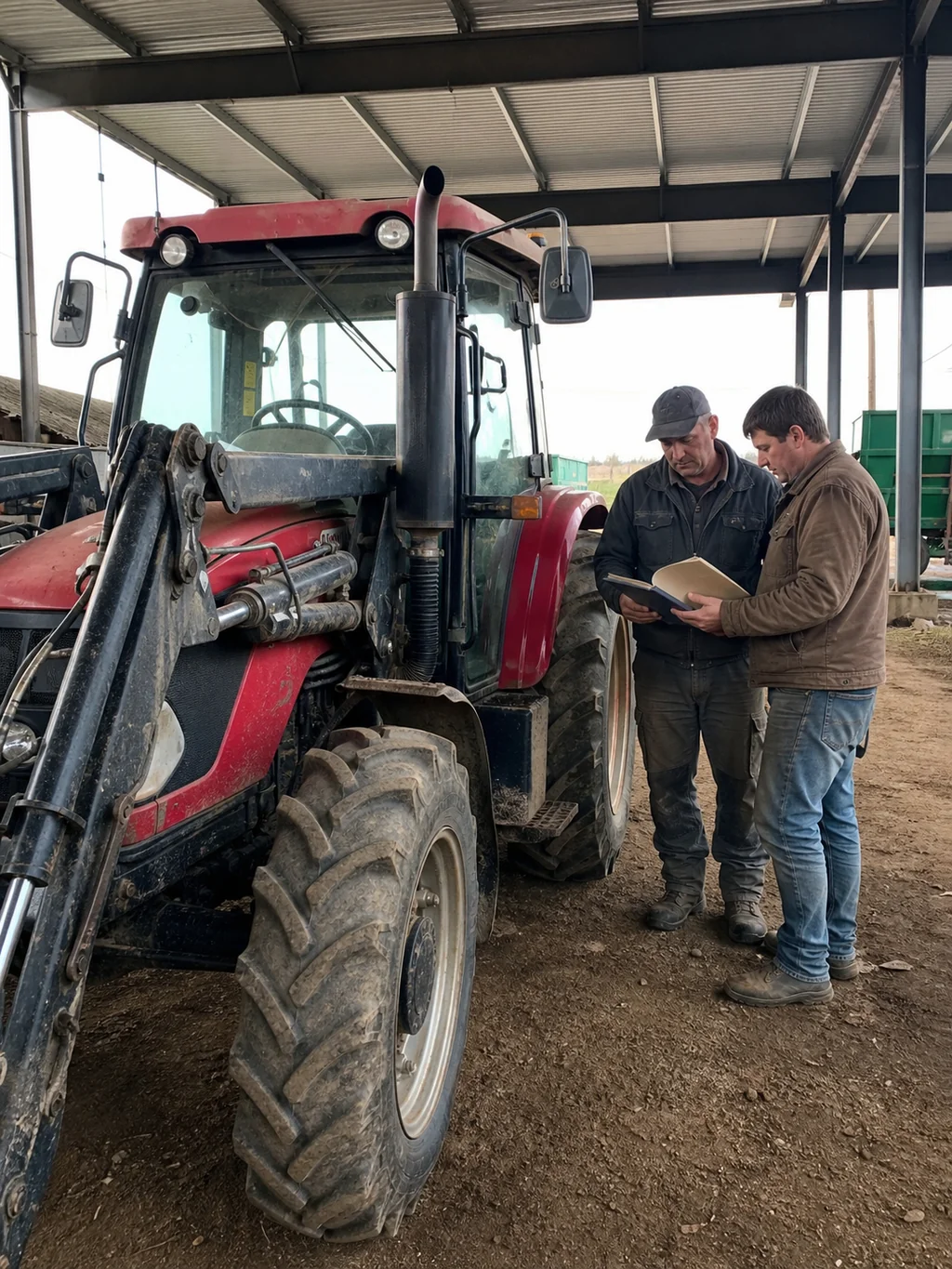
Missed maintenance should be treated as an ownership risk, not converted into a universal return-on-investment claim. Manufacturer guidance associates preventive care with fuel efficiency, fewer unexpected breakdowns, less downtime, longer service life, and resale value. These are manufacturer-described maintenance outcomes1², not measured guarantees for every tractor, workload, or market.
A defensible comparison begins with a recurring-cost worksheet for each model. Include:
- Engine, transmission, hydraulic, cooling, front-axle, differential, and planetary-drive fluids specified by the manual
- Oil, fuel, hydraulic, transmission, and air filters
- Grease and other lubrication materials
- Operator inspection and cleaning time
- Scheduled workshop labor, travel, transport, or call-out costs
- Planned downtime for hour-based and calendar-based service
- Consumables or critical parts that need to be stocked
- A separately identified repair allowance based on tractor age, condition, workload, and supplier quotations
Routine oil, tire, and lubrication care5⁵ may appear inexpensive task by task. The practical issue is whether it can be completed on time with the correct materials and labor. Conversely, a more demanding schedule is not automatically poor value when the required support is dependable and its cost is known.
Service records help owners and later buyers compare completed work with the required schedule, although records do not prove that the tractor is free from defects. Compare value using confirmed fluid and filter prices, labor rates, service lead times, transport costs, and expected operating conditions. Do not insert an assumed fuel saving, repair reduction, payback period, or resale premium where the supplier has not provided evidence.
What Maintenance Evidence Should a Supplier Provide?
Request the operator manual, maintenance chart, approved fluids and capacities, consumables list, lubrication map, front-axle procedures, and qualified service route.
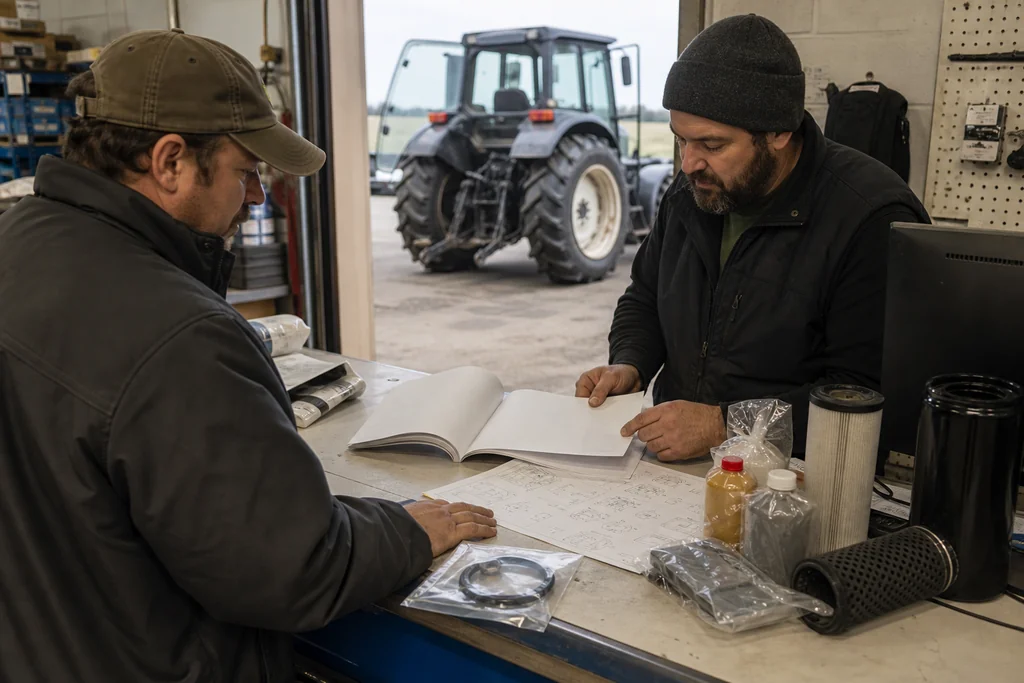
Request a maintenance evidence pack for the exact model and, where relevant, its product-identification-number range. A general brochure or verbal assurance is not a substitute. Published guidance explains that an operator manual should contain safe-operation information, capacities, detailed maintenance instructions, and schedules—making the exact operator manual3¹ the starting document.
The supplier should provide or confirm:
- The complete operator manual and hour-based and calendar-based maintenance chart
- Approved specifications and capacities for engine, transmission, hydraulic, cooling, front-axle, differential, and wheel-end fluids
- Filter, belt, hose, seal, and recurring-consumable part numbers
- A lubrication map identifying each grease point and its interval
- Front-axle, differential, planetary-drive, drive-shaft, and universal-joint procedures where fitted
- Steering, brake, tire, wheel-lug, PTO-protection, and safety-equipment inspection requirements
- Special tools, software, or technician qualifications needed for deeper work
- The warranty-compliant service route and required maintenance records
The request for approved products is consistent with guidance to use recommended oils and scheduled filters1². The breadth of the 4WD inspection scope2³ also shows why fluids and filters alone are insufficient.
After receiving the documents, assign every task to a capable party. For each item, ask:
- Can trained on-site staff complete it safely and correctly?
- Are the specified materials, tools, and instructions available at the operating location?
- If external service is required, who will provide it and how will the tractor reach them—or they reach the tractor?
Resolve missing specifications and unclear responsibilities in writing before approving the maintenance plan.
Can Parts and Qualified Service Be Secured Locally?
Verify access to specified fluids, filters, replacement parts, manuals, and trained service rather than relying on unsupported regional assumptions.
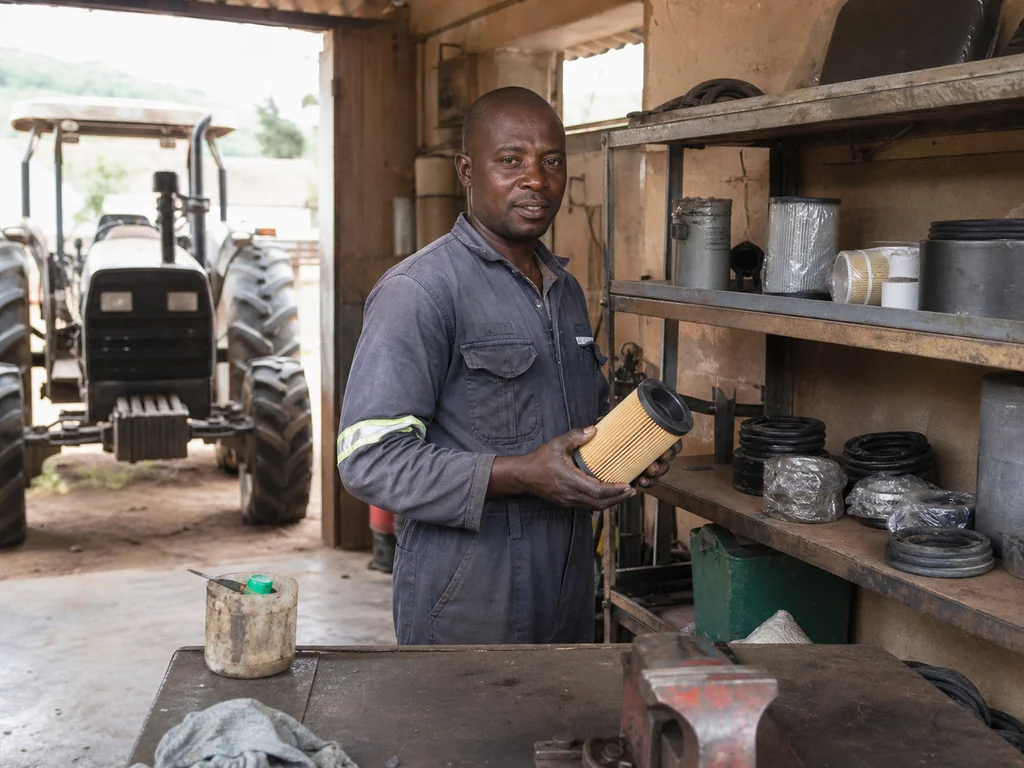
For a tractor intended for Latin America or Africa, local support must be checked for the exact operating location. The supplied manufacturer articles are framed around India, so their India-focused maintenance guidance1² and model-aware dealer servicing5⁵ cannot establish parts stocks, technician coverage, labor costs, or response times elsewhere.
Give the supplier the operating location and ask for written confirmation of:
- Exact fluid specifications, filter numbers, current stock status, and approved alternatives
- Availability and lead times for front-axle, steering, driveline, hydraulic, brake, cooling, and electrical parts
- The language and delivery format of operator manuals and technical information
- The name and location of a technician or workshop qualified for the exact model
- Which services can be performed on-site and which require tractor transport
- Any diagnostic tools or specialist equipment required
- Ordering contacts, delivery routes, warranty procedures, and expected response times
- A practical stocking list for routine consumables and selected critical parts
The need for continuing access to fluids, filters, and lubrication materials4⁴ follows from the recurring maintenance workload. However, an unsupported statement that parts are “available” is insufficient. Request part numbers, a quotation or stock confirmation, expected lead times, and an identified supply route.
Define “local” operationally: support is adequate only if it can reach the tractor within the owner’s acceptable downtime. Imported parts may be workable when lead times and stocking plans are known. Select the tractor only after the complete consumables, parts, information, and specialist-service route has been confirmed.
What Deserves Extra Attention on a Used 4WD Tractor?
Record identity, hours, and applicable service bulletins, then inspect front-drive operation, differential and planetary oils, steering alignment, bearings, tires, hydraulics, brakes, wheel lugs, and safety equipment.
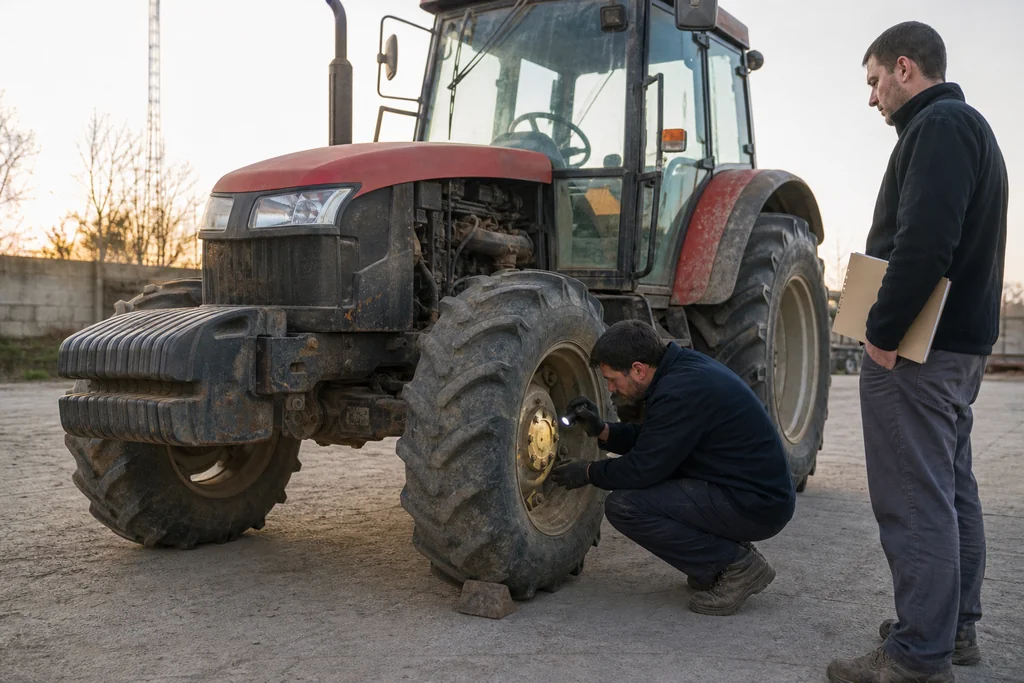
Start by establishing the tractor’s identity and the instructions that apply to it. A brand-specific used 4WD inspection framework2³ begins by recording the model, product identification number, operating hours, and applicable service bulletins or product-improvement information. Also request service records, fitted-equipment details, and the correct operator manual.
Then inspect the systems that can create additional maintenance exposure:
- Front drive: Check engagement and disengagement according to the manual, the front-drive switch or indicator, axle housings, shafts, joints, seals, and visible leakage.
- Differential and planetary drives: Verify oil condition and level using the correct procedure, and compare available service records with the manual.
- Steering and wheels: Check steering operation, tie rods, knuckles, model-specified toe-in, wheel bearings, rims, tire condition, pressure requirements, and wheel lugs.
- Hydraulics and brakes: Inspect oil level, filters, hoses, controls, cylinders, couplers, service brakes, parking brake, and associated linkage.
- Safety equipment: Check the ROPS, restraint, warning lights, reflectors, horn, mirrors, PTO shielding, decals, and other fitted protective equipment.
These items are all represented in the cited front-drive and safety checks2³. Because the checklist is brand-specific, use it as a framework rather than applying its model-dependent items or limits universally.
Classify each finding before setting the purchase price or initial maintenance budget. The source distinguishes critical defects from visible wear2³, alongside acceptable or serviced items. A practical assessment should similarly separate:
- Safety defects requiring repair before operation
- Overdue maintenance requiring immediate service
- Ordinary wear that can be monitored and budgeted
- Unresolved conditions requiring specialist diagnosis
Obtain parts and labor quotations for the first two groups before accepting the tractor. Unconfirmed identity, hours, oil history, or front-drive condition should remain recorded as uncertainty rather than being treated as normal wear.
Separate defects requiring immediate repair from ordinary wear before accepting the tractor or setting its first maintenance budget.
Conclusion
A complete 4WD tractor maintenance plan combines pre-use readiness checks, manual-controlled scheduled servicing, and periodic mechanical and safety inspections. Its distinguishing burden is the additional driven-axle equipment, which may introduce separate fluids, lubrication points, inspection procedures, and specialist tasks.
The exact model’s manual must override every illustrative interval. Before buying or placing the tractor in service, confirm that each task has a responsible person, documented procedure, approved material, required tool, and realistic parts or service route. That supportability test is more defensible than assuming that a tractor will be inexpensive to maintain simply because its routine checklist appears short.
References
-
Maintenance Tips to Keep Your 4WD Tractor Running Like New — Manufacturer-style maintenance advice focused on keeping 4WD tractors reliable with regular inspections and fluid service. ↩ ↩ ↩ ↩ ↩
-
4WD Tractor Inspection — Inspection checklist PDF for 4WD tractor condition checks and operational safety. ↩ ↩ ↩ ↩ ↩ ↩
-
A Farm Tractor Maintenance Guide — Detailed hour-based maintenance schedule covering daily, 50-hour, 100-hour, 200-hour, 300-hour, 400-hour, and annual service tasks, including 4WD-specific front axle checks. ↩ ↩ ↩ ↩ ↩ ↩ ↩
-
Daily Maintenance Guide for Four-Wheel Tractors — Daily maintenance checklist covering oil, air filter, tires, battery, drivetrain lubrication, and cooling system care. ↩ ↩
-
Maintaining Your 4-Wheel Drive Tractor: Tips for Longevity — Basic longevity advice emphasizing air filters, oil levels, oil changes, and tire checks. ↩ ↩ ↩